
How Do I Onboard SaaS Customers?
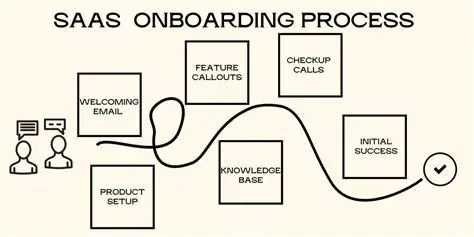
The first day a customer uses your software may determine whether they stay for years.
That sounds dramatic.
It is also increasingly true.
A customer does not begin a SaaS relationship with a blank slate. They arrive carrying expectations, assumptions, doubts, and a quiet question that many companies underestimate:
“Did I make the right decision?”
The purchase may have been approved.
The contract may have been signed.
The payment may have cleared.
But psychologically, the customer is still evaluating.
They are asking whether the product delivers what was promised. Whether implementation will be painful. Whether their team will actually adopt it. Whether the investment will produce measurable results.
Customer onboarding is where those questions receive their first answers.
A strong onboarding experience transforms uncertainty into confidence.
A weak one creates friction before the relationship has even begun.
And this is the paradox of SaaS onboarding:
The customer has already said yes.
Yet the company still has something important to prove.
What Is SaaS Customer Onboarding?
SaaS customer onboarding is the process of guiding new customers from their initial purchase to successful product adoption and measurable value realization.
It includes every interaction that helps customers:
- Set up the product
- Understand key features
- Complete initial workflows
- Achieve their first success milestone
- Integrate the software into daily operations
But effective onboarding is not simply a checklist of technical tasks.
It is a transition.
Customers move from being buyers to becoming users.
From curiosity to confidence.
From expectation to experience.
The best SaaS companies understand that onboarding is not about teaching every feature.
It is about helping customers accomplish something meaningful as quickly as possible.
Why SaaS Onboarding Matters So Much
Customer onboarding has a direct relationship with retention.
A customer who struggles immediately after purchase begins accumulating doubt.
That doubt influences behavior.
They delay implementation.
They reduce usage.
They postpone internal adoption.
Eventually, the product becomes easier to abandon.
Successful onboarding creates the opposite effect.
Customers experience progress.
Progress creates confidence.
Confidence creates engagement.
Engagement creates retention.
This relationship explains why SaaS companies invest heavily in onboarding programs.
The initial customer experience often determines the trajectory of the entire relationship.
The Real Goal: Time-to-Value
Many companies misunderstand onboarding because they measure completion rather than success.
Did the customer attend training?
Did they complete setup?
Did they watch the tutorials?
These metrics provide information.
They do not necessarily indicate value.
The more important question is:
How quickly did the customer achieve their first meaningful outcome?
This is known as time-to-value.
Time-to-value represents the period between purchase and the moment a customer experiences genuine benefit from the product.
A shorter time-to-value generally creates stronger engagement.
Consider two customers.
The first signs up for a marketing platform and launches their first campaign within a week.
The second spends two months configuring settings before seeing results.
Both customers purchased the same software.
Their confidence levels are likely very different.
Speed matters.
Momentum matters.
Early wins matter.
The SaaS Customer Onboarding Process
Although onboarding programs vary across industries, many successful SaaS companies follow a similar structure.
Stage 1: Welcome and Expectation Setting
The onboarding experience begins before the customer logs into the product.
The first communication should answer basic questions:
What happens next?
How long will setup take?
Who should participate?
What outcome should the customer expect?
Clarity reduces anxiety.
Confusion creates friction.
The customer should never wonder what happens after purchase.
Stage 2: Account Setup and Configuration
This stage involves technical preparation.
Depending on the product, customers may need to:
- Import data
- Configure settings
- Invite team members
- Connect integrations
- Customize workflows
The challenge is balancing flexibility with simplicity.
Too few options limit usefulness.
Too many options overwhelm users.
The strongest onboarding experiences guide customers toward the fastest path to value.
Stage 3: Activation
Activation represents the moment when the customer experiences meaningful product value.
This moment differs by product.
For a collaboration platform, activation may occur when a team completes its first project.
For analytics software, activation may occur when a user creates their first valuable report.
For a CRM, activation may occur when sales representatives successfully manage their first opportunity.
Identifying this moment is critical.
Because onboarding should be designed around reaching it.
Stage 4: Adoption and Expansion
Successful onboarding does not end when customers understand basic functionality.
The goal is deeper integration.
Customers should discover how the product fits into broader workflows.
This stage creates opportunities for:
- Increased usage
- Additional features
- More users
- Expanded accounts
Adoption transforms software from a tool into infrastructure.
That transformation strengthens retention.
Comparing Weak and Strong SaaS Onboarding
The difference between average and exceptional onboarding often appears in small details.
| Area | Weak Onboarding | Strong Onboarding |
|---|---|---|
| First Experience | Generic welcome | Personalized guidance |
| Setup Process | Customer figures it out alone | Structured assistance |
| Training | Feature-focused | Outcome-focused |
| Communication | Infrequent | Timely and proactive |
| Success Measurement | Completion metrics | Business outcomes |
| Product Adoption | Passive monitoring | Active encouragement |
| Customer Support | Reactive | Preventive |
| Follow-Up | Renewal-focused | Value-focused |
The pattern is clear.
Strong onboarding is designed around customer success, not company convenience.
Personalization: The Difference Between Guidance and Noise
One of the biggest onboarding mistakes is treating every customer the same.
A small business purchasing simple workflow software has different needs than a global enterprise implementing a complex platform.
Their goals differ.
Their timelines differ.
Their challenges differ.
Personalized onboarding may include:
- Industry-specific recommendations
- Customized implementation plans
- Different training paths
- Role-based experiences
Personalization does not mean creating unlimited complexity.
It means recognizing that customers have different definitions of success.
The Role of Customer Success Managers
Customer success managers often become the human connection between customers and the product.
Their role extends beyond answering questions.
They help customers:
- Define goals
- Measure progress
- Overcome obstacles
- Discover opportunities
The most effective customer success managers do not simply explain software.
They understand customer objectives.
This distinction changes conversations.
Instead of saying:
“Here is how to use this feature.”
They ask:
“What outcome are you trying to achieve?”
The second question leads to better onboarding.
Product-Led Onboarding
Many SaaS companies now incorporate product-led onboarding strategies.
The product itself guides users toward success.
Examples include:
- Interactive walkthroughs
- Setup checklists
- In-app recommendations
- Progress indicators
- Contextual education
Product-led onboarding works because it reduces dependence on external assistance.
Customers learn while doing.
The experience becomes immediate.
However, automation should not replace human support entirely.
Complex customers still need expertise.
The strongest programs combine self-service simplicity with human guidance when needed.
A Lesson I Learned About SaaS Onboarding
Several years ago, I observed a SaaS company with an impressive product and disappointing retention numbers.
The leadership team believed customers were leaving because competitors offered better features.
The response was predictable.
More development.
More releases.
More functionality.
But customer interviews revealed something different.
Many users never reached the product’s most valuable capabilities.
They were overwhelmed during the first few weeks.
The software was capable.
The onboarding experience was not.
The company redesigned the process around customer outcomes instead of product education.
Instead of showing every feature, it identified the first critical success milestone.
Instead of measuring training completion, it measured customer progress.
The results changed dramatically.
Retention improved.
Engagement increased.
The lesson was simple but lasting:
A powerful product cannot create value if customers never discover how to use it.
Onboarding is the bridge between capability and outcome.
Common SaaS Onboarding Mistakes
Even experienced companies make onboarding mistakes.
Several appear repeatedly.
Mistake 1: Overloading Customers With Information
More information does not always create more understanding.
Timing matters.
Customers should receive relevant guidance when they need it.
Mistake 2: Focusing on Features Instead of Goals
Customers do not purchase features.
They purchase improvements.
Onboarding should reflect that reality.
Mistake 3: Ignoring Customer Segmentation
Different customers require different approaches.
One process rarely fits everyone.
Mistake 4: Treating Onboarding as a One-Time Event
Customer learning continues.
Products evolve.
Customer needs change.
Onboarding should create an ongoing relationship, not a single interaction.
Measuring SaaS Onboarding Success
Effective onboarding requires meaningful measurement.
Important metrics include:
Activation Rate
The percentage of customers reaching a defined success milestone.
Time-to-Value
How quickly customers experience meaningful benefits.
Feature Adoption
How deeply customers engage with important capabilities.
Onboarding Completion Rate
Whether customers complete key setup activities.
Early Retention
Whether customers remain engaged after initial adoption.
These measurements reveal whether onboarding creates real progress.
Why Documentation Matters
Self-service resources play an important role in modern SaaS onboarding.
Customers often prefer finding answers independently.
Strong documentation includes:
- Setup guides
- Knowledge bases
- Tutorials
- Video resources
- Best-practice examples
Good documentation reduces friction.
Great documentation accelerates confidence.
The goal is not simply answering questions.
It is helping customers move forward.
The Bigger Truth About SaaS Customer Onboarding
Companies often ask:
“How do we onboard customers?”
The question sounds operational.
What emails should we send?
What training should we provide?
What tools should we use?
Those questions matter.
But they overlook the deeper issue.
Customer onboarding is not about introducing software.
It is about introducing possibility.
Every customer begins with an expectation.
They believe the product can improve something important.
The onboarding experience either strengthens that belief or weakens it.
The best SaaS companies understand this.
They do not measure onboarding by how much information customers receive.
They measure it by how much progress customers achieve.
Because customers do not remember every tutorial.
They remember the moment the product started working for them.
That moment creates trust.
Trust creates adoption.
Adoption creates retention.
And retention creates sustainable growth.
In SaaS, the first impression is not merely about being welcoming.
It is about proving the decision was correct.
The companies that understand this treat onboarding as more than a process.
They treat it as the beginning of a relationship.
And relationships are not built through explanations alone.
They are built through successful experiences.
- Arts
- Business
- Computers
- Giochi
- Health
- Home
- Kids and Teens
- Money
- News
- Personal Development
- Recreation
- Regional
- Reference
- Science
- Shopping
- Society
- Sports
- Бизнес
- Деньги
- Дом
- Досуг
- Здоровье
- Игры
- Искусство
- Источники информации
- Компьютеры
- Личное развитие
- Наука
- Новости и СМИ
- Общество
- Покупки
- Спорт
- Страны и регионы
- World

 English
 Russian
 French
 Spanish
 Portuguese
 Deutsch
 Turkish
 Dutch
Dutch
 Arabic
 Romaian
 Portuguese (Brazil)
 Greek
Greek
