
Should I pay off debt or save money?
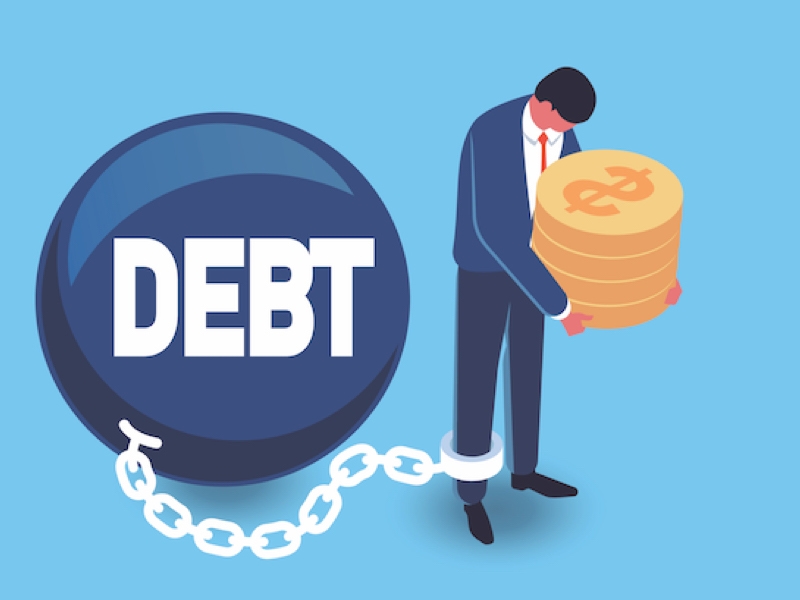
Should I Pay Off Debt or Save Money?
Deciding whether to pay off debt or save money can be difficult. Paying down debt reduces the interest you owe and can improve your financial position, while saving gives you a financial cushion for emergencies and future goals.
For many people, the best answer is not to choose one exclusively. A balanced approach can help you build savings while strategically paying down debt.
Start With an Emergency Fund
Before aggressively paying off debt, consider building an emergency fund. An emergency fund is money set aside for unexpected expenses such as medical bills, car repairs, home repairs, or a temporary loss of income.
Without savings, an unexpected expense could force you to rely on a credit card or take out another loan. That can create a cycle of debt.
A reasonable starting goal is to save enough to cover essential expenses for at least a few weeks or one month. Over time, you may want to build an emergency fund covering three to six months of essential expenses, depending on your income, job stability, and financial responsibilities.
Consider the Interest Rate on Your Debt
The interest rate on your debt is one of the most important factors in deciding what to prioritize.
High-interest debt, particularly credit card debt, can grow quickly. If your credit card charges a high annual percentage rate, paying it down may provide a much better financial benefit than keeping extra money in a savings account earning a lower rate.
For example, suppose you have $5,000 in credit card debt at 20% interest and $5,000 in a savings account earning 4%. Keeping the money in savings while carrying the credit card balance could cost substantially more in interest than the savings account earns.
In this situation, after maintaining an appropriate emergency cushion, paying down the high-interest debt may make sense.
Compare Your Debt Rate With Your Savings Rate
A simple way to think about the decision is to compare the cost of your debt with what your savings can earn.
If your debt costs 18% annually and your savings earns 4%, paying down the debt generally has a stronger financial benefit. By reducing the balance, you avoid future interest charges.
On the other hand, if you have very low-interest debt and can earn a competitive return on your savings, keeping more money in savings may be reasonable.
Remember that savings interest may be taxable, depending on your circumstances and where you live. This means the after-tax return on savings can be lower than the advertised interest rate.
Prioritize High-Interest Debt
Not all debt needs to be treated the same way.
High-interest debt should generally receive more attention than low-interest debt. Common examples include:
-
Credit card balances
-
High-interest personal loans
-
Some high-rate private loans
-
Other debts with expensive variable interest rates
Lower-interest debt, such as certain mortgages or other loans with relatively favorable rates, may be less urgent to pay off.
This does not mean low-interest debt should be ignored. It simply means you may have more flexibility to divide your money between debt repayment, savings, and investing.
Don't Ignore Employer Retirement Contributions
If your employer offers a retirement plan with matching contributions, consider taking advantage of the match before putting all your extra money toward debt.
An employer match can provide an immediate benefit that may be difficult to replicate elsewhere. For example, if an employer contributes additional money when you contribute to a retirement account, failing to contribute enough to receive the available match could mean leaving part of your compensation unused.
The exact strategy depends on the interest rate on your debt and the terms of your employer's retirement plan. Extremely high-interest debt may still deserve priority after establishing a basic emergency fund.
Consider Your Financial Security
Your financial situation matters as much as the interest rates.
Someone with a stable income, substantial savings, and low-interest debt may be comfortable focusing more heavily on debt repayment.
Someone with an unpredictable income and no emergency savings may need to prioritize building a cash reserve, even if they have debt.
Think about how easily you could handle an unexpected $1,000 or $2,000 expense without borrowing. If the answer is "not at all," building some emergency savings may be important.
A Practical Order of Priorities
A common strategy is to organize your money in stages:
-
Pay essential bills and minimum debt payments. Missing payments can result in fees, credit damage, and other consequences.
-
Build a starter emergency fund. Save enough to handle common unexpected expenses.
-
Pay down high-interest debt. Focus additional payments on the debt with the highest interest rate.
-
Take advantage of available employer retirement matches.
-
Build a larger emergency fund. Work toward several months of essential expenses if appropriate.
-
Pay down lower-interest debt and increase long-term savings or investments.
This is not a universal formula. Your priorities may differ depending on your debt, income, financial goals, and risk tolerance.
The Debt Avalanche Method
If you decide to focus on debt repayment, the debt avalanche method can help minimize interest costs.
With this approach, you make the minimum payment on every debt but direct extra money toward the debt with the highest interest rate. Once that debt is paid off, you move to the debt with the next-highest rate.
This approach can reduce the total interest you pay over time.
The Debt Snowball Method
Another approach is the debt snowball method. Instead of targeting the highest interest rate, you pay off your smallest balance first while making minimum payments on the others.
Once the smallest debt is eliminated, you move to the next-smallest balance.
The snowball method may not minimize interest as efficiently as the avalanche method, but some people find the quick wins motivating. A strategy you can consistently follow may be more useful than a mathematically optimal strategy you abandon.
When Saving May Be the Better Choice
There are situations where increasing your savings can be more important than making extra debt payments.
For example, saving may deserve greater priority if:
-
You have little or no emergency fund.
-
Your income is unstable.
-
You expect a major expense soon.
-
Your debt has a very low interest rate.
-
You need cash for a short-term financial goal.
-
You have access to a valuable employer retirement match.
Having cash available can provide flexibility and reduce the need to borrow when something unexpected happens.
When Paying Off Debt May Be the Better Choice
Aggressively paying off debt may make more sense when:
-
You have high-interest credit card debt.
-
Your debt interest rate is significantly higher than your savings rate.
-
You already have an adequate emergency fund.
-
Your income is stable.
-
You want to reduce your monthly financial obligations.
-
Being debt-free is an important personal goal.
Reducing debt can also improve cash flow. Once a loan or credit card balance is eliminated, the money that previously went toward payments can be redirected toward savings, investing, or other goals.
Don't Forget About Your Personal Goals
Financial decisions are not purely mathematical.
Some people feel more comfortable having substantial savings, even while carrying low-interest debt. Others strongly prefer eliminating debt as quickly as possible.
Your priorities matter. If being debt-free gives you greater financial confidence and reduces stress, that benefit has value. Likewise, having enough cash to handle emergencies can provide peace of mind.
Bottom Line
Whether you should pay off debt or save money depends largely on the type and interest rate of your debt, your emergency savings, income stability, and financial goals.
For many people, a balanced strategy works well: build an initial emergency fund, make all required debt payments, take advantage of valuable employer retirement matches, and aggressively tackle high-interest debt. Once expensive debt is under control, you can put more money toward savings, investing, and lower-interest debt.
The key is to avoid treating the decision as an all-or-nothing choice. You can often make progress on both debt repayment and saving at the same time while adjusting the balance as your financial situation changes.
- Arts
- Business
- Computers
- Games
- Health
- Home
- Kids and Teens
- Money
- News
- Personal Development
- Recreation
- Regional
- Reference
- Science
- Shopping
- Society
- Sports
- Бизнес
- Деньги
- Дом
- Досуг
- Здоровье
- Игры
- Искусство
- Источники информации
- Компьютеры
- Личное развитие
- Наука
- Новости и СМИ
- Общество
- Покупки
- Спорт
- Страны и регионы
- World

 Russian
 French
 Spanish
 Portuguese
 Deutsch
 Turkish
 Dutch
Dutch
 Italiano
 Arabic
 Romaian
 Portuguese (Brazil)
 Greek
Greek