
What are the benefits of international trade?
What Are the Benefits of International Trade?
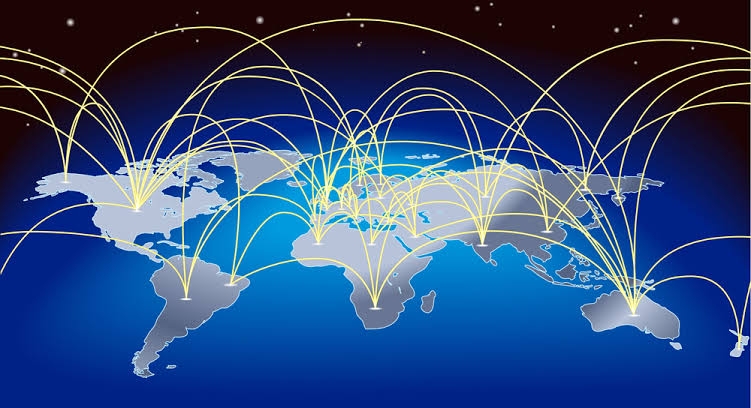
International trade is the exchange of goods and services between countries. It allows nations to buy products they cannot produce efficiently and sell products in which they have an advantage. From raw materials and agricultural products to automobiles, technology, financial services, and digital products, international trade connects economies around the world.
In today's global economy, few countries are completely self-sufficient. International trade provides businesses and consumers with access to foreign markets, resources, technologies, and products. It can contribute to economic growth, employment, innovation, and higher living standards. However, the benefits of trade depend on appropriate economic policies and the ability of workers and businesses to adapt to changing market conditions.
1. Economic Growth
One of the major benefits of international trade is that it can promote economic growth. When countries export goods and services, businesses receive revenue from foreign customers. Increased demand can encourage companies to expand production, invest in new facilities, and hire additional workers.
Exports can therefore become an important source of national income. Countries that successfully develop competitive export industries can increase their production and improve their overall economic performance.
International trade also allows countries to participate in global supply chains, where different stages of production take place in different countries. This can create additional opportunities for economic development.
2. Access to a Wider Variety of Goods and Services
International trade gives consumers access to products that may not be available domestically. Countries differ in climate, natural resources, technology, labor skills, and production capabilities. As a result, some products are easier or cheaper to produce in certain countries than others.
For example, countries with suitable climates can export particular agricultural products, while countries with advanced manufacturing industries may export machinery or electronics.
Imports allow consumers to enjoy a wider variety of products and services. This greater choice can improve consumer satisfaction and make it easier for people to find products that match their needs and preferences.
3. Lower Prices
Trade can help reduce prices by increasing competition and allowing countries to obtain products from efficient producers.
If a product can be produced more cheaply in another country, importing it may be less expensive than producing it domestically. Consumers can benefit from these lower costs, while businesses can purchase imported raw materials, components, and equipment at competitive prices.
International competition can also encourage domestic companies to become more efficient. When businesses face competition from foreign producers, they may look for ways to reduce costs, improve productivity, and offer better value to customers.
4. Specialization and Comparative Advantage
A fundamental economic benefit of international trade is specialization. Countries can focus on producing goods and services for which they have a comparative advantage.
Comparative advantage means that a country can produce a particular product at a lower opportunity cost than another country. By specializing and trading, countries can potentially produce and consume more than they could if each country tried to produce everything independently.
For example, one country may be relatively efficient at producing agricultural goods, while another may have a stronger advantage in producing machinery. Both countries can benefit by specializing in areas where they are relatively more efficient and then trading with each other.
5. Greater Market Opportunities for Businesses
International trade allows businesses to sell their products beyond their domestic markets. A company operating in a small country may have a limited number of potential customers at home. Exporting can give that company access to millions of additional consumers.
A larger market can allow businesses to increase sales and production. It can also help companies spread fixed costs over a greater number of products, potentially improving efficiency.
For small and medium-sized businesses in particular, access to international markets can provide opportunities for expansion that may not exist within their domestic economy.
6. Increased Employment Opportunities
International trade can create jobs in industries that produce goods and services for export. Export-oriented companies may need additional workers as foreign demand increases.
Trade also creates employment indirectly. Companies involved in transportation, logistics, warehousing, banking, insurance, marketing, and other supporting activities may benefit from increased international commerce.
At the same time, trade can cause job losses in industries that cannot compete successfully with foreign producers. Therefore, the overall employment effect depends on the structure of an economy and how workers move between industries. Education, training, and labor-market policies can help workers adapt to these changes.
7. Encourages Innovation and Technology Transfer
International trade can promote innovation by exposing businesses to new technologies, production methods, and ideas from other countries.
Companies that compete in international markets often have strong incentives to improve their products and production processes. Foreign competition can encourage firms to invest in research and development and adopt more efficient technologies.
Trade can also facilitate technology transfer. Businesses may obtain advanced machinery, software, equipment, and technical knowledge from foreign suppliers. Developing countries can particularly benefit when international trade helps them gain access to technologies that would otherwise be difficult or expensive to acquire.
8. Improves Productivity
International trade can increase productivity by encouraging specialization, competition, and access to better resources.
Businesses that participate in global markets may have access to specialized equipment, high-quality materials, and advanced technologies. They can also learn from international competitors and adopt more efficient business practices.
Higher productivity means that businesses can produce more output using the same amount of resources. Over time, increased productivity can contribute to higher wages, business investment, and economic growth.
9. Attracts Foreign Investment
International trade can encourage foreign direct investment (FDI). Companies may establish factories, offices, distribution centers, or other operations in countries that provide access to international markets.
Foreign investment can bring capital, technology, management expertise, and employment opportunities to the receiving country. It can also help domestic businesses become connected to international supply chains.
For developing economies, foreign investment combined with international trade can support industrial development and contribute to long-term economic growth.
10. Strengthens International Relationships
Trade does more than connect economies; it can also strengthen relationships between countries. When nations become economically connected, they have greater incentives to maintain stable and cooperative relationships.
Trade agreements can encourage countries to work together on common economic rules, transportation systems, customs procedures, and investment policies.
Although trade cannot eliminate political disagreements, economic cooperation can create stronger connections between countries and encourage peaceful international relations.
11. Provides Access to Essential Resources
Some countries lack sufficient supplies of certain natural resources, food products, energy sources, or industrial materials. International trade allows them to obtain these resources from other countries.
For example, a country with limited domestic energy resources may import fuel. A country with limited agricultural land may import food. Manufacturers may import minerals, metals, chemicals, or components needed for production.
Access to international markets can therefore help countries meet domestic needs and maintain economic activity.
12. Raises Living Standards
The combined effects of international trade can contribute to higher living standards. Consumers may benefit from lower prices and greater product variety, while workers may gain employment opportunities in expanding industries.
Economic growth, higher productivity, technological progress, and increased investment can also raise incomes over time.
Trade is not the only factor that determines living standards, but it can be an important contributor when supported by effective economic institutions and policies.
Challenges and Limitations of International Trade
Although international trade offers many benefits, it also creates challenges. Some domestic industries may struggle to compete with foreign producers, leading to business closures or job losses. Workers may need to change occupations or acquire new skills.
Countries can also become vulnerable to international disruptions. Problems such as wars, natural disasters, transportation interruptions, financial crises, or changes in trade policy can affect global supply chains.
In addition, excessive dependence on particular export products or foreign markets can create economic risks. Governments therefore need policies that encourage the benefits of trade while helping businesses and workers manage its potential costs.
Conclusion
International trade plays an important role in the modern global economy. Its major benefits include economic growth, lower prices, greater consumer choice, specialization, larger markets for businesses, employment opportunities, technological progress, increased productivity, foreign investment, and improved access to resources.
By allowing countries to specialize according to their comparative advantages and exchange goods and services, trade can make resources more productive and expand economic opportunities. While international trade can create adjustment challenges for certain industries and workers, appropriate policies can help distribute its benefits more broadly.
Overall, international trade is an important mechanism through which countries can cooperate, expand their economies, access new markets and technologies, and improve the availability and affordability of goods and services for their populations.
- Arts
- Business
- Computers
- Oyunlar
- Health
- Home
- Kids and Teens
- Money
- News
- Personal Development
- Recreation
- Regional
- Reference
- Science
- Shopping
- Society
- Sports
- Бизнес
- Деньги
- Дом
- Досуг
- Здоровье
- Игры
- Искусство
- Источники информации
- Компьютеры
- Личное развитие
- Наука
- Новости и СМИ
- Общество
- Покупки
- Спорт
- Страны и регионы
- World

 English
 Russian
 French
 Spanish
 Portuguese
 Deutsch
 Dutch
Dutch
 Italiano
 Arabic
 Romaian
 Portuguese (Brazil)
 Greek
Greek