
Why do countries trade with each other?
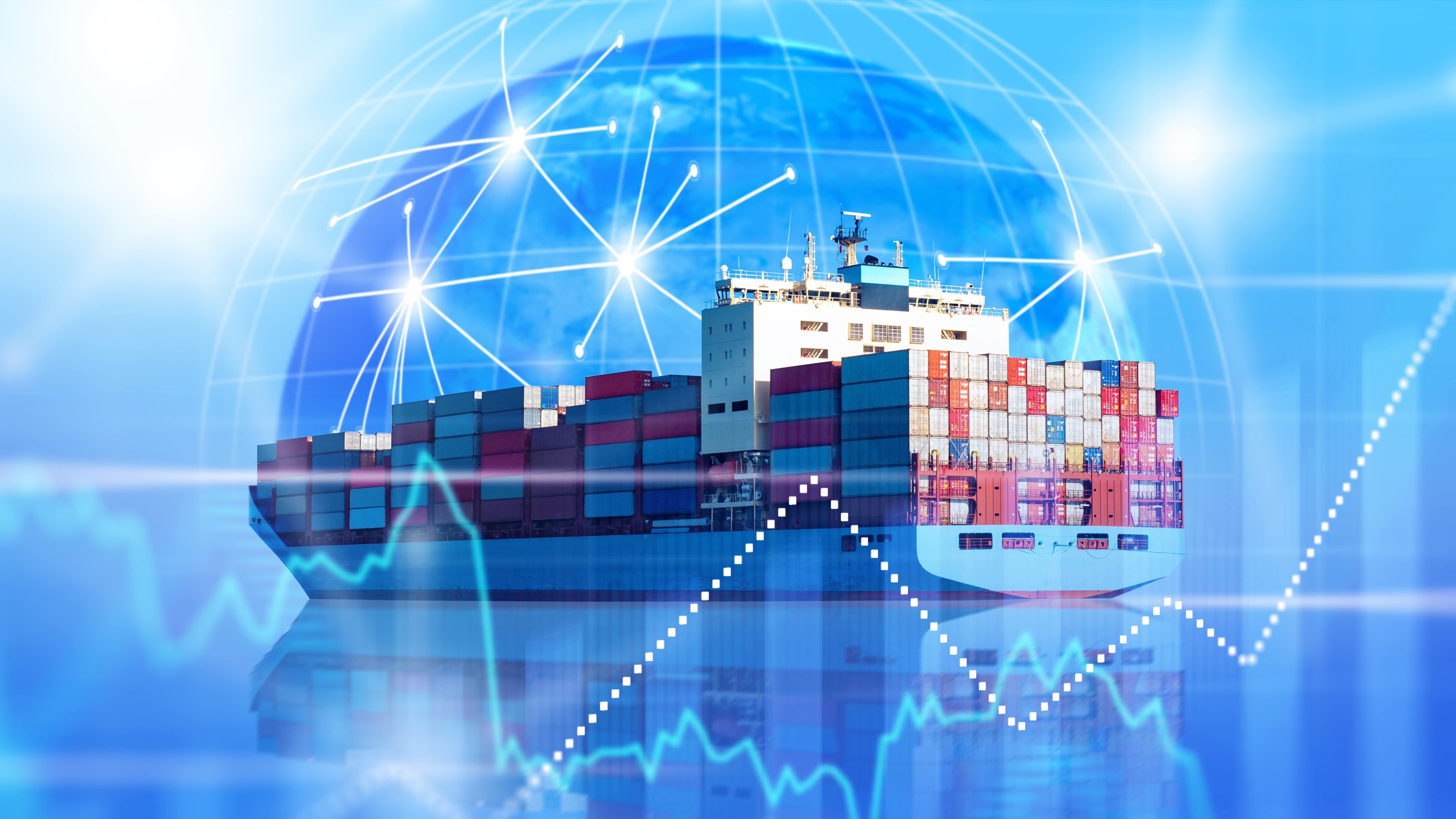
Why Do Countries Trade With Each Other?
International trade is one of the most important features of the modern global economy. Countries regularly buy and sell goods and services across their borders, creating economic relationships that connect businesses, consumers, and governments around the world. From oil and machinery to food, clothing, software, and financial services, international trade allows countries to access products and resources that may be unavailable or more expensive to produce domestically.
But why do countries trade with each other? The main reason is that countries differ in their resources, technology, labor, climate, skills, and production costs. Trade allows them to specialize in activities where they have an advantage and obtain other products through exchange. As a result, international trade can increase efficiency, expand consumer choice, support economic growth, and improve living standards.
Differences in Resources
One major reason countries trade is that natural resources are not distributed equally around the world. Some countries have abundant oil and natural gas, while others have large deposits of minerals, fertile agricultural land, forests, or fresh water.
For example, countries with significant petroleum reserves can export oil to countries that do not produce enough oil to meet their domestic needs. Similarly, countries with favorable agricultural conditions may export crops such as coffee, wheat, bananas, or rice.
Trade allows countries to obtain resources that are scarce or unavailable within their own borders. Without international trade, countries would have to rely almost entirely on their domestic resources, which could limit production and consumption.
Comparative Advantage
Another important explanation for international trade is comparative advantage. This means that a country can benefit by specializing in goods and services that it can produce at a relatively lower opportunity cost than other countries.
A country does not necessarily need to be the most efficient producer of a product in absolute terms. It can still benefit from specializing in activities where it has a comparative advantage and trading for other products.
For example, one country may be particularly efficient at producing agricultural goods, while another may be better at producing electronics. If each country specializes and then trades, both can potentially obtain more goods than if they attempted to produce everything themselves.
Comparative advantage is therefore a fundamental reason why international specialization and trade can increase overall economic efficiency.
Differences in Production Costs
Countries often have different costs of producing goods and services. These differences can result from variations in wages, energy prices, land costs, technology, taxes, infrastructure, and access to raw materials.
For instance, a country with relatively low labor costs may specialize in labor-intensive manufacturing, while a country with advanced technology and highly skilled workers may focus on sophisticated machinery, pharmaceuticals, or high-tech services.
Businesses can use international trade to locate production where it is most efficient. Consumers can then purchase products at prices that may be lower than those available from domestic producers alone.
Access to Larger Markets
International trade allows businesses to sell their products to customers beyond their domestic markets. A company that operates only in a small country may face a limited number of potential customers. By exporting, it can reach millions of consumers in other countries.
Larger markets can allow businesses to increase production and benefit from economies of scale. When production increases, the average cost of producing each unit may fall because fixed costs can be spread across more products.
International markets are particularly important for industries such as automobiles, electronics, aircraft, software, and pharmaceuticals, where production costs can be high and large markets can help companies operate more efficiently.
Greater Variety for Consumers
Trade gives consumers access to a much wider range of products and services. Many products available in modern stores would not exist, or would be much more expensive, without international trade.
Consumers may purchase fruits grown in different climates, electronics manufactured using components from several countries, clothing produced abroad, and services delivered internationally.
Competition from foreign producers can also encourage domestic companies to improve product quality, reduce costs, and introduce new products. Therefore, trade can benefit consumers not only by increasing variety but also by encouraging competition.
Economic Growth and Development
International trade can contribute to economic growth by increasing production, investment, employment, and access to foreign markets.
Exporting companies can earn foreign currency and expand their operations. Increased production can create employment opportunities and generate income for workers. Governments can also receive tax revenues from expanding businesses and economic activity.
For developing countries, international trade can provide opportunities to participate in global production networks. A country may begin by exporting agricultural products or basic manufactured goods and gradually develop more advanced industries.
Trade can also provide access to imported machinery, technology, and capital goods that help domestic businesses become more productive.
Access to Technology and Knowledge
Countries trade not only physical products but also services, technology, expertise, and intellectual property. International economic relationships can help spread new technologies and production methods across borders.
For example, businesses can import advanced machinery from technologically developed countries. Workers and companies can learn from international partners, foreign investment, and participation in global supply chains.
The exchange of knowledge can improve productivity and encourage innovation. Over time, technological improvements can contribute to higher incomes and better living standards.
Meeting Domestic Demand
Sometimes countries simply cannot produce enough of a particular good to satisfy domestic demand. International trade allows them to fill these shortages through imports.
This is especially important for products affected by climate, geography, or limited natural resources. A country with a cold climate, for example, may need to import certain tropical fruits. A country with limited oil reserves may import petroleum to meet its energy needs.
Imports can therefore help stabilize the availability of essential products and reduce the risk of domestic shortages.
Seasonal and Climatic Differences
Different countries experience different climates and growing seasons. These differences create opportunities for international trade.
Agricultural products may be harvested at different times in different parts of the world. When one country's growing season ends, it can import products from another country where the harvest is beginning.
Climate also determines which crops can be produced efficiently. Countries with suitable conditions for particular crops can specialize in them and export them to countries where those crops are difficult or expensive to grow.
Competition and Efficiency
International trade increases competition by allowing foreign businesses to enter domestic markets. Competition can encourage companies to become more efficient and innovative.
If domestic producers face competition from foreign companies, they may have stronger incentives to improve quality, adopt new technologies, reduce waste, and control costs.
This process can increase productivity and benefit consumers. However, increased competition can also create challenges for industries that are unable to compete with foreign producers.
Political and International Relationships
Trade can also strengthen relationships between countries. Countries that trade extensively with each other often develop stronger economic connections and incentives to maintain stable relationships.
Trade agreements can encourage cooperation by reducing tariffs, simplifying customs procedures, and establishing common rules. Organizations such as the World Trade Organization also provide frameworks for international trade relations.
Although trade does not eliminate political disagreements, economic interdependence can encourage countries to cooperate on shared interests.
Access to Essential Goods
International trade can become especially important when countries face emergencies or shortages. Imports can provide access to food, medicine, energy, machinery, and other essential goods that domestic industries cannot supply in sufficient quantities.
Global supply chains can therefore increase access to important products, although heavy dependence on foreign suppliers can also create risks when wars, natural disasters, pandemics, or trade restrictions disrupt international transportation.
Conclusion
Countries trade with each other because no country can produce everything its population and businesses need as efficiently as possible. Differences in natural resources, technology, labor, climate, skills, and production costs create opportunities for specialization and exchange.
International trade allows countries to use their resources more efficiently, access larger markets, obtain scarce products, enjoy greater consumer choice, acquire technology, and support economic growth. The principle of comparative advantage shows that countries can benefit from specialization even when one country is more productive in many industries.
At the same time, international trade can create challenges, including job losses in some industries, dependence on foreign suppliers, trade disputes, and unequal distribution of benefits. Effective economic policies are therefore important for ensuring that the gains from trade are broadly shared.
Overall, countries trade because international exchange can make it possible for nations to produce, consume, and achieve more than they could by relying entirely on domestic production. In an increasingly interconnected world, international trade remains a central part of economic activity and international cooperation.
- Arts
- Business
- Computers
- Games
- Health
- Home
- Kids and Teens
- Money
- News
- Personal Development
- Recreation
- Regional
- Reference
- Science
- Shopping
- Society
- Sports
- Бизнес
- Деньги
- Дом
- Досуг
- Здоровье
- Игры
- Искусство
- Источники информации
- Компьютеры
- Личное развитие
- Наука
- Новости и СМИ
- Общество
- Покупки
- Спорт
- Страны и регионы
- World

 Russian
 French
 Spanish
 Portuguese
 Deutsch
 Turkish
 Dutch
Dutch
 Italiano
 Arabic
 Romaian
 Portuguese (Brazil)
 Greek
Greek