
What is currency appreciation?
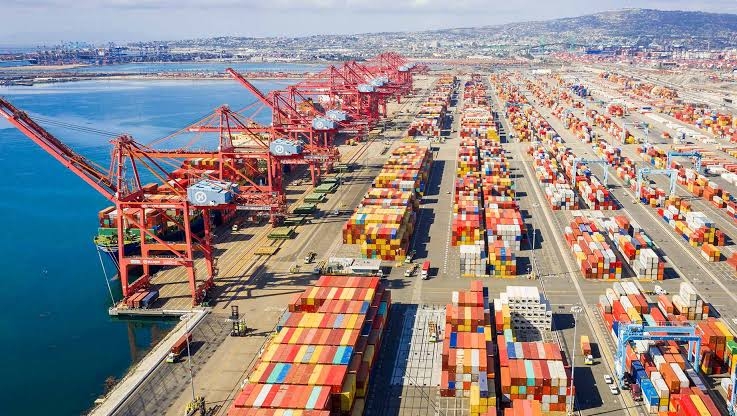
What Is Currency Appreciation?
Currency appreciation refers to an increase in the value of one currency relative to another currency. When a currency appreciates, it becomes more valuable in the foreign exchange market, meaning that it can buy more units of another currency than it could previously. Currency appreciation is an important concept in international economics because it affects trade, inflation, investment, tourism, and the overall competitiveness of an economy.
For example, suppose the exchange rate is 1 U.S. dollar = 400 units of a country's currency. If the local currency appreciates and the exchange rate changes to 1 U.S. dollar = 350 units, the local currency has become stronger. Fewer units of the local currency are now needed to purchase one dollar.
How Does Currency Appreciation Occur?
Currency appreciation generally occurs when demand for a currency increases relative to its supply. In countries with floating exchange rates, the value of a currency is largely determined by conditions in the foreign exchange market.
Several factors can increase demand for a currency. Foreign investors may want to purchase the country's assets, such as stocks, bonds, businesses, or real estate. Exporters may receive strong demand for their products, causing foreign buyers to purchase the country's currency to pay for those goods. Higher interest rates can also attract international investors seeking better returns.
Economic confidence is another important factor. If investors believe a country's economy is stable and likely to grow, they may be more willing to hold its currency. Political stability, strong institutions, rising productivity, and healthy public finances can all contribute to greater confidence.
Causes of Currency Appreciation
Higher Interest Rates
Interest rates can have a significant effect on exchange rates. When a country's central bank raises interest rates, financial assets denominated in that currency may become more attractive to international investors. Increased demand for the currency can contribute to appreciation.
However, interest rates are only one factor. Investors also consider inflation, economic growth, political risks, and expectations about future interest-rate changes.
Strong Economic Growth
A growing economy can attract foreign investment. Businesses may invest in factories, technology, or other assets, while investors may purchase domestic financial assets. These activities can increase demand for the country's currency.
Strong economic growth can therefore contribute to currency appreciation, particularly when investors expect the growth to continue.
Increased Exports
When a country exports more goods and services, foreign customers may need to obtain the exporting country's currency to make payments. Higher export demand can increase demand for that currency.
For instance, if international demand for a country's manufactured products increases significantly, foreign businesses may exchange their currencies for the producer's currency. This additional demand can place upward pressure on its exchange rate.
Capital Inflows
Foreign capital entering an economy can support currency appreciation. Capital inflows occur when international investors purchase domestic assets or establish businesses in the country.
Large capital inflows increase demand for the domestic currency because foreign investors generally need the local currency to complete their investments.
Lower Inflation
A country with relatively low and stable inflation may become more attractive to investors and trading partners. If its goods and services remain relatively competitive while purchasing power is preserved, demand for its currency may strengthen.
Lower inflation does not automatically cause appreciation, but differences in inflation rates between countries can influence long-term exchange-rate movements.
Effects of Currency Appreciation
Currency appreciation can produce both benefits and disadvantages. Its effects depend on the country's economic structure and the reasons behind the appreciation.
Cheaper Imports
One of the most immediate effects of an appreciating currency is that imported goods become less expensive, assuming other factors remain unchanged. A stronger currency allows consumers and businesses to purchase more foreign currency with the same amount of domestic currency.
Imported products such as fuel, machinery, electronics, food, and raw materials may therefore become cheaper. Businesses that rely on imported inputs can experience lower costs.
Lower Inflationary Pressure
Cheaper imports can also help reduce inflation. When imported consumer goods and production inputs become less expensive, businesses may face less pressure to raise prices.
This can be particularly important for countries that depend heavily on imported energy, food, or industrial materials.
Reduced Export Competitiveness
Currency appreciation can make a country's exports more expensive for foreign buyers. Suppose a company sells a product for 10,000 units of its domestic currency. If the currency appreciates, foreign customers may have to pay more in their own currency for the same product.
As a result, exporters may become less competitive compared with businesses in countries whose currencies have not appreciated.
This can reduce export sales, particularly when buyers have cheaper alternatives.
More Affordable Foreign Travel
An appreciating currency can benefit residents who travel abroad. Their domestic currency can purchase more foreign currency, making hotels, transportation, meals, and other expenses in foreign countries relatively cheaper.
The opposite may occur for foreign tourists visiting the appreciating country because their currencies buy fewer units of the local currency.
Impact on Foreign Debt
Currency appreciation can make foreign-currency debt easier to repay for domestic borrowers whose income is primarily in the appreciating currency. The stronger domestic currency allows borrowers to obtain more foreign currency for each unit of domestic currency.
However, the effect depends on the currency in which the debt and income are denominated.
Currency Appreciation and Imports and Exports
Currency appreciation has an important relationship with international trade. A stronger domestic currency generally encourages imports because foreign products become relatively cheaper. At the same time, it can discourage exports because domestic products become relatively more expensive for foreign customers.
For example, imagine that a country's currency appreciates by 10 percent. Imported machinery priced in a foreign currency may become cheaper for domestic companies. However, products manufactured domestically may become more expensive for overseas buyers.
This does not mean exports will necessarily decline. Businesses may respond by reducing prices, improving productivity, increasing quality, or targeting new markets. Exchange rates are only one factor determining international trade.
Appreciation vs. Depreciation
Currency appreciation is the opposite of currency depreciation.
Appreciation means that a currency increases in value relative to another currency. Depreciation means that its value decreases.
Consider an exchange rate of 1 dollar = 500 units of a domestic currency. If the exchange rate changes to 1 dollar = 450 units, the domestic currency has appreciated because fewer domestic currency units are needed to buy one dollar.
If the exchange rate instead changes to 1 dollar = 550 units, the domestic currency has depreciated because more domestic currency is required to purchase one dollar.
Appreciation vs. Revaluation
Currency appreciation should also be distinguished from revaluation. Appreciation usually refers to a currency becoming stronger under a floating exchange-rate system as a result of market forces.
Revaluation, by contrast, generally refers to an official increase in the value of a currency under a fixed or managed exchange-rate system. In such a system, the government or central bank may deliberately adjust the official exchange rate.
Therefore, the terms describe similar movements in currency value but can occur under different exchange-rate arrangements.
Is Currency Appreciation Always Good?
Currency appreciation is neither automatically good nor bad. Its effects depend on the economy's circumstances.
Consumers and businesses that purchase imports can benefit from lower prices. Travelers may also benefit, while inflationary pressure can decrease. However, exporters may face greater competition from foreign producers, potentially reducing export revenues and affecting employment in export-oriented industries.
A strong currency can also affect economic growth. If appreciation significantly reduces exports while increasing imports, net exports may fall and economic growth could weaken. On the other hand, cheaper imported machinery and technology can help businesses invest and improve productivity.
Conclusion
Currency appreciation occurs when a currency increases in value relative to another currency. It is commonly driven by factors such as higher interest rates, strong economic growth, increased exports, capital inflows, investor confidence, and relatively low inflation.
An appreciating currency can make imports and foreign travel cheaper and may reduce inflationary pressure. At the same time, it can make exports more expensive for international buyers and create challenges for industries that compete in global markets.
Ultimately, currency appreciation is an important part of the foreign exchange system. Its economic consequences depend not only on the size and speed of the appreciation but also on why it occurred and how consumers, businesses, investors, and policymakers respond.
- Arts
- Business
- Computers
- الألعاب
- Health
- الرئيسية
- Kids and Teens
- مال
- News
- Personal Development
- Recreation
- Regional
- Reference
- Science
- Shopping
- Society
- Sports
- Бизнес
- Деньги
- Дом
- Досуг
- Здоровье
- Игры
- Искусство
- Источники информации
- Компьютеры
- Личное развитие
- Наука
- Новости и СМИ
- Общество
- Покупки
- Спорт
- Страны и регионы
- World

 English
 Russian
 French
 Spanish
 Portuguese
 Deutsch
 Turkish
 Dutch
Dutch
 Italiano
 Romaian
 Portuguese (Brazil)
 Greek
Greek