
What is economic globalization?
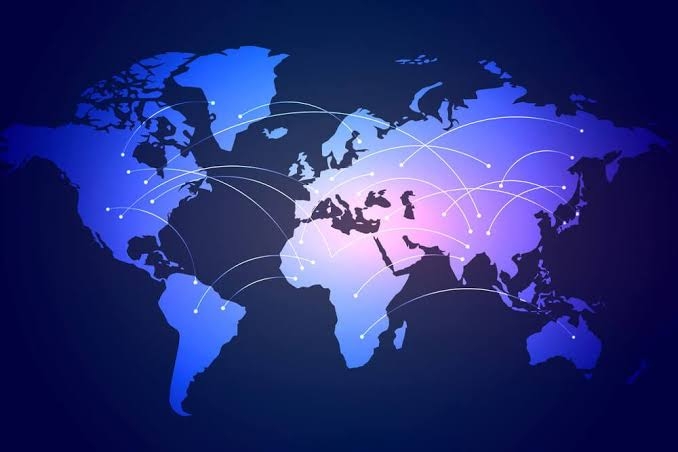
What Is Economic Globalization?
Economic globalization is the process through which countries, businesses, and individuals become increasingly connected through international trade, investment, finance, technology, and the movement of goods and services. It has made national economies more interdependent, allowing products, capital, ideas, and technologies to cross borders more easily than ever before.
Although international economic connections have existed for centuries, globalization accelerated significantly during the late twentieth and early twenty-first centuries. Advances in transportation, communication, digital technology, and international trade agreements have made it possible for businesses to operate across multiple countries and for consumers to purchase products from almost anywhere in the world.
Main Features of Economic Globalization
One of the most important features of economic globalization is the growth of international trade. Countries increasingly buy and sell goods and services from one another. For example, a smartphone may be designed in one country, use components manufactured in several others, be assembled somewhere else, and then be sold worldwide. This demonstrates how production has become international rather than being limited to a single country.
Another important feature is foreign investment. Companies often invest in businesses, factories, infrastructure, and other assets in foreign countries. A company may establish a manufacturing plant abroad to reduce production costs, gain access to new markets, or obtain resources that are not readily available at home.
Global financial markets are also an important part of economic globalization. Money can move rapidly across borders through banks, investment funds, stock markets, and other financial institutions. Investors can purchase foreign assets, while companies can obtain financing from international sources.
Technology and communication have greatly strengthened globalization. The internet, smartphones, cloud computing, and digital payment systems allow businesses and individuals to communicate and conduct transactions internationally almost instantly. A small company can now sell products to customers in other countries through an online platform without establishing physical stores abroad.
Causes of Economic Globalization
Several factors have contributed to the growth of economic globalization.
First, improvements in transportation have reduced the cost and time required to move goods around the world. Modern shipping, aviation, railways, and logistics systems allow companies to organize international supply chains efficiently.
Second, technological development has made international communication faster and cheaper. Businesses can coordinate factories, suppliers, employees, and customers across different countries using digital technologies.
Third, many countries have adopted trade liberalization policies. Governments have reduced tariffs, quotas, and other barriers to international trade through agreements and international institutions. These policies have encouraged countries to specialize in producing goods and services in which they have a comparative advantage.
Finally, the growth of multinational corporations has played a major role. Large companies increasingly operate in many countries, establishing production facilities, offices, distribution networks, and research centers around the world.
Advantages of Economic Globalization
Economic globalization can provide significant benefits.
One major advantage is greater economic growth. International trade allows countries to access larger markets for their products. Businesses that can sell internationally have opportunities to expand production, increase revenue, and create jobs.
Globalization can also provide consumers with greater choice and lower prices. When companies compete internationally, consumers can purchase products from different countries. Competition may encourage businesses to improve quality and reduce costs.
Another benefit is access to technology and knowledge. Developing countries can obtain advanced technologies, management practices, and technical expertise through foreign investment and international cooperation. This can increase productivity and support economic development.
Globalization can also encourage specialization. Countries can focus resources on industries where they are relatively efficient and trade for products that other countries produce more efficiently. In theory, this can increase overall economic efficiency and raise living standards.
Furthermore, globalization can create employment opportunities. Foreign companies may establish factories, offices, and service centers in countries where they invest. International trade can also create jobs in industries that produce goods and services for export.
Disadvantages of Economic Globalization
Despite its benefits, economic globalization also creates challenges.
One concern is job displacement. Companies may move production to countries where labor or other production costs are lower. Workers in industries exposed to international competition may lose their jobs or face pressure on wages.
Globalization can also contribute to economic inequality. The benefits of international trade and investment are not always distributed equally. Highly skilled workers, large corporations, and people who own capital may benefit more than workers in industries facing international competition.
Another problem is dependence on global supply chains. When countries rely heavily on foreign suppliers, disruptions such as wars, natural disasters, pandemics, or transportation problems can affect the availability of important products.
There are also environmental concerns. Increased international production and transportation can contribute to pollution, resource consumption, and greenhouse gas emissions. Companies may sometimes move production to countries with weaker environmental regulations.
Globalization can additionally create pressure on local businesses and cultures. Small businesses may struggle to compete with large international corporations that have greater financial resources and established global networks.
Economic Globalization and Developing Countries
Economic globalization can be particularly important for developing countries. Access to international markets and foreign investment can help these countries increase exports, attract capital, create employment, and develop infrastructure.
For example, a developing country may attract foreign companies to establish manufacturing facilities. These investments can create jobs and introduce new technologies and skills. If supported by effective education, infrastructure, and economic policies, such investment can contribute to long-term development.
However, globalization does not automatically guarantee economic success. Countries that depend heavily on a small number of exports can be vulnerable to changes in global prices and demand. Governments therefore need policies that encourage economic diversification, education, infrastructure development, and innovation.
The Role of Governments
Governments play an important role in managing the effects of economic globalization. Completely rejecting international economic integration may prevent countries from benefiting from trade and investment, while completely ignoring its negative effects can increase inequality and economic insecurity.
Governments can support workers through education and retraining programs, strengthen social safety nets, enforce labor standards, and encourage businesses to invest in productive industries. They can also establish environmental regulations to reduce the negative ecological effects of economic activity.
International cooperation is equally important. Countries need rules governing trade, investment, taxation, labor standards, and environmental protection. Effective international institutions and agreements can help make globalization more predictable and beneficial.
Conclusion
Economic globalization is the growing integration and interdependence of national economies through trade, investment, finance, technology, and international production. It has transformed the way businesses operate and has given consumers access to products, services, and technologies from around the world.
Globalization can promote economic growth, increase consumer choice, encourage technological development, create employment, and improve international cooperation. At the same time, it can contribute to job displacement, inequality, environmental problems, and vulnerability to global economic disruptions.
The central challenge is therefore not simply whether globalization should exist, but how its benefits and costs should be managed. With appropriate economic policies, investment in education and infrastructure, strong social protections, and international cooperation, countries can take advantage of globalization while reducing its negative consequences. Ultimately, economic globalization is neither entirely beneficial nor entirely harmful; its impact depends largely on how governments, businesses, and societies respond to it.
- Arts
- Business
- Computers
- Jogos
- Health
- Início
- Kids and Teens
- Money
- News
- Personal Development
- Recreation
- Regional
- Reference
- Science
- Shopping
- Society
- Sports
- Бизнес
- Деньги
- Дом
- Досуг
- Здоровье
- Игры
- Искусство
- Источники информации
- Компьютеры
- Личное развитие
- Наука
- Новости и СМИ
- Общество
- Покупки
- Спорт
- Страны и регионы
- World

 English
 Russian
 French
 Spanish
 Deutsch
 Turkish
 Dutch
Dutch
 Italiano
 Arabic
 Romaian
 Portuguese (Brazil)
 Greek
Greek