
What is protectionism?
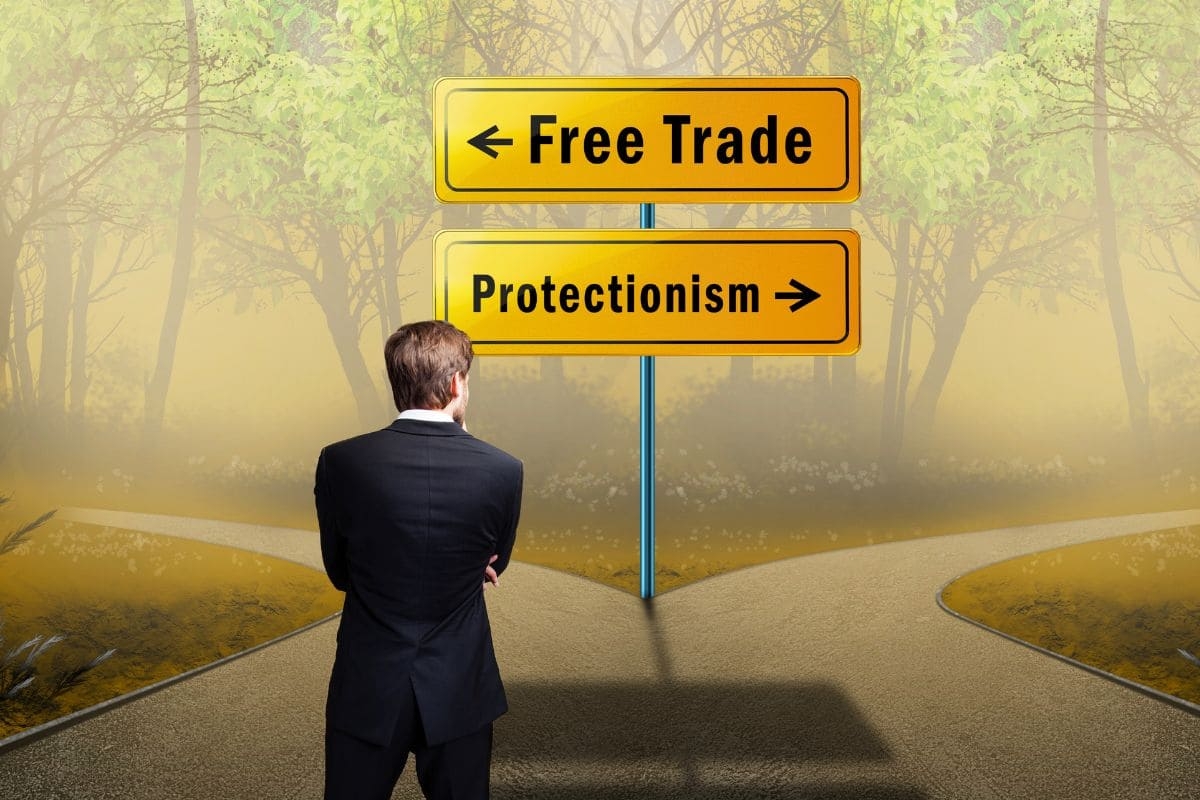
What Is Protectionism?
Protectionism is an economic policy in which a government takes measures to protect domestic industries and businesses from foreign competition. Instead of allowing goods and services to move freely across borders, a protectionist government may impose tariffs, quotas, subsidies, regulations, or other restrictions on imports. The main goal is usually to support domestic producers, protect jobs, and strengthen certain industries within the country.
Protectionism is the opposite of free trade, which encourages countries to reduce barriers to international trade and allows businesses to compete more freely across borders.
How Does Protectionism Work?
Protectionist policies make imported goods more expensive, less available, or more difficult to sell in the domestic market. This can give local businesses an advantage over foreign competitors.
For example, suppose a country imports inexpensive steel from another country. Domestic steel producers may struggle to compete because imported steel costs less. The government could introduce a tariff on imported steel. The tariff raises the price of foreign steel, making domestically produced steel relatively more competitive.
Governments can use several different tools to achieve protectionist goals.
1. Tariffs
A tariff is a tax placed on imported goods. When an imported product becomes more expensive because of a tariff, consumers and businesses may be more likely to purchase a domestically produced alternative.
For example, if a government places a 20% tariff on imported cars, foreign vehicles may become more expensive. Domestic car manufacturers could therefore gain a competitive advantage.
2. Import Quotas
An import quota limits the amount of a particular product that can be imported during a specific period.
For instance, a government might allow only 100,000 tons of imported sugar per year. Limiting foreign supply can help domestic sugar producers sell more of their products.
3. Subsidies
Governments may provide subsidies or financial assistance to domestic businesses. Subsidies can reduce production costs and help local companies compete with foreign producers.
For example, a government might provide financial support to farmers, manufacturers, or renewable-energy companies to encourage domestic production.
4. Import Regulations
Governments can also use technical standards, licensing requirements, safety rules, and other regulations that affect foreign products. Some regulations may serve legitimate public purposes, such as protecting consumers or the environment. However, when regulations are designed primarily to disadvantage foreign competitors, they can function as protectionist measures.
Why Do Countries Use Protectionism?
There are several reasons governments may choose protectionist policies.
Protecting Domestic Jobs
One of the most common arguments for protectionism is that foreign competition can cause domestic companies to lose market share. If local factories close or reduce production, workers may lose their jobs.
Protectionist policies can make it easier for domestic companies to compete, potentially helping preserve employment in industries such as manufacturing, agriculture, and mining.
Supporting New Industries
Governments sometimes protect infant industries, which are newly developing industries that may not yet be strong enough to compete with established foreign companies.
For example, a developing country may temporarily protect its domestic technology or manufacturing sector while local businesses develop the skills, capital, and infrastructure needed to compete internationally.
Protecting National Security
Some industries are considered strategically important to national security. Governments may want domestic production of products such as food, energy, medicines, or defense-related equipment so that the country does not become overly dependent on foreign suppliers.
Reducing Dependence on Foreign Countries
Protectionism can also be used to encourage domestic production and reduce reliance on imports. This became particularly important in discussions about supply-chain disruptions, when countries experienced shortages of essential goods.
Addressing Unfair Trade Practices
A government may impose trade restrictions when it believes foreign companies or governments are engaging in unfair practices, such as dumping products at artificially low prices or providing large subsidies to exporters.
Advantages of Protectionism
Protectionism can provide several potential benefits.
First, it can protect domestic industries. Import restrictions can give local businesses more room to compete and grow.
Second, it can protect employment. If domestic companies increase production because foreign competition is reduced, demand for workers may increase or remain stable.
Third, it can encourage strategic industries. Governments can use protectionist policies to promote sectors considered important for long-term economic development or national security.
Fourth, protectionism can encourage domestic production. By making imports more expensive, governments can create incentives for businesses and consumers to purchase locally produced goods.
Finally, tariffs can generate government revenue. Although tariffs are primarily intended to influence trade, the government collects revenue when imported products are subject to these taxes.
Disadvantages of Protectionism
Despite its potential benefits, protectionism also has significant disadvantages.
Higher Prices
One of the biggest disadvantages is that consumers may have to pay more. If tariffs make imported products more expensive, domestic producers may also be able to raise their prices because they face less foreign competition.
Less Competition
Protection can reduce competitive pressure on domestic companies. Without strong competition, businesses may have less incentive to improve efficiency, reduce costs, or develop better products.
Trade Wars
Protectionist policies can lead to retaliation. If one country imposes tariffs on another country's products, the affected country may respond with tariffs of its own. This can develop into a trade war, reducing international trade and harming businesses in both countries.
Reduced Consumer Choice
Import restrictions can limit the variety of products available to consumers. When foreign goods are restricted, consumers may have fewer alternatives to choose from.
Inefficient Resource Allocation
Protectionism can keep inefficient businesses operating because they are shielded from international competition. In a free market, resources tend to move toward businesses and industries that are more productive or competitive.
Protectionism and Free Trade
The debate between protectionism and free trade has existed for centuries. Supporters of free trade argue that countries benefit when they specialize in producing goods and services in which they have a comparative advantage. International trade allows countries to exchange these products, potentially increasing overall economic efficiency and lowering prices.
Supporters of protectionism, however, argue that completely free trade can create problems for workers and industries that cannot compete with lower-cost foreign producers. They believe governments should sometimes intervene to protect important domestic sectors.
In reality, most countries use a combination of free-trade and protectionist policies. A country may support international trade in many industries while protecting certain sectors considered especially important.
Examples of Protectionism
Protectionist policies have been used throughout history. Governments have imposed tariffs on agricultural products, manufactured goods, steel, automobiles, and many other products.
A country may protect its agricultural sector because farmers are considered important to food security. Another country may protect its manufacturing industry because it wants to maintain industrial capabilities and employment.
Modern protectionism can also involve restrictions on foreign investment, government procurement preferences, export controls, and policies designed to encourage companies to manufacture products domestically.
Conclusion
Protectionism is an economic strategy designed to protect domestic industries from foreign competition. Governments can use tariffs, quotas, subsidies, regulations, and other measures to achieve this goal.
Protectionism can help preserve jobs, support developing industries, strengthen strategic sectors, and reduce dependence on foreign suppliers. However, it can also result in higher prices, reduced consumer choice, less competition, inefficient businesses, and international trade conflicts.
Ultimately, whether protectionism is beneficial depends on how it is designed and implemented. Temporary and targeted protection may help industries develop or address genuine strategic concerns, while excessive or permanent protection can reduce economic efficiency. For this reason, governments must carefully balance the interests of domestic producers, workers, consumers, and international trading partners.
- Arts
- Business
- Computers
- Jogos
- Health
- Início
- Kids and Teens
- Money
- News
- Personal Development
- Recreation
- Regional
- Reference
- Science
- Shopping
- Society
- Sports
- Бизнес
- Деньги
- Дом
- Досуг
- Здоровье
- Игры
- Искусство
- Источники информации
- Компьютеры
- Личное развитие
- Наука
- Новости и СМИ
- Общество
- Покупки
- Спорт
- Страны и регионы
- World

 English
 Russian
 French
 Spanish
 Portuguese
 Deutsch
 Turkish
 Dutch
Dutch
 Italiano
 Arabic
 Romaian
 Greek
Greek