
How is artificial intelligence changing global trade?
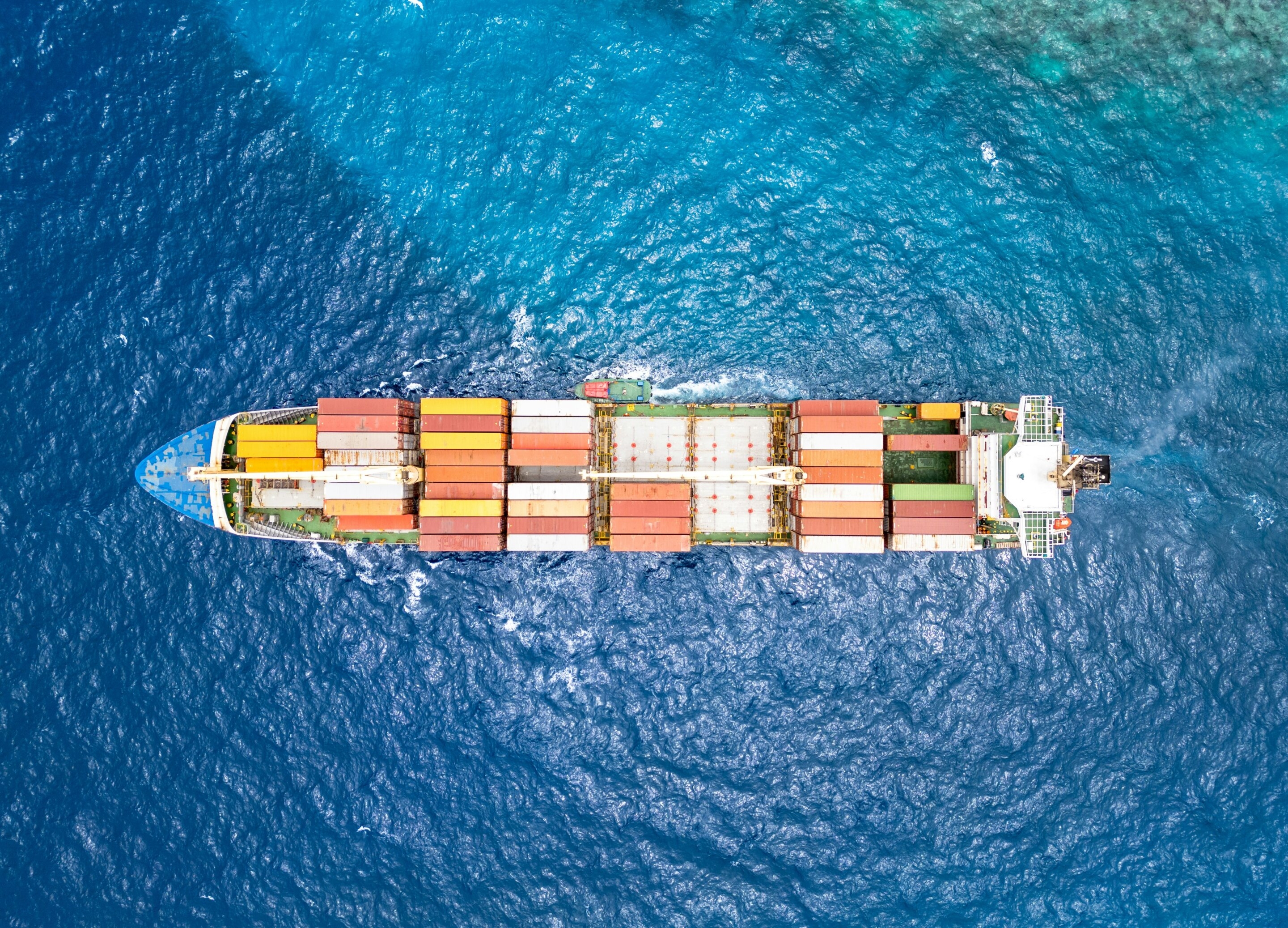
How Is Artificial Intelligence Changing Global Trade?
Artificial intelligence (AI) is rapidly transforming the global economy, and international trade is one of the areas experiencing some of the most significant changes. AI is no longer limited to research laboratories or technology companies. Businesses, governments, logistics providers, manufacturers, and financial institutions are increasingly using AI to predict demand, manage supply chains, translate languages, automate documentation, and identify new markets. As a result, AI is changing not only what countries trade but also how goods and services cross borders.
The World Trade Organization (WTO) describes AI as a general-purpose technology capable of reshaping production, consumption, and international commerce. Its 2025 World Trade Report estimates that, depending on how widely AI is adopted and how effectively countries catch up technologically, global trade could be 34–37% higher by 2040 than in scenarios without AI-driven advances.
Reducing the Cost of International Trade
One of AI's most important effects is its ability to reduce the costs and complexity associated with international trade. Exporting and importing goods traditionally require large amounts of paperwork, regulatory checks, communication, transportation planning, and risk assessment. AI can automate or improve many of these activities.
For example, AI systems can examine customs documents, classify products, identify potential compliance problems, and predict risks at borders. Businesses can also use AI to understand foreign regulations and prepare documentation more efficiently. These improvements can make international transactions faster and less expensive.
AI-powered translation is another important development. Language barriers have traditionally made it difficult for small businesses to enter foreign markets. AI translation tools can help companies communicate with customers, suppliers, and business partners in other languages, potentially making international markets more accessible to smaller firms. The WTO reports that AI is already being used to improve regulatory compliance, supply-chain visibility, customs processes, and trade-risk management.
Transforming Global Supply Chains
Global supply chains depend heavily on accurate information and efficient coordination. Companies must decide how much inventory to hold, where to source components, which transportation routes to use, and how to respond to unexpected disruptions.
AI can analyze enormous amounts of data to make these decisions more effectively. Machine-learning systems can forecast consumer demand, predict delays, monitor shipping conditions, and identify potential disruptions before they become serious problems. This allows companies to adjust production and transportation plans more quickly.
For example, if an AI system detects that a particular shipping route is likely to experience delays, a company can redirect cargo through another route. Similarly, manufacturers can use AI-based forecasts to adjust production when demand for a product is expected to increase or decline.
This could make global supply chains more flexible and resilient. Instead of simply responding to disruptions after they occur, companies can increasingly use predictive systems to anticipate problems.
Increasing Productivity and Changing Comparative Advantage
AI is also changing the productivity of businesses involved in international trade. Companies can use AI to automate repetitive tasks, improve decision-making, develop products more quickly, and analyze markets more efficiently.
Higher productivity can make firms more competitive internationally. A company that can produce goods at a lower cost or provide services more efficiently may be able to export more successfully.
This could also change the traditional concept of comparative advantage. In the past, countries often developed international advantages based on factors such as cheap labor, natural resources, capital, or specialized skills. AI adds another important factor: access to advanced technology and the ability to use it effectively.
Countries with strong digital infrastructure, skilled workers, access to computing power, and innovative businesses may gain an increasing advantage in international markets. At the same time, countries that successfully adopt AI could improve productivity even if they lack some traditional advantages.
WTO research suggests that AI could significantly increase both global GDP and trade because of productivity improvements and lower operational trade costs. One WTO working-paper simulation estimates that, in a favorable scenario, AI adoption could raise global GDP by 13.2% and global trade volumes by 35% over the following 15 years compared with a baseline without those AI gains.
Expanding Trade in Digital Services
AI is creating new products and services that can be traded internationally without physical transportation. These include AI software, cloud-based services, automated business solutions, data-related services, and other digitally delivered products.
This is particularly important because digital services can cross borders almost instantly. A software company in one country can provide services to customers thousands of kilometers away without building a physical distribution network in every market.
The WTO's 2025 projections indicate that digitally deliverable services could experience especially strong growth as AI develops. The report projects that trade in digitally deliverable services could increase by around 42% by 2040 in its scenarios.
This creates opportunities for countries that have relatively small domestic markets. Skilled professionals and technology companies can serve international customers from their home countries, allowing them to participate in global trade without relying entirely on traditional exports.
Creating New Trade in AI-Related Goods
AI itself is also generating demand for physical products. Artificial intelligence requires semiconductors, servers, data-center equipment, advanced computing systems, telecommunications infrastructure, and critical raw materials.
Consequently, AI is creating new international supply chains. The WTO reports that global trade in AI-enabling goods—including semiconductors, computing equipment, and certain raw materials—was worth approximately $2.3 trillion in 2023.
This means that the growth of AI can influence international trade even when the final product being traded is not an AI service. Countries producing semiconductors, specialized machinery, minerals, and computing equipment can benefit from increasing global demand.
At the same time, this creates strategic competition. Countries increasingly recognize that access to advanced chips and other AI technologies can have economic and geopolitical importance.
Opportunities for Developing Countries
AI could provide developing economies with new opportunities to participate in international trade. By reducing transaction costs and making information more accessible, AI can help smaller companies overcome some traditional barriers to exporting.
A small business can use AI to research foreign markets, translate product descriptions, communicate with overseas customers, analyze competitors, and navigate complicated regulations. These capabilities were previously expensive or required specialized employees.
However, these opportunities are not guaranteed. Countries need reliable internet infrastructure, electricity, digital skills, computing resources, and access to technology. Without them, AI could actually increase the gap between advanced and developing economies.
The WTO therefore identifies the "AI divide" as one of the central challenges for international trade. Unequal access to digital infrastructure, skills, hardware, and AI capabilities could cause the benefits of AI to be concentrated in a relatively small number of countries and companies.
Challenges for Workers and Businesses
Although AI can increase productivity, it can also disrupt employment. Some tasks currently performed by workers may increasingly be automated, particularly routine administrative, analytical, translation, and customer-service tasks.
This does not necessarily mean that AI will eliminate large numbers of jobs altogether. Historically, technological progress has often replaced some tasks while creating new occupations and industries. However, workers may need new skills to work effectively alongside AI.
The effects could also differ between countries. Economies that invest in education, retraining, and digital skills may be better positioned to benefit from AI, while workers and regions that cannot adapt could face greater economic pressure.
Small businesses face another challenge. Large multinational companies often have more money and technical expertise to invest in AI systems. If access to advanced AI becomes concentrated among large corporations, smaller firms could struggle to compete.
The Challenge of AI Regulation
AI is also creating new questions for international trade policy. Countries are developing different approaches to issues such as data protection, artificial intelligence safety, intellectual property, privacy, and algorithmic accountability.
Different regulations can create additional costs for businesses operating internationally. A company may have to modify its AI system to comply with different rules in different markets.
The WTO has warned that regulatory fragmentation could limit the benefits of AI-enabled trade, particularly for small and medium-sized businesses. International cooperation will therefore be important for developing compatible rules while allowing governments to address legitimate concerns about safety, privacy, security, and intellectual property.
The Future of Global Trade
Artificial intelligence is likely to become one of the most important technologies shaping international trade in the coming decades. It can reduce trade costs, improve supply-chain management, increase productivity, expand digital services, and make international markets more accessible.
The potential economic impact is substantial. WTO simulations suggest that global trade could be 34–37% higher by 2040 as a result of AI under different adoption scenarios, while global GDP could be 12–13% higher. These are projections rather than guarantees, and their realization will depend heavily on investment, technological adoption, skills, and government policy.
Ultimately, AI will not make global trade automatically more prosperous or more equal. Its effects will depend on how countries and businesses respond to the technology. Investment in digital infrastructure, education, international cooperation, and predictable trade rules will be essential.
AI therefore represents both an opportunity and a challenge for the global trading system. If its benefits are widely accessible, it could make international commerce faster, cheaper, and more inclusive. If access remains concentrated among a small group of countries and companies, it could deepen existing economic inequalities. The future of global trade will depend not simply on how powerful AI becomes, but on how effectively the world makes that power accessible to everyone.
- Arts
- Business
- Computers
- Spellen
- Health
- Home
- Kids and Teens
- Money
- News
- Personal Development
- Recreation
- Regional
- Reference
- Science
- Shopping
- Society
- Sports
- Бизнес
- Деньги
- Дом
- Досуг
- Здоровье
- Игры
- Искусство
- Источники информации
- Компьютеры
- Личное развитие
- Наука
- Новости и СМИ
- Общество
- Покупки
- Спорт
- Страны и регионы
- World

 English
 Russian
 French
 Spanish
 Portuguese
 Deutsch
 Turkish
 Italiano
 Arabic
 Romaian
 Portuguese (Brazil)
 Greek
Greek