
How Much Does Sponsorship Cost?
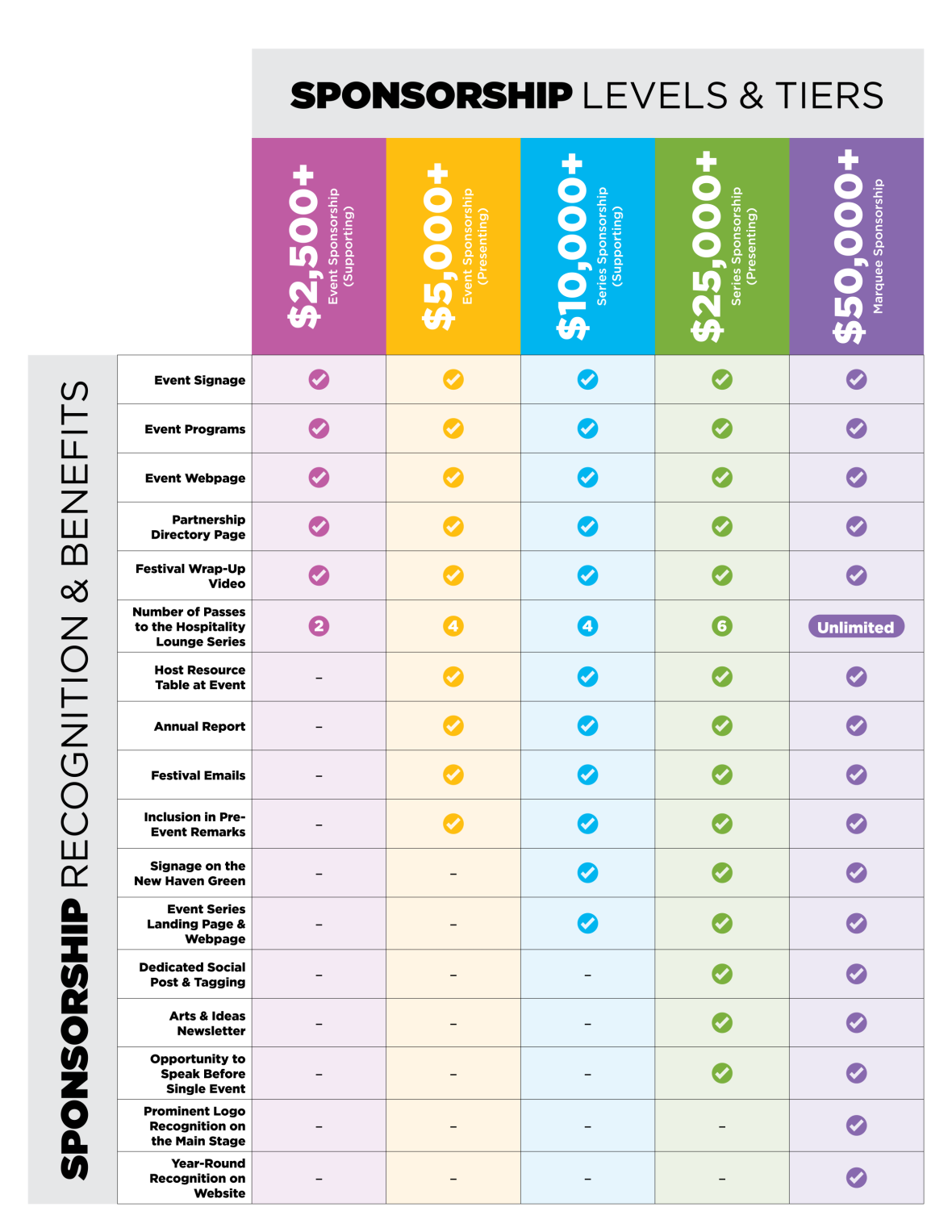
“How much does sponsorship cost?”
It sounds like a simple question.
It isn't.
A local business might sponsor an event for $500. A regional company might invest $10,000. A major corporation could spend $100,000 or considerably more on a strategic sponsorship.
And all three numbers can be perfectly reasonable.
Why?
Because sponsorship isn't a product with a fixed retail price.
There is no universal sponsorship price tag hanging on the wall.
The cost depends on what the sponsor receives, who the sponsor reaches, how valuable the audience is, how exclusive the opportunity is, and what the sponsor can do with the partnership.
That's the part many organizations get wrong.
They ask, “What should we charge?”
The better question is:
“What is this sponsorship opportunity worth to the right company?”
Once you understand that distinction, sponsorship pricing becomes much easier to approach.
The Typical Cost of Sponsorship
Let's start with some useful ranges.
For illustration, sponsorship investments might look something like this:
| Sponsorship Type | Illustrative Investment | Typical Sponsor |
|---|---|---|
| Community Sponsor | $500–$2,500 | Local small business |
| Bronze Sponsor | $2,500–$5,000 | Small or regional company |
| Silver Sponsor | $5,000–$15,000 | Established regional business |
| Gold Sponsor | $15,000–$30,000 | Major regional or national brand |
| Presenting Sponsor | $30,000–$100,000+ | Strategic corporate partner |
| Title Sponsor | $50,000–$250,000+ | Major brand or institution |
| Major Multi-Year Partnership | $100,000–$1 million+ | Large corporation or national brand |
These are illustrative ranges, not industry-wide rate cards.
A nonprofit community event could charge far less.
A national sports property, major conference, or highly sought-after media platform could charge dramatically more.
The number itself doesn't tell you whether the sponsorship is expensive.
The value exchange does.
Why Sponsorship Prices Vary So Much
Imagine two events.
Event A attracts 5,000 people.
Event B attracts 500.
At first glance, Event A looks more valuable.
But suppose Event A's audience is broad and difficult to monetize, while Event B attracts 500 senior executives who make purchasing decisions worth millions of dollars.
Suddenly, the smaller event may have the stronger sponsorship proposition.
This is why audience size should never be your only pricing metric.
Audience Quality Matters
Sponsors want the right people.
Not merely more people.
Consider:
- Job titles
- Purchasing authority
- Industry
- Income
- Geographic location
- Demographics
- Buying behavior
- Professional influence
- Customer relevance
A sponsor selling enterprise software may happily pay more to reach 300 qualified executives than 30,000 general consumers.
The audience is the asset.
The event is the vehicle.
What Does a Sponsor Actually Pay For?
Sponsors aren't really paying for a logo.
That's one of the biggest misconceptions in sponsorship sales.
The logo is simply one piece of the package.
Sponsors may be paying for:
Visibility
Their brand appears in front of the audience.
Association
Their company becomes connected with the event, cause, community, or experience.
Access
They gain opportunities to meet customers, prospects, executives, or influential participants.
Exclusivity
Competitors may be prevented from receiving equivalent rights.
Engagement
The sponsor can interact directly with attendees.
Thought leadership
The sponsor can demonstrate expertise through educational content or speaking opportunities.
Hospitality
The company can invite clients, prospects, employees, or partners.
Lead generation
The sponsorship can support measurable business-development activity.
Content
The sponsor may receive opportunities to create or participate in valuable media.
That's why comparing sponsorship to traditional advertising can be misleading.
A sponsorship can contain advertising.
But it can also contain relationship-building, public relations, hospitality, experiential marketing, and business development.
How Much Should Different Sponsorship Levels Cost?
A tiered system can make pricing easier for prospects to understand.
For example:
Bronze Sponsorship
$2,500–$5,000
A Bronze sponsor might receive:
- Logo recognition
- Website listing
- Basic event signage
- A few event tickets
- Social media recognition
- Program inclusion
This level works well as an entry point.
Silver Sponsorship
$5,000–$15,000
Silver might add:
- More prominent branding
- Additional tickets
- Exhibitor space
- More social promotion
- Newsletter recognition
- Networking access
- Limited activation opportunities
Now the sponsor receives meaningful engagement in addition to visibility.
Gold Sponsorship
$15,000–$30,000+
Gold could include:
- Premium branding
- VIP tickets
- Speaking opportunities
- Dedicated promotional exposure
- Hospitality
- Activation space
- Lead-generation opportunities
- Category protection
The exact benefits should reflect your event.
The labels aren't important.
The progression is.
Each step upward should deliver materially greater value.
Presenting and Title Sponsorships Cost More
At the top of the sponsorship hierarchy, the economics change.
A presenting sponsor might invest $30,000, $50,000, $100,000, or more.
A title sponsor can command even more.
Why?
Because these sponsors aren't simply purchasing exposure.
They're purchasing a position within the identity of the event.
Consider the difference between:
ABC Corporation — Gold Sponsor
and:
The ABC Corporation Leadership Summit
The second creates a much deeper association.
That association can be valuable.
But naming rights should never be thrown into a package simply because you want to justify a higher price.
Naming rights are premium inventory.
Treat them accordingly.
What Makes a Sponsorship More Expensive?
Several factors can push sponsorship pricing upward.
1. Scarcity
If there is one presenting sponsor, that position is scarce.
If there are 20 identical sponsorship slots, scarcity disappears.
2. Exclusivity
A category-exclusive sponsor may receive significant additional value.
If a sponsor is the only healthcare company associated with your event, that can be worth considerably more than ordinary recognition.
3. Audience Influence
A highly influential audience can increase value.
A room filled with decision-makers, industry leaders, affluent consumers, or specialized professionals may command premium pricing.
4. Media Reach
If the event generates meaningful television, press, podcast, social, or digital exposure, sponsors may receive value beyond the physical event.
5. Activation
A sponsor that can create an experience for attendees has more opportunity to generate results.
6. Hospitality
VIP receptions, executive dinners, private meetings, and premium seating can significantly enhance a sponsorship.
7. Duration
A multi-year relationship can justify a larger overall investment.
It can also provide the sponsor with continuity.
That matters.
A company may value being associated with an event for three years much more than appearing once.
Don't Price Sponsorship Based Only on Your Costs
This deserves emphasis.
Suppose your event costs $100,000 to produce.
It would be tempting to say:
“We need $150,000 in sponsorship revenue.”
Fine.
That's a financial target.
But it doesn't tell you what your sponsorships are worth.
Your event might cost $100,000 and generate $500,000 worth of sponsorship value.
Or it might cost $500,000 and have relatively little appeal to sponsors.
Cost and value are related, but they are not the same thing.
Know your costs.
Absolutely.
But don't confuse your expense sheet with your sponsorship rate card.
A Lesson I Learned About Sponsorship Pricing
One of the most useful lessons I've learned is that sponsors often object to unclear value, not necessarily high prices.
I remember seeing a sponsorship opportunity that initially looked expensive.
The natural reaction was, “That's a lot of money.”
But once the benefits were examined individually, the picture changed.
The sponsor wasn't simply getting logo placement.
It was getting access to a highly relevant audience, hospitality for important clients, category exclusivity, thought-leadership opportunities, and measurable engagement.
The price hadn't changed.
The understanding had.
That distinction stuck with me.
When a sponsor says, “That's expensive,” don't immediately cut the price.
Ask:
“Compared with what?”
Then investigate.
Maybe the package really is overpriced.
Or perhaps the value simply hasn't been communicated clearly.
Those are two very different problems.
How to Calculate a Sponsorship Price
A useful internal framework is to estimate the value of each major benefit.
For example:
| Sponsorship Asset | Illustrative Value Range |
|---|---|
| Basic logo recognition | $500–$2,000 |
| Premium signage | $1,000–$5,000 |
| Website exposure | $500–$3,000 |
| Dedicated email promotion | $1,000–$7,500 |
| Social media campaign | $1,000–$5,000 |
| Event tickets/hospitality | $1,000–$15,000+ |
| Speaking opportunity | $3,000–$15,000+ |
| Lead-generation activation | $5,000–$25,000+ |
| Category exclusivity | $5,000–$50,000+ |
| Presenting rights | $15,000–$100,000+ |
| Naming rights | $25,000–$250,000+ |
Again, these are planning examples.
Your actual values should be based on your audience, market, demand, inventory, and historical results.
The purpose of an internal valuation model isn't to tell sponsors, “Your logo is worth exactly $1,500.”
It's to prevent your sales team from giving away valuable benefits without realizing it.
How Much Should You Discount?
Ideally, not much.
A better strategy is to adjust the package.
If a sponsor says the investment is beyond its budget, consider moving from Gold to Silver.
Or remove an expensive benefit and replace it with something that costs less to deliver but remains valuable.
For example:
Instead of reducing a $20,000 package to $15,000, you might remove a hospitality component and create a $15,000 version.
Now you're not simply telling the sponsor that your original price wasn't real.
You're changing the value exchange.
That's healthier.
Multi-Year Sponsorships Can Change the Equation
A sponsor committing for three years may deserve different pricing from a sponsor committing for one.
The benefits might include:
- Reduced annual rate
- Guaranteed category exclusivity
- Multi-year branding
- Long-term content
- Annual activation
- Renewal rights
- First right of refusal
The sponsor gets predictability.
You get revenue visibility and a longer relationship.
That's valuable on both sides.
But don't give away three years of premium inventory at a discount that you'll regret later.
Long-term agreements should protect future value.
The Sponsor's Expected Return Matters
Sophisticated sponsors often think in terms of return.
They may ask:
How many customers could this generate?
How much brand awareness could it create?
How many prospects can we meet?
How much media exposure will we receive?
What is the value of the hospitality?
Can we track leads?
Can we measure engagement?
You don't need to promise a guaranteed financial return.
You do need to provide enough information for the sponsor to make an informed decision.
That's why sponsorship proposals should contain real audience data whenever possible.
Attendance.
Demographics.
Job titles.
Geography.
Engagement.
Media reach.
Past sponsor results.
Renewal rates.
Testimonials.
Relevant case studies.
Numbers create confidence.
The Bottom Line
So, how much does sponsorship cost?
The honest answer is:
It depends on the value of the opportunity.
A community sponsorship might cost hundreds of dollars.
A standard corporate sponsorship might cost thousands.
A major presenting partnership could cost tens or hundreds of thousands.
And a high-profile title sponsorship can reach substantially higher levels.
But don't begin with the price.
Begin with the asset.
Who is the audience?
How valuable are they?
How much attention can the sponsor earn?
What access can you provide?
What can the sponsor activate?
What is exclusive?
What is scarce?
What can be measured?
Then build the price.
And here's the uncomfortable truth:
If you're asking, “What should we charge for a sponsorship?” before asking, “What are we actually offering?” you're pricing the wrong thing.
Sponsors don't wake up wanting to buy sponsorship packages.
They want customers.
Relationships.
Credibility.
Visibility.
Access.
Growth.
Community connection.
Business results.
Your sponsorship package is simply the mechanism that connects those objectives to your event.
Price that mechanism thoughtfully.
Protect your premium assets.
Stop apologizing for a price that is supported by real value.
And never confuse being inexpensive with being attractive.
The best sponsorship isn't the one with the lowest price. It's the one where both sides can clearly see why the investment makes sense.
- Arts
- Business
- Computers
- Jogos
- Health
- Início
- Kids and Teens
- Money
- News
- Personal Development
- Recreation
- Regional
- Reference
- Science
- Shopping
- Society
- Sports
- Бизнес
- Деньги
- Дом
- Досуг
- Здоровье
- Игры
- Искусство
- Источники информации
- Компьютеры
- Личное развитие
- Наука
- Новости и СМИ
- Общество
- Покупки
- Спорт
- Страны и регионы
- World

 English
 Russian
 French
 Spanish
 Portuguese
 Deutsch
 Turkish
 Dutch
Dutch
 Italiano
 Arabic
 Romaian
 Greek
Greek