
Man of the future. New technologies will change our body and mind by 2030
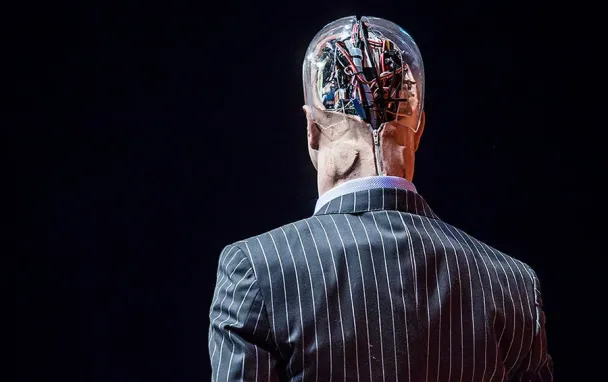
According to transhumanists, neural interfaces, electronics that improve our capabilities, and other technologies will seriously transform society in the next decade
Today, companies are developing strategies for future investments and technologies in areas such as artificial intelligence, the Internet of Things or new business models. Of course, their development will contribute to serious infusions from investors within 5-10 years, but interesting changes await technologies associated with behavioral and social changes, as well as medical advances. The convergence of all these disparate trends will seriously transform society in the next decade.
Body Empowerment
In the coming years, a number of opportunities will open up that will expand human capabilities. In particular, wearable devices will appear that are noticeably superior to fitness trackers. Experts believe that in the future we can expect to see contact lenses capable of capturing images or videos; universal language translators for free communication anywhere in the world, as well as exosuits that increase a person’s physical strength.
We will also see the introduction of implants in the future, ranging from brain microchips and neural interfaces to brain-controlled prosthetics and subcutaneous microcircuits that will allow you to “wave your hand” to unlock doors or enter passwords. A powerful impetus to this direction will come from the development of biotechnology and a deeper understanding of the human genome, as well as progress in IVF technology for selecting the most developed embryos. CRISPR gene editing technology will also play a role, which will one day allow us to eliminate all hereditary diseases “in the bud.”
Acceleration of thought processes
The development of wearable and implantable neural interfaces is carried out by both Elon Musk at Neuralink and Mark Zuckerberg at Facebook, as well as the US Department of Defense Advanced Research Projects Agency (DARPA). Such devices will change the way we interact with each other, as well as with digital devices. While when talking we are limited by the speed at which we can speak, and when communicating with a computer - by the speed of typing. Neural interfaces will fundamentally change this, allowing us to instantly transmit and record thoughts in an “unfiltered” state.
Increased productivity through gamification and behavioral tricks
Startups like Uber are already harnessing the power of behavioral science, gamification technology, and artificial intelligence. Methods the company uses include, for example, handing out “rewards” to drivers based on the results of their trips, which stimulate the production of dopamine. The company also uses a video game-like graphical interface in the app. By 2030, the results of behavioral research will be in demand in corporate HR departments, in strategy development, and in consulting.
More empathy
Virtual reality (VR) technology will likely teach us to better understand the potential consequences of our own actions. In particular, VR technology could put us in the shoes of refugees or “future selves” in order to experience their plight or our own prospects. Neural interfaces, in turn, could enhance our ability to empathize, allowing us to receive or transmit a complete picture directly from our brain, without fear of any of it being misinterpreted by the listener.
More personalization and customization
We have been seeing a love for personalization in marketing practices for a long time. In the future, this trend will take over almost all aspects of our lives. So, in addition to location data and previous purchases, marketers will be able to use emotional filters to change the tone of their messages depending on our mood. Personalization will “come into our homes” with smart home devices that will customize lighting and music to suit our mood.
Artificial intelligence will take over our career trajectory, choosing the most suitable positions based on the candidate’s personal strengths. Our diet will also become more balanced and suitable for us, since the diet will be selected based on information extracted from the genome of a particular person.
Artificial intelligence and neurotechnology in business
According to experts, most employees in the future will receive personal “smart” assistants that will improve the quality of their work. Some futurists predict that by 2026, one seat on every board of directors will be held by an artificially intelligent machine.
The integration of neural interfaces into the workplace will, in turn, require greater attention to cybersecurity issues. Perhaps some companies will even begin to sponsor the purchase of nootropic supplements or neurostimulation devices that would improve employee attention and increase the rate at which they learn new skills.
- Arts
- Business
- Computers
- Spiele
- Health
- Startseite
- Kids and Teens
- Geld
- News
- Personal Development
- Recreation
- Regional
- Reference
- Science
- Shopping
- Society
- Sports
- Бизнес
- Деньги
- Дом
- Досуг
- Здоровье
- Игры
- Искусство
- Источники информации
- Компьютеры
- Личное развитие
- Наука
- Новости и СМИ
- Общество
- Покупки
- Спорт
- Страны и регионы
- World

 English
 Russian
 French
 Spanish
 Portuguese
 Turkish
 Dutch
Dutch
 Italiano
 Arabic
 Romaian
 Portuguese (Brazil)
 Greek
Greek