
Has Brexit benefited the UK?
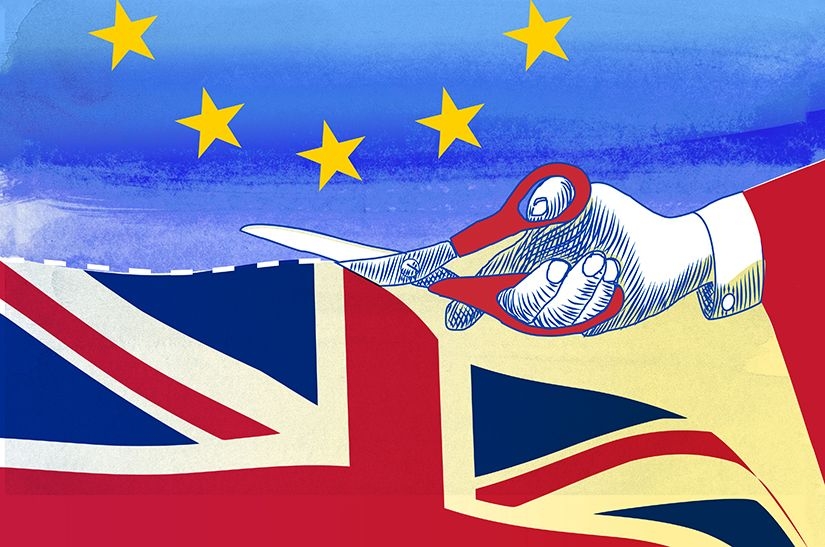
Has Brexit benefited the UK?
When the United Kingdom voted to leave the European Union in 2016, supporters of Brexit argued that the country would regain control over its laws, borders and money, and become more flexible and globally competitive. Opponents warned that leaving the EU would weaken the economy, reduce the UK’s influence and create long-term uncertainty. Several years after the UK formally left the EU, the question remains: has Brexit benefited the UK?
The answer is not simple. Brexit has brought some clear political and legal changes, but its economic and social effects are more mixed and, in many areas, still unfolding.
Economic performance and growth
One of the most important measures of whether Brexit has benefited the UK is its impact on the economy. The UK did not experience an immediate economic collapse after leaving the EU, but growth has been relatively weak compared with many similar advanced economies.
A key issue has been uncertainty. For several years after the referendum, businesses were unsure about future trade rules, regulation and labour supply. This made some companies delay or reduce investment in the UK. While uncertainty has now eased, many firms have already adjusted their plans or expanded elsewhere in Europe instead.
Supporters of Brexit argue that slow growth cannot be blamed on Brexit alone. The COVID-19 pandemic, the war in Ukraine, high energy prices and global inflation have all damaged economic performance. That is true. However, many economists agree that Brexit has added extra pressure to the UK economy, particularly through higher trade costs and reduced business investment.
In short, Brexit has not delivered the clear economic boost that many voters hoped for.
Trade and business
Before Brexit, the UK could trade freely with other EU countries without customs checks or extra paperwork. Today, although the UK and EU have a trade agreement, trade is less smooth than before.
New border procedures, customs declarations and regulatory checks have made it more expensive and time-consuming for businesses to sell goods to the EU. Smaller firms, in particular, have found it harder to deal with these changes. Some UK exporters have stopped selling to the EU altogether because the costs are no longer worth it.
At the same time, Brexit supporters argue that leaving the EU gives the UK freedom to make its own trade deals with countries around the world. The UK has signed a number of agreements since leaving, including joining a major Asia-Pacific trade partnership.
However, most of these deals are either similar to agreements the UK already had through the EU, or are relatively small compared with the importance of EU trade. The EU remains the UK’s largest and closest trading partner. So far, new trade deals have not fully replaced the advantages of friction-free trade with Europe.
For many businesses, Brexit has therefore made trading more complex rather than easier.
Sovereignty and control
One of the strongest arguments in favour of Brexit was the idea of restoring national sovereignty. The UK is no longer subject to EU law and no longer takes part in EU institutions. Parliament can now make decisions in areas such as agriculture, fishing, state aid and immigration without being bound by EU rules.
For supporters, this is a major benefit. They see democratic control as valuable in itself, even if it does not immediately improve economic outcomes. The UK can now choose different regulatory approaches and design policies more closely suited to its own priorities.
However, sovereignty in practice can be limited. In order to trade with the EU, UK businesses often still need to meet EU standards. This means the UK may follow many EU rules without having any influence over how those rules are made. Critics therefore argue that Brexit has reduced the UK’s ability to shape European regulations that still affect it.
Brexit has increased formal independence, but it has not removed the UK’s need to cooperate closely with its neighbours.
Immigration and the labour market
Another major promise of Brexit was greater control over immigration. Free movement from the EU has ended, and the UK now uses a points-based immigration system that applies to both EU and non-EU citizens.
This change has given the government more control over who can work in the UK and under what conditions. Supporters argue that the new system is fairer and allows the country to focus on skills and shortages.
However, the end of free movement has also created problems in sectors that previously relied heavily on EU workers, such as farming, hospitality, social care and transport. Many employers report ongoing difficulties in recruiting staff, which can lead to higher costs and reduced services.
Although overall migration to the UK remains high, its composition has changed. More workers now come from outside Europe, and fewer from EU countries. Brexit has reshaped the labour market, but it has not solved long-standing problems such as skills shortages or low pay in some industries.
Public finances and government policy
Some Brexit supporters argued that leaving the EU would free up money previously sent to Brussels and allow the government to spend more at home. In reality, the financial impact is complex.
The UK no longer contributes directly to the EU budget, but it also no longer benefits from some EU funding programmes. At the same time, new public costs have appeared, such as running customs systems, border controls and regulatory agencies that were previously shared at the EU level.
There is little evidence that Brexit has created a large, clear increase in money available for public services. Decisions about spending remain mainly shaped by wider economic performance and political choices rather than by EU membership alone.
The UK’s global role
Brexit was often presented as a chance for the UK to become a more outward-looking and independent global power. Supporters spoke of a more flexible foreign policy and stronger relationships with fast-growing economies.
The UK still plays an important international role, especially in defence, diplomacy and development. However, outside the EU it no longer has the same ability to influence European policy from the inside. When the EU acts together on trade, regulation or foreign affairs, the UK must now respond from the outside rather than help shape the initial decisions.
This does not mean the UK has become irrelevant, but its position in Europe has clearly changed. Cooperation now depends more on negotiation than membership.
Political and social effects
Brexit has had a lasting impact on British politics. It reshaped party loyalties, contributed to divisions between different regions and age groups, and increased tensions between the nations of the UK.
Scotland, in particular, voted strongly to remain in the EU, and Brexit has strengthened debates about Scottish independence. Northern Ireland has faced unique challenges because of its land border with the EU, leading to complex political and trading arrangements.
While some voters feel that Brexit has restored national confidence and democratic control, others believe it has deepened political polarisation and reduced trust in institutions.
Conclusion
Has Brexit benefited the UK? The honest answer is that the benefits are limited and mainly political rather than economic.
The UK has gained formal control over its laws, borders and trade policy. For those who value sovereignty and national decision-making above all else, this is a meaningful achievement. Brexit has allowed the government to pursue its own regulatory and immigration policies and to operate outside EU structures.
However, in economic terms, Brexit has brought new barriers to trade, higher costs for many businesses and weaker investment than many supporters expected. New trade deals have not yet matched the advantages of close access to the EU market, and labour shortages remain a serious challenge in several sectors.
Overall, Brexit has changed how the UK governs itself, but it has not so far delivered the clear prosperity or global advantage promised during the referendum campaign. Whether it will do so in the long term depends largely on how effectively future governments use the powers that Brexit has created—and how well the UK manages its relationship with its closest neighbours in Europe.
- Arts
- Business
- Computers
- Juegos
- Health
- Home
- Kids and Teens
- Money
- News
- Personal Development
- Recreation
- Regional
- Reference
- Science
- Shopping
- Society
- Sports
- Бизнес
- Деньги
- Дом
- Досуг
- Здоровье
- Игры
- Искусство
- Источники информации
- Компьютеры
- Личное развитие
- Наука
- Новости и СМИ
- Общество
- Покупки
- Спорт
- Страны и регионы
- World

 English
 Russian
 French
 Portuguese
 Deutsch
 Turkish
 Dutch
Dutch
 Italiano
 Arabic
 Romaian
 Portuguese (Brazil)
 Greek
Greek
