
Is Capitalism Good or Bad?
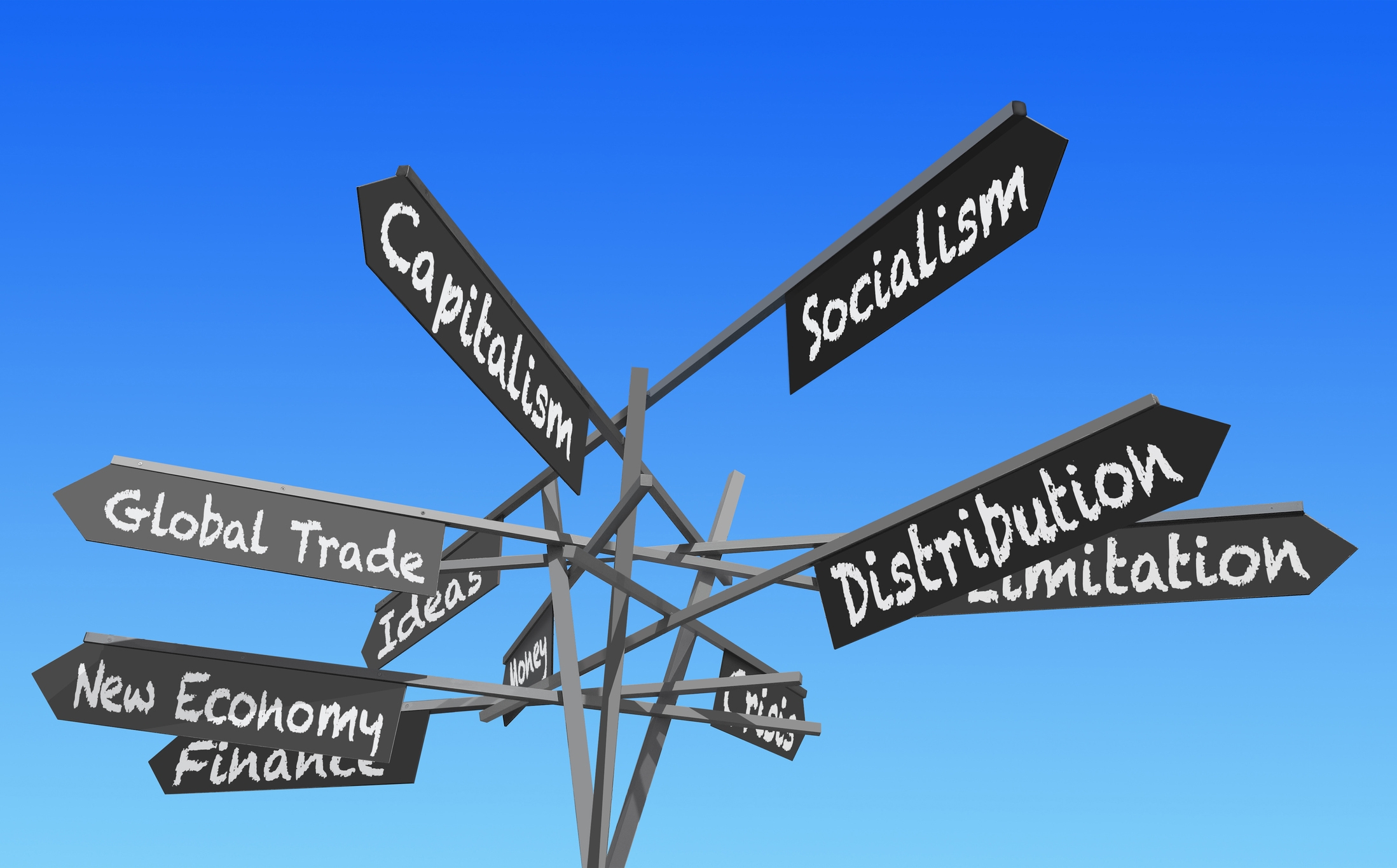
Is Capitalism Good or Bad?
Capitalism is one of the most powerful and controversial ideas in modern society. It shapes how people work, how businesses grow, and how countries develop. At its core, capitalism is an economic system in which individuals and companies own property, make decisions for profit, and compete in markets. Supporters argue that capitalism drives innovation and raises living standards. Critics argue that it creates inequality and puts profit before people. So, is capitalism good or bad? The honest answer is that it is neither purely good nor purely bad—it is a system with real strengths and serious weaknesses.
To understand capitalism, it helps to focus on three basic features: private ownership, markets, and profit. In a capitalist system, people can own businesses and property. Prices are mostly set by supply and demand rather than by the government. Companies try to make profit, and consumers choose what to buy. This simple structure has produced enormous economic change across the world.
One of the strongest arguments in favor of capitalism is that it encourages innovation. When people and companies can earn money by creating better products or services, they have a strong reason to take risks and invest in new ideas. Many technologies that shape daily life—smartphones, medicine, transport systems, and online platforms—grew inside capitalist economies. Competition pushes businesses to improve quality, lower costs, and respond to what people want. In this sense, capitalism is very good at turning ideas into real-world solutions.
Capitalism has also played a major role in increasing overall wealth. Over the past two centuries, countries that adopted market-based systems generally experienced rapid economic growth. Large numbers of people gained access to better housing, education, healthcare, and food. Even though poverty still exists, extreme poverty has fallen significantly in many parts of the world. Supporters of capitalism argue that no other system has been as effective at creating large-scale economic progress.
Another benefit is personal freedom. In a capitalist system, people can choose their careers, start businesses, and decide how to spend their money. This freedom allows individuals to follow their interests and goals rather than having their lives directed by a central authority. For many, this independence is not only practical but deeply connected to human dignity and creativity.
However, these strengths do not mean capitalism works equally well for everyone. One of the most serious criticisms is that it creates and increases inequality. While some people and companies become extremely wealthy, others struggle to meet basic needs. Because wealth can generate more wealth—through investments, property, and business ownership—economic advantages tend to grow over time. This can lead to large gaps between rich and poor, and those gaps can affect education, health, and opportunities.
Inequality is not only about income. It can also translate into power. Large corporations and wealthy individuals often have more influence over politics, media, and public policy. When money plays a major role in shaping laws and regulations, the system may begin to serve those at the top rather than the wider population. Critics argue that this undermines democracy and fairness.
Another major concern is how capitalism treats workers. In theory, workers freely choose where to work and negotiate their wages. In reality, many people have limited choices, especially when jobs are scarce or when they must accept poor conditions to survive. In highly competitive markets, companies may try to reduce costs by lowering wages, cutting benefits, or using unstable forms of employment. This can lead to job insecurity and stress, even in wealthy countries.
Capitalism is also often criticized for its impact on the environment. Because businesses focus on profit and growth, they may overuse natural resources, pollute ecosystems, or ignore long-term environmental damage. The costs of this harm are frequently not paid by the companies that cause it, but by society as a whole. Climate change is one of the clearest examples of how market incentives alone may fail to protect the public interest.
Another weakness of capitalism is that it does not always reward socially useful work fairly. Jobs such as teaching, caregiving, and community work are essential to society, but they often pay much less than jobs connected to finance, technology, or large corporations. This mismatch between social value and market value raises questions about whether profit is a good measure of what truly matters.
Supporters of capitalism respond to these criticisms by arguing that many problems blamed on capitalism are actually caused by poor regulation, corruption, or weak institutions. They claim that markets can function more fairly when governments set clear rules, protect workers, enforce environmental standards, and prevent monopolies. From this perspective, the problem is not capitalism itself, but an unbalanced version of it.
This leads to an important point: capitalism does not exist in only one form. Different countries combine markets with different levels of government involvement. Some systems rely heavily on private companies and low regulation. Others include strong public healthcare, free education, labor protections, and social safety nets. These mixed systems still use markets and private ownership, but they try to reduce inequality and insecurity through public policies.
When people ask whether capitalism is good or bad, they often compare it to ideal alternatives rather than to realistic options. History shows that centrally planned economies struggled with inefficiency, shortages, and limited personal freedom. At the same time, pure free-market systems tend to produce instability and social harm. The real debate today is less about choosing capitalism or rejecting it entirely, and more about how capitalism should be shaped.
A more useful question may be: good for whom, and under what conditions? Capitalism tends to work well at creating wealth and innovation. It performs much worse at ensuring fairness, stability, and environmental protection without strong public institutions. Markets are effective tools, but they are not moral decision-makers. They respond to demand and profit, not to justice or long-term wellbeing.
In practical terms, this means societies face an ongoing challenge. They must find ways to keep the creative and productive energy of markets while limiting their harmful side effects. This includes enforcing labor standards, taxing wealth and income fairly, supporting public services, and investing in sustainable technologies. It also means preventing excessive concentration of power in a small number of companies or individuals.
So, is capitalism good or bad? It is good at producing growth, innovation, and choice. It is bad at protecting vulnerable people and shared resources when left on its own. Capitalism is not a solution to every social problem, but it is also not a system that can simply be removed without serious consequences.
The real responsibility lies with society, not with the market itself. Capitalism is a tool. Whether it becomes a force that improves life for many or a system that benefits only a few depends on the rules, values, and political decisions that shape it. Instead of asking whether capitalism should exist, the more important task is deciding what kind of capitalism we are willing to accept—and what kind we are determined to change.
- Arts
- Business
- Computers
- Jogos
- Health
- Início
- Kids and Teens
- Money
- News
- Personal Development
- Recreation
- Regional
- Reference
- Science
- Shopping
- Society
- Sports
- Бизнес
- Деньги
- Дом
- Досуг
- Здоровье
- Игры
- Искусство
- Источники информации
- Компьютеры
- Личное развитие
- Наука
- Новости и СМИ
- Общество
- Покупки
- Спорт
- Страны и регионы
- World

 English
 Russian
 French
 Spanish
 Deutsch
 Turkish
 Dutch
Dutch
 Italiano
 Arabic
 Romaian
 Portuguese (Brazil)
 Greek
Greek