
How Do Free Trade Agreements Relate to Commercial Policy?
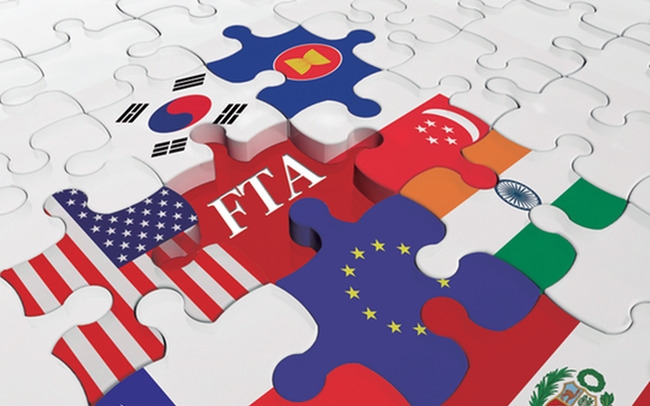
How Do Free Trade Agreements Relate to Commercial Policy?
Commercial policy is one of the main ways a government shapes how its economy connects with the rest of the world. At the center of that policy are choices about tariffs, import rules, export promotion, and the legal treatment of foreign firms. Free trade agreements (FTAs) are not separate from commercial policy—they are one of its most powerful tools. In practice, FTAs translate a country’s commercial policy goals into binding international commitments.
This article explains what commercial policy is, what free trade agreements do, and how the two fit together.
What is commercial policy?
Commercial policy refers to the set of government measures that regulate international trade and investment. It usually includes:
-
Tariff policy – how much tax is charged on imported goods
-
Non-tariff measures – product standards, licensing rules, quotas, and border procedures
-
Trade remedies – anti-dumping and safeguard measures
-
Export and investment rules – support for exporters and rules affecting foreign investors
At the international level, many of these policies are coordinated through institutions such as the World Trade Organization, which establishes common trade rules and a system for settling disputes between governments.
In simple terms, commercial policy answers a basic question:
How open or protected should the national market be—and under what conditions?
What are free trade agreements?
Free trade agreements are treaties between two or more economies that reduce or remove barriers to trade and investment among the members.
Although tariff elimination is the most visible feature, modern FTAs usually go much further. They often cover:
-
customs procedures
-
services and digital trade
-
investment protection
-
intellectual property rules
-
competition policy
-
labor and environmental standards
In other words, FTAs are not just about goods crossing borders. They increasingly shape how markets are regulated.
The direct link: FTAs are instruments of commercial policy
The most important relationship is straightforward:
Free trade agreements are a way of implementing commercial policy internationally.
A government may decide—through its domestic political process—that it wants to:
-
improve access to foreign markets,
-
attract foreign investment,
-
integrate its firms into global supply chains,
-
or strengthen political ties with certain partners.
An FTA turns these priorities into enforceable rules. Instead of unilaterally cutting tariffs or simplifying regulations, governments agree to do so reciprocally and lock those changes into a legal framework.
For example, when the European Union negotiates trade agreements, it is extending its internal commercial policy preferences—such as product standards, competition rules, and consumer protections—into its external trade relations.
FTAs and the main tools of commercial policy
To understand the relationship more clearly, it helps to look at how FTAs affect the classic tools of commercial policy.
1. Tariffs
Tariffs are the oldest and most visible part of commercial policy.
An FTA commits members to reduce or eliminate tariffs on most goods traded among them.
This means that commercial policy becomes partner-specific. A country may still maintain tariffs against non-members, while offering zero or very low tariffs to its FTA partners.
In this sense, FTAs reshape tariff policy from a single national schedule into a network of preferential rules.
2. Non-tariff measures and regulation
Modern commercial policy is less about tariffs and more about regulation.
FTAs increasingly address:
-
technical standards,
-
health and safety rules,
-
customs documentation,
-
and conformity assessment.
By coordinating or recognizing each other’s rules, FTA partners reduce regulatory friction. This allows firms to trade more easily without formally lowering safety or quality requirements.
Commercial policy therefore shifts from “how much tax is charged at the border” to “how compatible our regulatory systems are.”
3. Services and investment policy
Commercial policy now covers many sectors that never pass through customs at all—such as finance, telecommunications, logistics, and digital services.
FTAs typically include market-access commitments for services and legal protections for foreign investors. These provisions directly shape national investment regimes and licensing systems.
This is one of the clearest signs that FTAs have become a central part of modern commercial policy rather than a narrow trade instrument.
4. Trade remedies and enforcement
Governments usually retain the right to apply anti-dumping and safeguard measures under FTAs. However, the agreements often introduce additional transparency rules, consultation requirements, and dispute-settlement procedures.
As a result, commercial policy becomes more constrained by international legal commitments, not only by domestic law.
FTAs as a strategic choice in commercial policy
FTAs are not neutral technical arrangements. They reflect strategic decisions about who a country wants to integrate with and how.
Large economies such as the United States and China both use trade agreements as part of broader economic and geopolitical strategies. Through FTAs, they can:
-
strengthen supply-chain links,
-
promote their preferred regulatory models,
-
and increase their influence over regional trade rules.
At the regional level, cooperation among the Canada, Mexico, and the United States shows how an FTA can embed a shared commercial policy framework across highly integrated production networks.
Similarly, regional groupings such as Association of Southeast Asian Nations use trade agreements to support their long-term goal of economic integration and collective bargaining power in global markets.
How FTAs complement multilateral trade rules
Commercial policy operates on two main levels:
-
the multilateral system, centered on global rules, and
-
the preferential system created by FTAs.
Multilateral rules set general principles—such as non-discrimination, transparency, and dispute settlement. FTAs build on top of these principles by offering deeper market access and more detailed regulatory commitments among a smaller group of partners.
From a policy perspective, governments often use FTAs to move faster or go further than what is politically feasible at the multilateral level. Issues such as digital trade, data flows, and environmental provisions are often addressed first in FTAs before appearing in broader global negotiations.
Commercial policy trade-offs created by FTAs
While FTAs support liberalization, they also create important policy trade-offs.
First, FTAs introduce discrimination by design. Firms from non-member countries do not receive the same preferential access. Commercial policy therefore becomes more complex and fragmented.
Second, regulatory commitments in FTAs can limit future policy flexibility. Governments may face constraints when introducing new industrial, environmental, or digital regulations if those measures conflict with agreed trade rules.
Third, FTAs can shift negotiating power toward countries with greater economic weight. Smaller economies often accept detailed regulatory disciplines in exchange for market access.
These trade-offs are why the design of FTAs is a central political debate within national commercial policy.
The development dimension
For developing economies, FTAs are frequently linked to broader development strategies.
Institutions such as the World Bank often emphasize that improved market access and clearer trade rules can support export diversification, investment inflows, and institutional reform.
However, the impact depends heavily on domestic policies—such as education, infrastructure, and competition policy—which are outside the scope of most trade agreements. FTAs can support commercial policy objectives, but they cannot replace domestic economic reform.
Conclusion
Free trade agreements are not separate from commercial policy—they are one of its primary operational tools.
Commercial policy defines a government’s objectives toward trade, regulation, and international economic integration. Free trade agreements turn those objectives into binding commitments with specific partners. Through FTAs, governments reshape tariff structures, align regulations, open services markets, protect investments, and create enforcement mechanisms.
In today’s trading system, the relationship can be summarized simply:
Commercial policy sets the direction; free trade agreements provide the legal and institutional framework to carry that policy beyond national borders.
As trade increasingly revolves around regulation, services, and data rather than just goods, FTAs have become central—not peripheral—to how modern commercial policy is designed and implemented.
- Arts
- Business
- Computers
- Spiele
- Health
- Startseite
- Kids and Teens
- Geld
- News
- Personal Development
- Recreation
- Regional
- Reference
- Science
- Shopping
- Society
- Sports
- Бизнес
- Деньги
- Дом
- Досуг
- Здоровье
- Игры
- Искусство
- Источники информации
- Компьютеры
- Личное развитие
- Наука
- Новости и СМИ
- Общество
- Покупки
- Спорт
- Страны и регионы
- World

 English
 Russian
 French
 Spanish
 Portuguese
 Turkish
 Dutch
Dutch
 Italiano
 Arabic
 Romaian
 Portuguese (Brazil)
 Greek
Greek