
How Does Government Spending Affect the Economy?
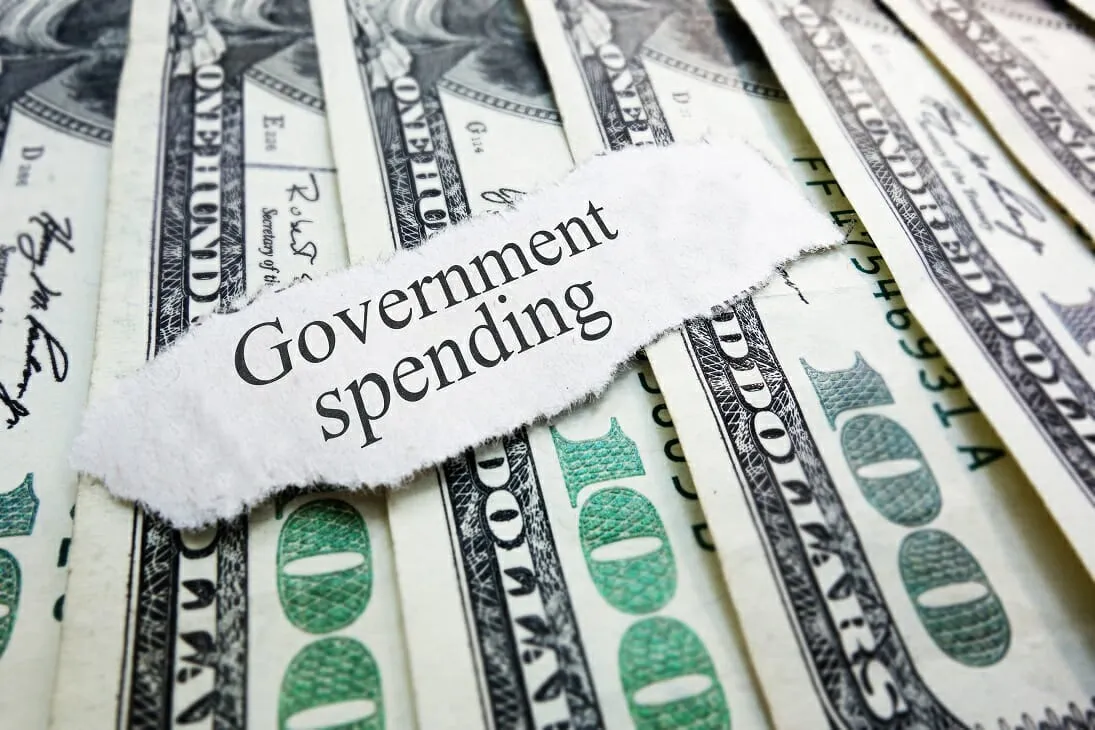
How Does Government Spending Affect the Economy?
Government spending is one of the most powerful tools a state has to influence economic activity. Whether it’s building infrastructure, funding education, providing social benefits, or investing in defense, public expenditure plays a central role in shaping growth, employment, and overall economic stability. Understanding how government spending affects the economy requires looking at both its immediate impact and its long-term consequences.
1. Government Spending as a Driver of Economic Growth
At its core, government spending contributes directly to a country’s Gross Domestic Product (GDP). GDP is commonly measured using the equation:
GDP = Consumption + Investment + Government Spending + Net Exports
When the government increases spending, it injects money into the economy. This can lead to higher demand for goods and services, which encourages businesses to produce more. In response, companies may hire more workers, increasing employment and income levels.
For example, if a government invests heavily in infrastructure—such as roads, bridges, or public transport—it creates jobs in construction and related industries. Workers earn wages, which they then spend on goods and services, further stimulating economic activity. This ripple effect is often referred to as the multiplier effect.
2. The Multiplier Effect Explained
The multiplier effect means that one dollar of government spending can generate more than one dollar in economic output. This happens because money circulates through the economy multiple times.
For instance:
-
The government pays a contractor.
-
The contractor pays employees and suppliers.
-
Employees spend their wages on groceries, housing, and services.
-
Businesses receiving that money then pay their workers and invest further.
The strength of the multiplier depends on factors like consumer confidence, taxation, and how much people choose to save versus spend. In times of economic downturn, the multiplier effect tends to be stronger because there are idle resources and unemployed workers.
3. Counteracting Economic Recessions
Government spending is especially important during recessions. When private sector demand falls, businesses cut back on investment and hiring, which can lead to a downward economic spiral.
In such situations, governments often adopt expansionary fiscal policy, increasing spending to stimulate demand. This approach was widely used during major crises like the 2008 global financial crisis and the COVID-19 pandemic.
By stepping in when the private sector pulls back, governments can:
-
Reduce unemployment
-
Stabilize incomes
-
Prevent deeper economic contraction
However, timing and scale are critical. Spending too little may fail to revive the economy, while excessive spending can lead to inefficiencies or inflation.
4. Impact on Employment
Government spending can significantly influence employment levels. Public sector jobs—such as teachers, healthcare workers, and civil servants—are directly funded by government budgets. Additionally, government-funded projects create indirect employment opportunities.
For example:
-
Infrastructure projects create construction jobs.
-
Defense spending supports manufacturing and technology sectors.
-
Education funding creates long-term employment opportunities by improving workforce skills.
In times of high unemployment, increased government spending can act as a safety net, providing jobs and boosting demand. Conversely, cuts in government spending (austerity measures) can lead to job losses and reduced economic activity.
5. Long-Term Economic Development
Not all government spending has the same impact. Economists often distinguish between consumption spending and investment spending.
-
Consumption spending includes salaries, subsidies, and welfare payments. While it supports demand, its long-term growth impact may be limited.
-
Investment spending includes infrastructure, education, and research and development. This type of spending can increase productivity and economic potential over time.
For instance, investing in education improves human capital, making the workforce more skilled and innovative. Infrastructure investments reduce transportation costs and improve efficiency for businesses. These factors contribute to sustainable economic growth.
6. Crowding Out vs. Crowding In
One debated effect of government spending is whether it helps or hinders private sector investment.
-
Crowding out occurs when government borrowing to finance spending leads to higher interest rates. This can make it more expensive for businesses to borrow, reducing private investment.
-
Crowding in happens when government spending boosts economic confidence and demand, encouraging businesses to invest more.
The outcome depends on the economic context. In a weak economy with low interest rates, government spending is more likely to crowd in private investment. In a strong economy operating near full capacity, it may crowd out private activity.
7. Government Spending and Inflation
While increased government spending can stimulate growth, it can also lead to inflation if the economy is already operating at or near full capacity.
When demand exceeds supply, prices tend to rise. For example, if the government significantly increases spending without a corresponding increase in production, businesses may respond by raising prices rather than expanding output.
This is why policymakers must balance spending carefully. During recessions, inflation is usually less of a concern, but in booming economies, excessive spending can overheat the economy.
8. Financing Government Spending
Government spending must be financed, typically through:
-
Taxation
-
Borrowing (issuing government debt)
-
Money creation (in some cases)
Each method has different economic implications:
-
Higher taxes can reduce disposable income and dampen consumption.
-
Borrowing increases national debt and may lead to higher future taxes.
-
Money creation can lead to inflation if overused.
Sustainable fiscal policy requires balancing these financing methods while maintaining economic stability.
9. Income Distribution and Social Welfare
Government spending also plays a key role in reducing inequality and supporting social welfare. Programs such as unemployment benefits, pensions, healthcare, and education help redistribute income and provide a safety net for vulnerable populations.
This type of spending can:
-
Reduce poverty
-
Improve access to essential services
-
Promote social stability
While critics argue that excessive welfare spending can discourage work incentives, well-designed programs can enhance productivity by improving health and education outcomes.
10. Potential Downsides of Government Spending
Despite its benefits, government spending is not without risks:
-
Inefficiency: Poorly planned projects can waste resources.
-
Corruption: Mismanagement of funds can reduce effectiveness.
-
Debt accumulation: Persistent deficits can lead to unsustainable public debt.
-
Dependency: Over-reliance on government support may weaken private sector initiative.
These risks highlight the importance of transparency, accountability, and strategic planning in public spending.
Conclusion
Government spending is a powerful economic tool that can stimulate growth, reduce unemployment, and support long-term development. Through mechanisms like the multiplier effect and targeted investments, it can significantly influence the direction and stability of an economy.
However, its impact depends on how, when, and where the money is spent. Well-targeted investments in infrastructure, education, and innovation can yield long-term benefits, while poorly managed spending can lead to inflation, debt, and inefficiencies.
Ultimately, effective government spending requires a careful balance—supporting economic activity without creating long-term imbalances. When used wisely, it serves as a cornerstone of a stable and prosperous economy.
- Arts
- Business
- Computers
- Oyunlar
- Health
- Home
- Kids and Teens
- Money
- News
- Personal Development
- Recreation
- Regional
- Reference
- Science
- Shopping
- Society
- Sports
- Бизнес
- Деньги
- Дом
- Досуг
- Здоровье
- Игры
- Искусство
- Источники информации
- Компьютеры
- Личное развитие
- Наука
- Новости и СМИ
- Общество
- Покупки
- Спорт
- Страны и регионы
- World

 English
 Russian
 French
 Spanish
 Portuguese
 Deutsch
 Dutch
Dutch
 Italiano
 Arabic
 Romaian
 Portuguese (Brazil)
 Greek
Greek