
How to Build a Scalable Company?
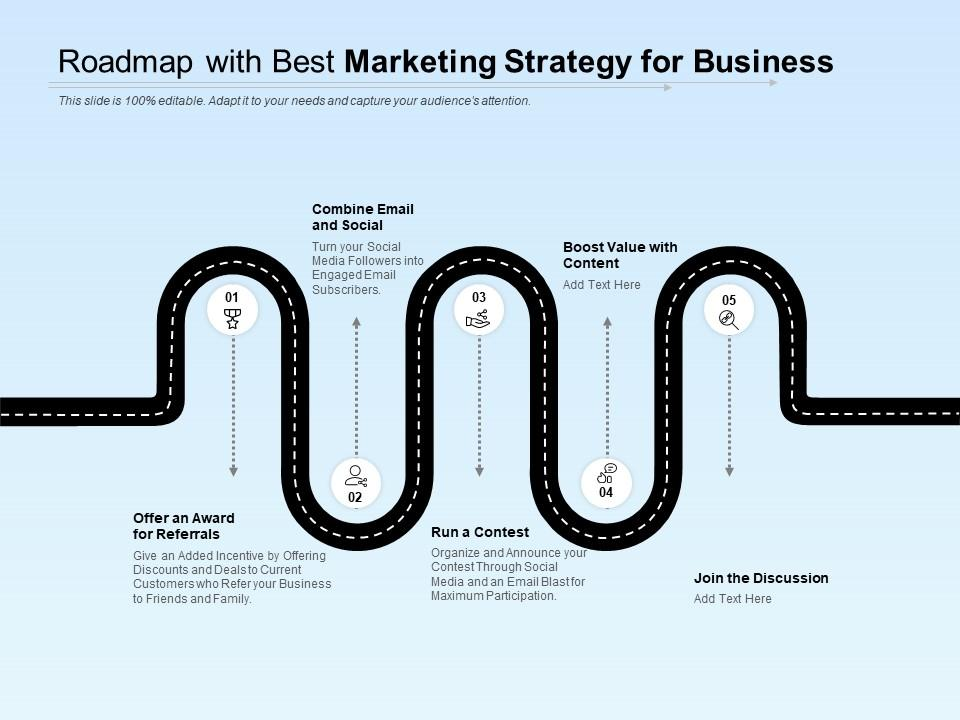
Most companies do not collapse because demand disappears.
They collapse because success arrives faster than their infrastructure can tolerate.
That contradiction sits at the center of modern entrepreneurship. Founders spend years chasing growth, then suddenly find themselves trapped beneath the operational weight of the thing they wanted most. Customers multiply. Revenue spikes. Hiring accelerates. Meetings metastasize. Systems strain quietly in the background until one day the organization feels strangely fragile despite outward momentum.
I once worked with a founder who celebrated landing the largest contract in his company’s history. Champagne appeared in the office before the onboarding process had even been finalized. Three months later, the same company was issuing refunds, hemorrhaging employees, and renegotiating delivery timelines because internal systems could not absorb the new workload.
The business had scaled revenue before scaling operations.
There is a difference.
A scalable company is not simply a growing company. It is a company designed to increase revenue, output, and market reach without suffering proportional increases in cost, inefficiency, or organizational chaos.
That sounds obvious in theory.
In practice, very few businesses achieve it deliberately.
Scalability Begins Before Expansion
This is where founders often get the sequence backward.
They pursue growth first and architecture second.
But scalability is fundamentally structural. It emerges from systems built before pressure arrives. Once hypergrowth begins, organizations rarely have the luxury of calmly redesigning workflows while customers flood support channels and investors demand acceleration.
Scalable companies prepare for future volume long before they technically “need” to.
That preparation feels inefficient at first. Founders resist it because early-stage businesses survive through improvisation. Processes seem bureaucratic. Documentation feels excessive. Automation appears premature.
Then growth exposes every shortcut simultaneously.
The First Principle: Build Systems, Not Heroics
Many startups initially operate on heroic effort.
Employees compensate for weak infrastructure through overtime, memory, and sheer personal sacrifice. Founders answer customer support tickets at midnight. Sales pipelines live inside spreadsheets only one person fully understands. Operations depend on tribal knowledge instead of documented systems.
This works temporarily.
Temporarily is the dangerous word.
Heroics Do Not Scale
A scalable company removes dependency on extraordinary individual effort wherever possible.
That does not mean removing talent. It means reducing operational fragility.
The strongest organizations create repeatable systems that survive personnel changes, demand spikes, and geographic expansion. If a company collapses because one employee leaves, the issue is not staffing. It is architecture.
I learned this lesson painfully during an advisory engagement with a fast-growing service business years ago. The founder believed operational excellence came from hiring “exceptional people.” Which sounded persuasive until those exceptional people started burning out.
Processes existed mostly inside conversations.
When turnover began, knowledge disappeared with employees. Deadlines slipped. Customer experience deteriorated. The business had confused talent concentration with scalability.
Those are not interchangeable concepts.
Product-Market Fit Comes Before Scale
Founders frequently attempt to scale products customers only moderately like.
This usually ends expensively.
No amount of marketing sophistication compensates for weak product-market fit over the long term. Scaling amplifies existing realities. If customers love the product, growth accelerates. If customers feel indifferent, churn accelerates instead.
Signs a Company Is Ready to Scale
Before aggressive expansion, scalable companies usually demonstrate:
- Strong customer retention
- Predictable revenue streams
- Sustainable acquisition costs
- Operational consistency
- Clear customer demand
- Repeatable onboarding systems
- Positive unit economics
Without these foundations, growth often becomes cosmetic rather than durable.
A company can appear successful publicly while deteriorating financially underneath.
The Operational Anatomy of Scalability
Scalability requires operational leverage.
That phrase matters because it shifts focus away from raw growth toward efficiency under expansion.
Core Components of a Scalable Company
Automation
Repetitive manual tasks eventually become growth constraints.
Customer onboarding, invoicing, inventory management, reporting, scheduling, and communication workflows should increasingly transition toward automation as volume rises.
Automation is not about replacing people indiscriminately. It is about preserving human attention for higher-value work.
Standardization
Scalable businesses reduce unnecessary variability.
This does not mean becoming robotic. It means ensuring critical processes remain consistent across teams, locations, and customer interactions.
McDonald’s became globally dominant because systems were replicable. Consistency itself became a competitive advantage.
Data Infrastructure
Fast-growing companies rely heavily on measurable visibility.
Without clean operational data, organizations lose the ability to diagnose inefficiencies quickly. Metrics become essential during scale because small problems compound aggressively under volume.
Scalable companies monitor:
- Customer acquisition cost
- Lifetime customer value
- Churn rates
- Gross margins
- Operational throughput
- Retention metrics
- Employee productivity
Growth without visibility becomes organizational gambling.
A Comparison of Scalable vs. Non-Scalable Company Structures
| Business Structure | Scalability Potential | Operational Complexity | Dependency on Labor | Margin Expansion Potential |
|---|---|---|---|---|
| SaaS Subscription Platform | Extremely High | Moderate | Low | Very High |
| Traditional Consulting Firm | Low-Moderate | High | Extremely High | Limited |
| E-commerce Marketplace | High | High | Moderate | High |
| Franchise System | Moderate-High | Moderate | Moderate | High |
| Online Education Company | Very High | Low-Moderate | Low | Very High |
| Manufacturing Business | Moderate | High | Moderate-High | Moderate |
| Freelance Agency | Low | Moderate | Extremely High | Limited |
| Licensing/IP Business | Extremely High | Low | Very Low | Extremely High |
The pattern is difficult to ignore.
The most scalable businesses separate revenue growth from direct labor expansion. The least scalable models rely on human hours as the primary production mechanism.
That dependency creates ceilings.
Hiring Carefully Is More Important Than Hiring Fast
Growth creates hiring pressure.
Pressure creates bad decisions.
Founders often assume scaling requires aggressive headcount expansion because visible organizational growth feels reassuring to investors and employees alike. Yet excessive hiring introduces communication friction, management complexity, and cultural dilution long before many companies are structurally prepared.
Some businesses become slower precisely because they became larger.
The Myth of Instant Team Expansion
I once advised a founder preparing to triple his staff within a year after securing major funding. He framed hiring as proof the company had “arrived.” But operational workflows remained inconsistent. Roles overlapped constantly. Internal accountability was blurry.
Adding people into that environment would not have solved inefficiency.
It would have multiplied it.
Six months later, after delaying expansion and refining internal systems first, the company grew far more sustainably with fewer hires than initially projected.
That experience reinforced something I now consider foundational:
Scalable companies optimize coordination before expansion.
Culture Becomes Infrastructure
This part receives less attention because culture sounds intangible compared to revenue metrics.
But culture determines execution quality under stress.
As companies scale, informal communication weakens naturally. Founders can no longer personally reinforce every decision. Teams become distributed across functions, geographies, and management layers.
Culture fills the coordination gaps systems cannot fully control.
Healthy Scalable Cultures Usually Share Several Traits
- Clear decision-making frameworks
- High accountability
- Transparent communication
- Adaptability under pressure
- Documentation discipline
- Strong hiring standards
- Operational ownership
Weak cultures create operational drag invisible on spreadsheets initially but devastating over time.
Toxicity scales too.
Technology Alone Does Not Create Scalability
This misconception deserves more skepticism.
Many organizations purchase expensive software believing digital tools automatically produce operational maturity. Instead, they often digitize inefficiency.
Technology amplifies existing organizational behavior.
Strong systems become faster. Weak systems become faster at producing confusion.
The best scalable companies implement technology intentionally. Every tool serves a specific operational objective tied directly to efficiency, visibility, or customer experience.
Otherwise, software becomes decorative complexity.
Financial Discipline Determines Survival
Revenue growth receives headlines.
Cash flow determines endurance.
Scalable companies maintain unusually disciplined financial structures because growth itself consumes capital aggressively. Inventory expansion, customer support, infrastructure investment, and talent acquisition all increase spending pressure.
Hypergrowth businesses frequently implode not because demand vanished, but because operational costs accelerated faster than financial controls evolved.
Unit Economics Matter More Than Vanity Metrics
Founders often celebrate user growth while ignoring profitability mechanics underneath.
Scalable companies understand their economics intimately:
- Revenue per customer
- Gross profit margins
- Acquisition costs
- Retention rates
- Operational overhead ratios
- Payback periods
Without healthy unit economics, growth can actually deepen financial instability.
That paradox ruins companies every year.
Distribution Is Often the Real Scaling Engine
Many businesses focus obsessively on product development while underestimating distribution architecture.
Yet scalable growth frequently depends more on distribution efficiency than product superiority alone.
Scalable Distribution Channels Include
- Search-driven content ecosystems
- Referral loops
- Strategic partnerships
- Platform integrations
- Subscription ecosystems
- Affiliate networks
- Community-led growth
The strongest scalable companies build acquisition systems that continue functioning without constant founder intervention.
That autonomy matters enormously.
Because founder-dependent growth eventually creates bottlenecks.
Why Most Companies Fail to Scale
Usually, failure emerges from one of several recurring patterns:
Premature Expansion
The company grows before operational systems mature.
Founder Bottlenecks
Leadership refuses to delegate effectively.
Weak Retention
Customer acquisition outpaces customer satisfaction.
Operational Complexity
Processes become fragmented and inconsistent.
Cultural Erosion
Hiring accelerates faster than organizational cohesion.
Financial Mismanagement
Growth masks unstable economics until liquidity pressure emerges.
Scalability failures are rarely caused by one dramatic event.
They accumulate quietly through unresolved structural weaknesses.
Conclusion: Scalability Is Engineered, Not Discovered
There is a seductive fantasy embedded in startup culture that scalability appears naturally once demand reaches sufficient intensity.
Reality is less romantic.
Scalable companies are engineered deliberately through systems, discipline, operational clarity, financial restraint, and relentless process refinement. They are built by leaders willing to confront inefficiency early, before growth magnifies every weakness.
That work is often tedious.
Nobody celebrates documentation frameworks on magazine covers. Investors rarely applaud improved onboarding workflows with the same enthusiasm they reserve for revenue milestones. Yet these invisible systems determine whether expansion becomes sustainable or self-destructive.
The public usually notices scalable companies during acceleration.
Internally, however, the foundations were often laid years earlier in far less glamorous moments — refining operations, clarifying roles, standardizing workflows, studying customer behavior, fixing small inefficiencies repeatedly.
Scale is not a reward bestowed upon ambitious companies.
It is the consequence of structural readiness.
And the businesses that endure longest usually understand one uncomfortable truth earlier than everyone else:
Growth exposes character.
Operational character. Financial character. Leadership character.
A scalable company survives because its internal architecture can withstand the pressure success inevitably creates.
- Arts
- Business
- Computers
- Spellen
- Health
- Home
- Kids and Teens
- Money
- News
- Personal Development
- Recreation
- Regional
- Reference
- Science
- Shopping
- Society
- Sports
- Бизнес
- Деньги
- Дом
- Досуг
- Здоровье
- Игры
- Искусство
- Источники информации
- Компьютеры
- Личное развитие
- Наука
- Новости и СМИ
- Общество
- Покупки
- Спорт
- Страны и регионы
- World

 English
 Russian
 French
 Spanish
 Portuguese
 Deutsch
 Turkish
 Italiano
 Arabic
 Romaian
 Portuguese (Brazil)
 Greek
Greek
