
How do trade wars affect markets?
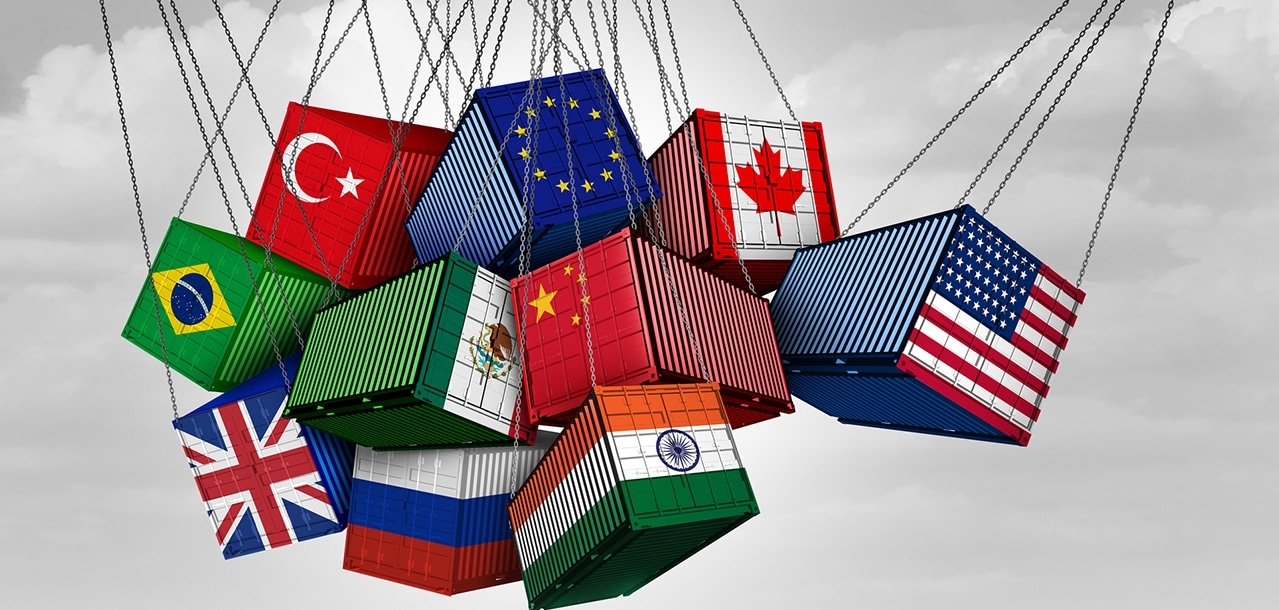
How Do Trade Wars Affect Markets?
The Tax Nobody Votes For
A few years ago, I sat in a boardroom listening to executives debate a problem that had nothing to do with product quality, customer demand, or competition. The issue was a tariff.
Not a new invention. Not a breakthrough technology. A tariff.
Within minutes, spreadsheets were flying across screens. One supplier became uneconomic. Another suddenly looked attractive. Inventory assumptions changed. Profit forecasts narrowed. Capital spending plans were reconsidered.
What struck me wasn't the complexity. It was the speed.
A policy decision made hundreds or thousands of miles away had instantly altered the economics of a business. The market understood it before most people did. Investors began repricing risk long before executives finished their presentations.
That's the thing about trade wars. They are often described as political events. Markets treat them as economic shocks.
And when markets sense a shock, they don't wait for certainty.
They move.
What Is a Trade War?
At its core, a trade war occurs when countries impose barriers on each other's goods and services, typically through tariffs, quotas, restrictions, or sanctions.
The sequence is usually straightforward.
Country A raises tariffs on imports from Country B.
Country B retaliates.
Country A responds again.
The cycle escalates.
Politicians may frame the dispute as a fight for domestic jobs, national security, industrial competitiveness, or strategic leverage. Investors see something different.
They see higher costs.
They see disrupted supply chains.
They see uncertainty.
Markets dislike all three.
The important distinction is that trade wars rarely affect only the countries involved. Modern commerce resembles a web more than a straight line. Pull one strand and movement appears everywhere else.
A smartphone assembled in one nation may contain components from ten others. An automobile may cross multiple borders before reaching a showroom. A tariff imposed on a single product category can ripple through entire industries.
That interconnectedness explains why trade disputes often create market reactions far larger than the headlines suggest.
Why Markets React So Quickly
Markets are forward-looking machines.
Stocks do not represent what a company earned yesterday. They represent what investors believe a company will earn tomorrow.
Trade wars directly challenge those expectations.
When tariffs rise, investors immediately begin asking several questions:
-
Will costs increase?
-
Can companies pass those costs to customers?
-
Will demand weaken?
-
Will profits shrink?
-
Will retaliation reduce exports?
Each question introduces uncertainty.
Each uncertainty demands a discount.
That discount often appears as falling stock prices.
Interestingly, markets frequently decline before measurable economic damage emerges. Investors are attempting to price future consequences, not current conditions.
That's why a trade-war headline can erase billions in market value within hours.
The market is essentially saying:
"We're not sure what happens next, and uncertainty deserves a lower valuation."
The Four Major Market Effects of Trade Wars
1. Higher Corporate Costs
The most immediate consequence is increased expense.
Imagine a manufacturer importing steel.
If tariffs increase steel prices by 25%, the company faces difficult choices:
-
Accept lower profit margins.
-
Raise prices.
-
Find alternative suppliers.
-
Reduce investment elsewhere.
None of those options are particularly attractive.
The challenge becomes even greater when companies operate with thin margins.
A two-percent increase in costs might sound manageable.
For some businesses, it can eliminate a significant portion of annual profits.
Markets understand this arithmetic instantly.
2. Supply Chain Disruption
Modern supply chains were built for efficiency.
Trade wars force companies to prioritize resilience instead.
That transition is expensive.
Factories may need relocation.
Suppliers may require replacement.
Logistics networks may require redesign.
Contracts may need renegotiation.
These changes rarely happen overnight.
They often take years.
During that period, uncertainty becomes a recurring feature of earnings reports and investor discussions.
3. Reduced Global Growth
Trade barriers generally reduce economic activity.
Economists may debate the precise magnitude, but the mechanism is straightforward.
When goods become more expensive:
-
Businesses buy less.
-
Consumers buy less.
-
Investment slows.
-
Trade volumes decline.
Lower trade activity often translates into slower economic growth.
Markets tend to anticipate that slowdown.
Cyclical sectors such as manufacturing, industrials, transportation, and materials often feel the pressure first.
4. Increased Market Volatility
Volatility thrives on unpredictability.
Trade disputes create exactly that environment.
Investors struggle to answer critical questions:
-
How long will tariffs remain?
-
Will negotiations succeed?
-
Which industries will face restrictions next?
-
How severe will retaliation become?
The absence of clear answers creates larger price swings.
Suddenly, earnings forecasts become less reliable.
Valuations become harder to justify.
Risk premiums increase.
Market volatility follows.
Winners and Losers During Trade Wars
Not every company suffers equally.
Some businesses actually benefit.
The distribution of outcomes can be surprisingly uneven.
| Group | Typical Impact | Reason |
|---|---|---|
| Domestic protected industries | Positive initially | Reduced foreign competition |
| Export-dependent firms | Negative | Foreign retaliation reduces demand |
| Manufacturers using imported inputs | Negative | Higher costs |
| Commodity producers | Mixed | Depends on global demand and tariffs |
| Logistics and shipping firms | Negative | Lower trade volumes |
| Domestic substitutes | Potentially positive | Demand shifts toward local products |
| Consumers | Generally negative | Higher prices |
| Multinational corporations | Often negative | Complex global exposure |
The key phrase is "initially."
Short-term beneficiaries do not always remain winners.
Protection can raise prices, reduce efficiency, and weaken incentives for innovation.
Markets eventually recognize those effects as well.
The Historical Record
Trade wars are hardly new.
One of the most cited examples remains the 1930 passage of the Smoot–Hawley Tariff Act in the United States.
The legislation dramatically increased tariffs on thousands of imported goods.
Many trading partners responded with their own restrictions.
Global trade contracted sharply during the ensuing years.
While economists continue debating the precise contribution of tariffs relative to other factors, the episode became a lasting lesson in how protectionism can amplify economic stress.
Fast forward nearly a century.
The U.S.-China trade conflict beginning in 2018 provided a modern case study.
Financial markets experienced repeated bouts of volatility as tariff announcements, negotiations, and retaliatory measures altered expectations.
Some companies shifted production.
Others diversified suppliers.
Investors learned once again that supply chains built over decades cannot be reconfigured in a quarter or two.
The lesson was familiar.
Trade wars may begin with policy.
They eventually show up in earnings.
The Psychological Side of Trade Wars
This aspect receives less attention than it deserves.
Markets are not purely mathematical systems.
They're behavioral systems.
Investors react not only to tariffs themselves but to what tariffs signal.
A trade dispute may indicate:
-
Rising geopolitical tension.
-
Deteriorating diplomatic relationships.
-
Future regulatory restrictions.
-
Potential currency conflicts.
-
Broader economic fragmentation.
Those concerns expand beyond immediate tariff costs.
They influence confidence.
Confidence drives investment.
Investment drives growth.
When confidence weakens, markets notice.
Sometimes the psychological effect exceeds the direct economic effect.
That's why market reactions can appear disproportionate.
Investors aren't pricing today's tariff.
They're pricing tomorrow's possibilities.
What Smart Investors Watch
When trade tensions emerge, experienced investors focus on a handful of indicators.
First, corporate earnings guidance.
Management teams often provide the earliest evidence of real-world impact.
Second, supply-chain adjustments.
Announcements regarding factory relocations or supplier diversification can reveal how seriously companies view the threat.
Third, business investment.
If capital expenditures begin slowing, markets may interpret that as evidence that uncertainty is affecting decision-making.
Fourth, consumer prices.
Tariffs frequently function as a tax embedded within product costs.
Watching inflation data becomes critical.
Finally, investors monitor negotiations themselves.
Markets care less about political rhetoric than they do about tangible progress.
A signed agreement matters.
A press conference rarely does.
The Hidden Cost Few People Discuss
The biggest damage from trade wars may not be tariffs.
It may be hesitation.
Businesses can adapt to many challenges.
Higher taxes.
New regulations.
Labor shortages.
Competition.
What executives struggle with is uncertainty.
When the rules may change tomorrow, long-term planning becomes difficult.
Factories don't get built.
Hiring slows.
Expansion projects are delayed.
Research budgets become vulnerable.
That hesitation rarely generates dramatic headlines.
Yet over time it can exert a meaningful drag on economic growth.
Markets understand this dynamic remarkably well.
Which is why they often react long before economists can measure the impact.
A Lesson Worth Remembering
One lesson I've learned watching markets over decades is that investors frequently underestimate second-order effects.
The first-order effect of a tariff is obvious.
Imported goods become more expensive.
The second-order effects are where the real story begins.
Supply chains shift.
Investment decisions change.
Consumer behavior adapts.
Competitive advantages evolve.
Entire industries reorganize themselves.
Markets spend enormous energy trying to anticipate those changes.
Sometimes they succeed.
Sometimes they overshoot.
But they never ignore them.
Conclusion: Trade Wars Are Really Confidence Wars
Trade wars are often presented as battles over imports and exports.
That's true, but it isn't the whole story.
They're also battles over confidence.
Confidence among executives deciding where to build factories.
Confidence among consumers deciding whether to spend.
Confidence among investors deciding how much risk they're willing to assume.
Markets can absorb higher costs.
They can adapt to new rules.
They can even survive substantial disruptions.
What they struggle with is prolonged uncertainty.
That's why trade wars tend to produce volatility far beyond the direct financial impact of tariffs themselves.
The market's message is usually simple.
Not every tariff destroys value.
Not every trade dispute triggers a downturn.
But when nations begin raising barriers, investors start asking whether the world is becoming less predictable.
And when predictability disappears, markets rarely stand still long enough for anyone to feel comfortable.
- Arts
- Business
- Computers
- الألعاب
- Health
- الرئيسية
- Kids and Teens
- مال
- News
- Personal Development
- Recreation
- Regional
- Reference
- Science
- Shopping
- Society
- Sports
- Бизнес
- Деньги
- Дом
- Досуг
- Здоровье
- Игры
- Искусство
- Источники информации
- Компьютеры
- Личное развитие
- Наука
- Новости и СМИ
- Общество
- Покупки
- Спорт
- Страны и регионы
- World

 English
 Russian
 French
 Spanish
 Portuguese
 Deutsch
 Turkish
 Dutch
Dutch
 Italiano
 Romaian
 Portuguese (Brazil)
 Greek
Greek