
Why are some people more creative than others?
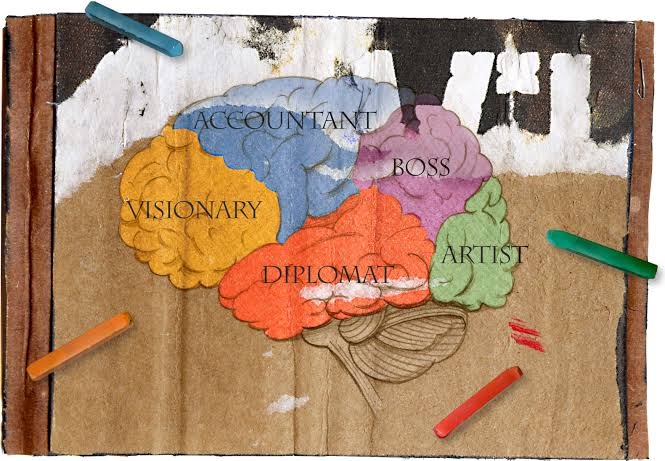
Why Are Some People More Creative Than Others?
Walk into any classroom.
Any office.
Any recording studio.
Any coffee shop.
You'll notice something curious.
Give ten people the same information, the same tools, and the same amount of time, and the outcomes can look dramatically different.
One person sees a problem.
Another sees an opportunity.
One sees limitations.
Another sees possibilities.
One follows the obvious path.
Another wanders somewhere unexpected and returns carrying an idea nobody else noticed.
For centuries, this difference has fascinated philosophers, artists, scientists, and entrepreneurs.
Why does creativity seem to flow effortlessly through some people while others struggle to access it?
Is creativity genetic?
Learned?
Environmental?
Psychological?
Neurological?
The answer, as it often does when studying human behavior, refuses to fit inside a simple category.
Creativity is not the result of a single trait.
It emerges from a collision.
Biology meets experience.
Curiosity meets knowledge.
Discipline meets imagination.
The people we describe as highly creative are rarely distinguished by one extraordinary quality.
More often, they possess an unusual combination of ordinary qualities working together in uncommon ways.
And that distinction changes everything.
The Myth of the Creative Genius
The cultural image is familiar.
A lone genius.
Touched by inspiration.
Operating according to mysterious rules.
Creating masterpieces while the rest of humanity watches from a distance.
It's a compelling story.
It is also deeply misleading.
Research increasingly suggests that creativity is not a magical gift bestowed upon a fortunate few.
Nor is it evenly distributed.
Instead, creativity exists along a spectrum.
Some people appear more creative because they consistently engage behaviors, thought patterns, and environments that make creativity more likely.
The difference matters.
If creativity belongs exclusively to geniuses, there is little to learn.
If creativity emerges from identifiable processes, the conversation becomes much more interesting.
The evidence overwhelmingly favors the second explanation.
The Brain's Wiring Matters
Let's begin with biology.
Not because biology determines destiny.
Because it influences possibility.
Neuroscientists studying creative individuals frequently observe differences in how brain networks communicate.
Particularly among three major systems:
-
Default Mode Network
-
Executive Control Network
-
Salience Network
Highly creative people often demonstrate stronger interaction between these networks.
Ideas move more freely.
Connections form more easily.
Unrelated concepts encounter one another more frequently.
Imagine two cities.
One city contains isolated neighborhoods connected by few roads.
The other contains an extensive transportation system.
Information travels differently.
The creative brain appears to function similarly.
Creativity often depends on unusual connections.
Brains that facilitate those connections may gain an advantage.
Not certainty.
An advantage.
Genetics: A Piece of the Puzzle
People sometimes ask whether creativity is inherited.
Research suggests genetics play a role.
Twin studies indicate that certain traits associated with creativity show moderate heritability.
These include:
-
Openness to experience
-
Cognitive flexibility
-
Risk tolerance
-
Curiosity
Yet genetics explain only part of the story.
A seed contains potential.
The environment determines much of what happens next.
Identical genetic predispositions can produce dramatically different outcomes depending on circumstances.
Genes may influence the starting point.
They do not write the entire script.
Openness to Experience: Creativity's Strongest Predictor
Among all personality traits studied by psychologists, one repeatedly stands above the rest.
Openness to experience.
This trait reflects a person's willingness to engage with novelty.
New ideas.
New places.
New perspectives.
New experiences.
Highly open individuals tend to:
-
Read broadly
-
Explore unfamiliar subjects
-
Question assumptions
-
Embrace ambiguity
-
Seek intellectual stimulation
The connection to creativity is obvious.
Creative insights often emerge from combining ideas across domains.
The broader the input, the richer the combinations.
A mind exposed to diverse influences possesses more raw material.
Creativity requires ingredients before it can produce recipes.
Curiosity Creates Creative Advantages
Curiosity operates like a silent engine.
Many people admire creative outcomes while overlooking the behavior that produces them.
Creative individuals frequently ask more questions.
Not necessarily smarter questions.
More questions.
Why?
What if?
How?
Why not?
What happens if we reverse the assumption?
Curiosity expands the range of information entering the mind.
And information matters.
Because creativity rarely involves creating from nothing.
More often, it involves recombining existing knowledge into new configurations.
The curious person continuously gathers pieces.
Years later, those pieces suddenly connect.
The breakthrough appears spontaneous.
The collection process was anything but.
Knowledge and Creativity Have a Complicated Relationship
Knowledge helps creativity.
Knowledge can also hinder it.
This paradox sits at the center of many creative challenges.
Without knowledge, meaningful innovation becomes difficult.
You cannot reinvent a field you do not understand.
Yet excessive familiarity sometimes creates rigidity.
Experts occasionally become trapped by assumptions.
Beginners occasionally discover possibilities because they don't yet know what is supposedly impossible.
Creative people often navigate this tension effectively.
They learn deeply.
Then they remain willing to question what they have learned.
Mastery without rigidity.
Expertise without imprisonment.
It sounds simple.
It rarely is.
Why Some People Notice More Than Others
Observation may be one of creativity's most underrated skills.
Many individuals move through life collecting information passively.
Creative people often observe differently.
They notice patterns.
Contradictions.
Odd details.
Subtle connections.
Things others overlook.
The world delivers the same raw material to millions of people.
Not everyone pays equal attention.
A songwriter hears an unusual phrase during a conversation.
A designer notices an awkward interaction.
A scientist observes a tiny inconsistency in existing research.
The observation itself may appear insignificant.
Its consequences can be enormous.
Creativity frequently begins with attention.
The Role of Childhood
Childhood experiences shape creative development profoundly.
Not because they determine creative destiny.
Because they influence habits of thought.
Children encouraged to explore often develop greater confidence experimenting with ideas.
Children exposed to diverse experiences accumulate broader mental inventories.
Children permitted to make mistakes often become more comfortable with uncertainty.
Conversely, environments that excessively punish failure may discourage experimentation.
Creativity requires risk.
Risk creates mistakes.
The relationship is unavoidable.
Many creative adults learned early that mistakes were not evidence of inadequacy.
They were part of discovery.
That lesson matters.
Perhaps more than we realize.
A Lesson I Learned About Creative People
Years ago, I had the opportunity to observe several exceptionally creative professionals working on the same project.
I expected brilliance.
What surprised me was curiosity.
They asked questions constantly.
Questions about things seemingly unrelated to their field.
Books.
History.
Psychology.
Architecture.
Music.
Human behavior.
At first, the conversations felt scattered.
Eventually a pattern emerged.
They were collecting material.
Not intentionally for immediate use.
Simply because they were interested.
Months later, those seemingly unrelated observations began appearing inside solutions.
The lesson stayed with me.
Creative people often look different because their inputs look different.
The originality appears during the output stage.
Its foundation was built much earlier.
The Fear Factor
Fear influences creativity more than many people realize.
Creating something new involves uncertainty.
Uncertainty creates vulnerability.
What if the idea fails?
What if people criticize it?
What if the experiment doesn't work?
Highly creative individuals are not necessarily less afraid.
They often develop a different relationship with fear.
Instead of treating fear as a stop sign, they treat it as information.
This distinction changes behavior dramatically.
The willingness to act despite uncertainty creates opportunities unavailable to those waiting for guarantees.
Creative work rarely provides guarantees.
The Importance of Cognitive Flexibility
Imagine receiving a puzzle with only one acceptable solution.
Now imagine receiving a puzzle with fifty possible solutions.
Creative people excel at the second scenario.
Psychologists refer to this ability as cognitive flexibility.
The capacity to shift perspectives.
Adapt assumptions.
Generate alternatives.
Reframe problems.
When confronted with obstacles, highly creative individuals often ask:
Can the problem be viewed differently?
Can the constraint become an advantage?
Can the question itself change?
These mental shifts create possibilities where others see dead ends.
Creativity and Tolerance for Ambiguity
Many people feel uncomfortable when answers remain unclear.
Creative individuals often tolerate ambiguity more effectively.
They can sit with uncertainty.
Remain curious.
Continue exploring.
Without demanding immediate resolution.
This ability matters because innovation frequently emerges from incomplete understanding.
New ideas rarely arrive fully formed.
They begin as fragments.
Hints.
Possibilities.
The willingness to spend time inside uncertainty allows those fragments to develop.
Impatience can interrupt the process prematurely.
Comparison Table: Factors That Influence Creativity
| Factor | How It Supports Creativity | Potential Limitation |
|---|---|---|
| Genetics | Influences cognitive traits and personality | Does not guarantee creative achievement |
| Openness to Experience | Expands exposure to new ideas | Can create distraction without focus |
| Curiosity | Increases information gathering | May lead to endless exploration |
| Knowledge | Provides expertise and raw material | Can encourage rigid thinking |
| Cognitive Flexibility | Enables perspective shifts | Requires continual mental effort |
| Risk Tolerance | Encourages experimentation | Can result in frequent failure |
| Environment | Supports exploration and innovation | Restrictive settings suppress creativity |
| Persistence | Sustains long-term projects | Can become stubbornness |
| Observation Skills | Reveals hidden patterns | Requires active attention |
| Tolerance for Ambiguity | Supports exploration of uncertainty | May delay decision-making |
The table reveals something important.
Creativity is rarely explained by a single variable.
It emerges from interaction.
A system.
A network.
A combination.
Why Persistence Often Matters More Than Talent
Talent receives enormous attention.
Persistence deserves more.
Many studies of creative achievement reveal a recurring pattern.
Highly creative people often produce large quantities of work.
Not all of it succeeds.
Some of it fails spectacularly.
That is precisely the point.
Creative success frequently depends on generating enough attempts for exceptional outcomes to emerge.
The public usually sees the breakthrough.
Not the hundreds of discarded versions.
Persistence creates opportunities for creativity to appear.
Without persistence, many creative advantages remain unrealized.
Environment Shapes Expression
Even extraordinary creative potential can remain dormant.
Environment matters.
Organizations.
Schools.
Families.
Communities.
Each influences whether creativity expands or contracts.
Supportive environments typically share several characteristics:
-
Psychological safety
-
Intellectual diversity
-
Encouragement of experimentation
-
Acceptance of mistakes
-
Access to resources
Creative individuals often flourish where exploration is welcomed.
The same individuals may struggle where conformity dominates.
Context influences expression.
Perhaps more than talent alone.
The Relationship Between Creativity and Failure
Creative people fail frequently.
Not because they are careless.
Because they attempt things others avoid.
Novelty increases uncertainty.
Uncertainty increases failure.
The connection is mathematical.
A person generating ten ideas experiences fewer failures than a person generating one hundred ideas.
Not because the second person is less capable.
Because they are taking more shots.
This reality often creates a misleading impression.
Creative success appears effortless after the fact.
The process rarely looks that way while unfolding.
Why Some People Become Less Creative Over Time
Children often display remarkable imaginative abilities.
Adults frequently report feeling less creative.
What changes?
Several factors contribute.
Routine increases.
Responsibilities expand.
Risk tolerance decreases.
Social expectations strengthen.
Efficiency becomes prioritized.
The brain gradually favors proven pathways.
This process improves productivity.
It can reduce exploration.
The encouraging news is that creativity rarely disappears completely.
More often, it becomes neglected.
Like a muscle receiving insufficient use.
The capacity remains.
The engagement changes.
Can Anyone Become More Creative?
The evidence suggests yes.
Not everyone will become a groundbreaking artist or inventor.
That is not the standard.
Creativity can increase through deliberate practice.
Several habits consistently support growth.
Expand Inputs
Read widely.
Study unfamiliar subjects.
Seek diverse experiences.
Ask Better Questions
Replace assumptions with curiosity.
Produce More Work
Quantity creates opportunities for quality.
Embrace Experimentation
Treat mistakes as information.
Create Regularly
Consistency strengthens creative habits.
Creativity behaves less like a fixed trait and more like a trainable capability.
Some people begin with advantages.
Everyone can improve.
The Real Reason Some People Appear More Creative
The simplest explanation is also the most incomplete.
Some people are more creative because they think differently.
But why do they think differently?
Because they live differently.
They notice differently.
Learn differently.
Question differently.
Experiment differently.
Persist differently.
The visible creativity is often the final result of invisible behaviors repeated across years.
What appears mysterious from a distance becomes understandable up close.
Not predictable.
Not formulaic.
Understandable.
The Question Behind the Question
When people ask why some individuals are more creative than others, they are often asking something deeper.
Is creativity reserved for a select few?
The evidence suggests otherwise.
Creative achievement varies enormously.
Creative potential appears far more widespread.
The difference often lies not in possession of creativity but in cultivation of it.
Some people build lives that encourage curiosity.
Others build lives optimized for certainty.
Some collect diverse experiences.
Others remain inside familiar territory.
Some practice generating ideas.
Others wait for inspiration.
These choices compound.
Years later, the outcomes look dramatic.
The origins may have been subtle.
Creativity is not merely a trait.
It is a relationship.
A relationship with uncertainty.
With curiosity.
With failure.
With possibility.
The people we call creative are often those who have spent years nurturing that relationship.
Not because they were chosen.
Because they kept showing up.
Again and again.
Until possibility became a habit.
- Arts
- Business
- Computers
- Oyunlar
- Health
- Home
- Kids and Teens
- Money
- News
- Personal Development
- Recreation
- Regional
- Reference
- Science
- Shopping
- Society
- Sports
- Бизнес
- Деньги
- Дом
- Досуг
- Здоровье
- Игры
- Искусство
- Источники информации
- Компьютеры
- Личное развитие
- Наука
- Новости и СМИ
- Общество
- Покупки
- Спорт
- Страны и регионы
- World

 English
 Russian
 French
 Spanish
 Portuguese
 Deutsch
 Dutch
Dutch
 Italiano
 Arabic
 Romaian
 Portuguese (Brazil)
 Greek
Greek