
Income inequality in China
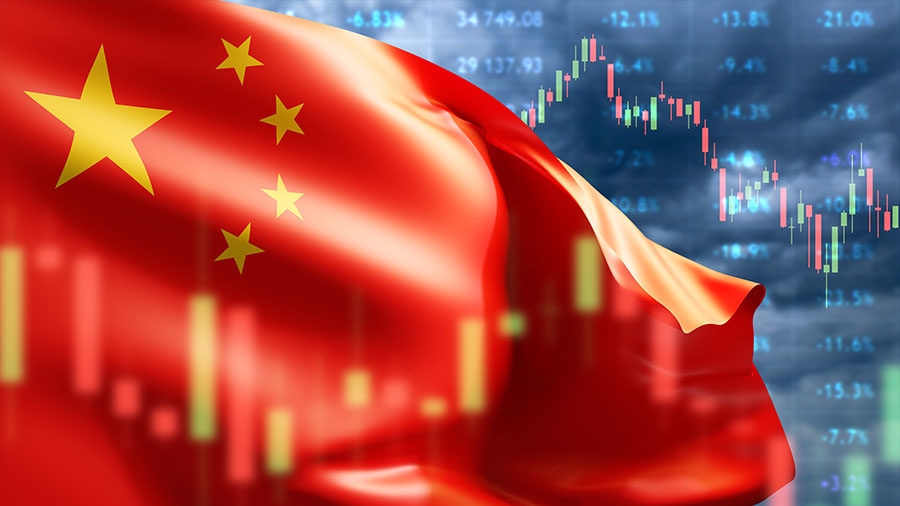
Income Inequality in China
Income inequality in China has been one of the most important socioeconomic issues of the country’s rapid transformation over the past four decades. Since the late 1970s, China has shifted from a centrally planned economy to a largely market-oriented system, lifting hundreds of millions of people out of poverty. However, this growth has not been evenly distributed. Large gaps have emerged between urban and rural populations, coastal and inland regions, and high-skilled and low-skilled workers. Understanding these disparities requires looking at structural reforms, labor markets, education, and government policy.
Overview of Inequality Trends
China’s income inequality rose sharply during the early stages of economic reform. In the 1980s and 1990s, market liberalization and export-led growth disproportionately benefited coastal cities such as Shanghai, Shenzhen, and Guangzhou. Rural areas and western provinces lagged behind.
A commonly used measure of inequality, the Gini coefficient, reflects this trend. According to estimates from the World Bank, China’s Gini coefficient rose from around 0.30 in the early reform period to above 0.45 in the early 2010s, indicating a significant increase in inequality. Although there has been some stabilization and slight decline in recent years, inequality remains relatively high compared to many developed economies.
Urban–Rural Divide
One of the most important drivers of inequality in China is the persistent gap between urban and rural incomes.
Urban residents typically earn significantly more due to access to better-paying jobs, infrastructure, healthcare, and education. Rural households, in contrast, rely more heavily on agriculture or low-wage informal labor. Even when rural residents migrate to cities for work, they often face institutional barriers that limit their access to full urban benefits.
A key structural factor behind this divide is the hukou system, or household registration system. This policy ties access to public services—such as schooling, healthcare, and pensions—to one’s registered place of origin. As a result, rural migrants working in cities may not receive equal social services, even if they contribute to urban economic growth. This institutional barrier has helped sustain income inequality across generations.
Regional Inequality: Coast vs. Inland
China’s economic growth has been geographically uneven. Coastal provinces have benefited from foreign investment, export-oriented manufacturing, and better infrastructure. In contrast, many inland and western regions have fewer industrial clusters and weaker access to global markets.
Cities like Shanghai and Shenzhen have developed into global financial and technology hubs, while provinces such as Gansu or Guizhou have historically relied on agriculture and resource extraction. Although government development programs have aimed to reduce these disparities, regional inequality remains significant.
Infrastructure investment and special economic zones have narrowed some gaps, but the productivity differences between regions continue to shape income distribution.
Education and Human Capital Gaps
Education plays a central role in income inequality. Individuals with higher education levels are far more likely to secure high-paying jobs in technology, finance, and advanced manufacturing sectors.
Urban residents tend to have better access to high-quality schools and universities, while rural students often face under-resourced educational systems. The competition for top universities also favors students from wealthier families who can afford tutoring and better preparation.
Over time, this creates a feedback loop: higher education leads to higher income, which in turn allows the next generation to access even better education. This intergenerational transmission of advantage is a key contributor to persistent inequality.
Labor Market Transformation
China’s transition to a market economy has dramatically reshaped its labor market. In the early reform period, state-owned enterprises played a dominant role in employment. Over time, private firms, foreign-invested companies, and the technology sector expanded rapidly.
This transformation has increased wage dispersion. Highly skilled workers in urban industries—especially in tech, finance, and engineering—have seen rapid income growth. Meanwhile, low-skilled workers in manufacturing or services often experience stagnating wages.
Automation and digitalization are further increasing wage gaps. Workers with advanced technical skills benefit from productivity gains, while routine manual jobs are more vulnerable to displacement or wage pressure.
Wealth Inequality and Asset Ownership
Income inequality is closely linked to wealth inequality, particularly in housing. Urban property prices in major Chinese cities have risen dramatically over the past two decades. Homeowners in cities such as Beijing or Shanghai have accumulated significant wealth, while younger generations and rural migrants often struggle to enter the housing market.
Because real estate is a major store of wealth in China, disparities in property ownership have widened the overall wealth gap. Families with early access to urban housing markets have seen substantial capital gains, further reinforcing inequality across generations.
Government Policy and Redistribution
The Chinese government has implemented various policies to address inequality. These include rural development programs, tax reforms, poverty alleviation campaigns, and expansion of social welfare systems.
One major initiative was the targeted poverty alleviation campaign, which aimed to eliminate extreme poverty by 2020. According to official reports, this goal was achieved, significantly improving living standards in poorer regions.
More recently, policymakers have emphasized the concept of “common prosperity,” which aims to reduce excessive wealth disparities and promote more balanced growth. This includes regulatory actions in sectors such as technology and real estate, as well as efforts to expand access to education, healthcare, and affordable housing.
International organizations such as the OECD have noted that while China has made progress in reducing absolute poverty, relative inequality remains a challenge due to structural and institutional factors.
Social Impacts of Inequality
Income inequality has broader social consequences. High levels of inequality can reduce social mobility, increase regional disparities in public services, and create perceptions of unfairness in economic opportunities.
In China, inequality has also influenced migration patterns, as millions of rural workers move to cities in search of better opportunities. While this migration supports economic growth, it also places pressure on urban infrastructure and public services.
Moreover, inequality can affect consumption patterns. Wealthier households tend to save and invest more, while lower-income households spend a larger share of their income on basic needs. This can influence overall economic stability and domestic demand.
Conclusion
Income inequality in China is the result of complex and interconnected factors, including rapid economic growth, regional development gaps, institutional barriers like the hukou system, and differences in education and skills. While economic reforms have lifted millions out of poverty and transformed China into a global economic powerhouse, they have also created significant disparities in income and wealth.
Government efforts under the “common prosperity” agenda indicate a renewed focus on reducing inequality, but balancing efficiency with equity remains a major policy challenge. As China continues to evolve economically, managing inequality will remain central to its long-term social and economic stability.
- Arts
- Business
- Computers
- Jeux
- Health
- Domicile
- Kids and Teens
- Argent
- News
- Personal Development
- Recreation
- Regional
- Reference
- Science
- Shopping
- Society
- Sports
- Бизнес
- Деньги
- Дом
- Досуг
- Здоровье
- Игры
- Искусство
- Источники информации
- Компьютеры
- Личное развитие
- Наука
- Новости и СМИ
- Общество
- Покупки
- Спорт
- Страны и регионы
- World

 English
 Russian
 Spanish
 Portuguese
 Deutsch
 Turkish
 Dutch
Dutch
 Italiano
 Arabic
 Romaian
 Portuguese (Brazil)
 Greek
Greek