
Does stress affect memory?
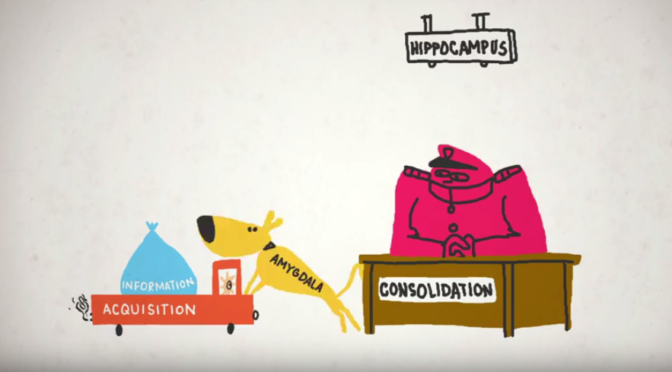
The mind is not a warehouse, and it is certainly not a hard drive. We operate under the stubborn, persistent delusion that our memories are finite—that we have a fixed capacity, a certain number of gigabytes of biological hard drive space that we slowly consume until we hit the inevitable, terrifying limit of a "full" brain. We treat the act of remembering as a feat of sheer, unadulterated willpower, as if we could simply brute-force our way to recall if we were only disciplined enough to keep our anxiety in check.
But this is not how the brain is built.
I remember standing in a drafty, cold auditorium in New York, watching a man memorize the sequence of an entire deck of playing cards in less than thirty seconds. He wasn't a savant. He wasn't gifted with a photographic recall that the rest of us lack. He was, by his own admission, a man of average intelligence who had spent his adult life mastering a series of ancient, spatial tricks. He was not a superhuman; he was an architect. He had learned that the secret to retention wasn't to "try harder"—a strategy that is, in neurobiological terms, a recipe for failure when the nervous system is saturated with cortisol—but to understand the delicate, chemical chemistry of his own cognition.
Does stress affect memory? The question itself is framed incorrectly. It suggests that stress is an external intruder, an inconvenience that bumps into our brain while we are trying to think. It is not. Stress is an evolutionary survival mechanism that effectively reallocates the brain's internal resources from high-level, reflective thought to immediate, reflexive action. Stress does not just "affect" memory; it fundamentally reconfigures what the brain prioritizes.
The Biology of the Siege
When we are under acute stress, the amygdala—the brain’s primitive, emotional alarm bell—begins to scream. It signals the release of glucocorticoids, primarily cortisol, into the bloodstream. In the short term, this is a beautiful, elegant adaptation. It makes us faster, sharper, and more reactive to the immediate danger. But it also shuts down the front office. The hippocampus, the seat of complex memory and spatial navigation, finds itself starved of the resources it needs to encode new, nuanced information.
Think of it as a riot in a library. When the building is on fire, the librarians stop organizing the books. They do not care about the Dewey Decimal System. They care about getting out of the building. Your brain does the same. It abandons the effort to store the name of a colleague or the nuances of a text, focusing instead on the singular, narrow task of survival.
The Cortisol Threshold
The relationship between stress and performance is not a straight line; it is an inverted U-curve. A moderate amount of arousal—a slight edge, a bit of healthy pressure—can actually sharpen memory and focus. But once you crest that peak, once the stress becomes toxic and chronic, the cognitive collapse is swift and merciless.
| Stress Level | Physiological State | Cognitive Output |
| Dormant | Low arousal; diffuse focus | Poor encoding; low motivation |
| Optimal | Elevated cortisol; engaged amygdala | Peak performance; high consolidation |
| Toxic/Chronic | Saturated receptors; hippocampal atrophy | Severe impairment; retrieval failure |
| Panic | Amygdala hijack; system shutdown | Memory blanking; complete loss of access |
The Lesson of the Locked Room
I once walked into a high-stakes meeting, having prepared for weeks. My notes were meticulous, my memory palace was pristine, and I felt I knew the material to the letter. But the moment the room went silent and all eyes turned to me, the cortisol spiked. I felt the familiar, hot prickle of adrenaline, and then, a terrifying, absolute silence in my mind. The information was there, I knew it was there, but the bridge between my intention and my access had been burned to the ground.
I was experiencing an "amygdala hijack." I wasn't failing because I hadn't studied. I was failing because I had allowed my body to believe that the meeting was a life-or-death scenario. I had tricked my own brain into thinking it needed to flee the room rather than speak to it.
The lesson learned was not to study more. It was to develop a "pre-flight" ritual—a way to signal to my amygdala that the environment, while pressurized, was not lethal. I learned to use controlled, slow breathing to physically signal a state of safety to my nervous system, essentially telling my brain that it was acceptable to reopen the library.
The Discipline of the Long-Term Trace
We live in a culture that encourages the immediate, the transient, and the disposable. We are constantly feeding the system, but we are never allowing the system to stabilize the trace. Chronic stress ensures that we are always in a state of flux, always reacting to the next alert, always bracing for the next impact.
Memory consolidation—the process by which a temporary neural firing becomes a permanent structural change—takes time. It requires a state of "quiet." It requires you to occasionally look away from the screen and actually think about what you have just read. If you are constantly living in a state of high-stress vigilance, you are effectively preventing the consolidation from ever occurring. You are, in effect, a person who never allows the cement to dry.
The Practice of Reframing
If you want a better memory, you must learn to navigate the stress you cannot avoid. You must practice the meta-cognitive art of labeling the stress. When you feel that tightening in your chest, do not just accept it as a state of "pressure." Identify it as a physiological, biochemical event. By naming it, you move the activity from the primitive amygdala back to the prefrontal cortex. You are effectively telling your brain that the riot is an illusion.
The Provocative Conclusion: The Choice to Remember
Can we mitigate the impact of stress on memory? Yes, but it cannot be improved by a pill, a quick-fix breathing app, or a passive avoidance of difficult tasks. It can only be improved by the decision to be a participant in your own biology.
We are living in an era of unprecedented stress, not because our brains are failing, but because we have outsourced the labor of attention to a world that feeds on our alarm. We have decided that our biological responses are something to be ignored or suppressed. We have surrendered our status as the architects of our own mental palaces in favor of a cheap, externalized storage locker that crumbles the moment the pressure rises.
If you want a better memory, you must reclaim the labor of the mind. Pay attention. Build the palaces. Make the images weird. Be willing to endure the struggle of retrieval, but be kind to your own nervous system while you do it. You are not the sum of what you have experienced; you are the sum of what you have bothered to keep. And that, in the final analysis, is a choice you make, over and over again, every single moment you decide to look at the world and actually, truly, see it.
- Arts
- Business
- Computers
- Oyunlar
- Health
- Home
- Kids and Teens
- Money
- News
- Personal Development
- Recreation
- Regional
- Reference
- Science
- Shopping
- Society
- Sports
- Бизнес
- Деньги
- Дом
- Досуг
- Здоровье
- Игры
- Искусство
- Источники информации
- Компьютеры
- Личное развитие
- Наука
- Новости и СМИ
- Общество
- Покупки
- Спорт
- Страны и регионы
- World

 English
 Russian
 French
 Spanish
 Portuguese
 Deutsch
 Dutch
Dutch
 Italiano
 Arabic
 Romaian
 Portuguese (Brazil)
 Greek
Greek
