
What Is Retail Merchandising? The Invisible Language That Shapes Every Purchase
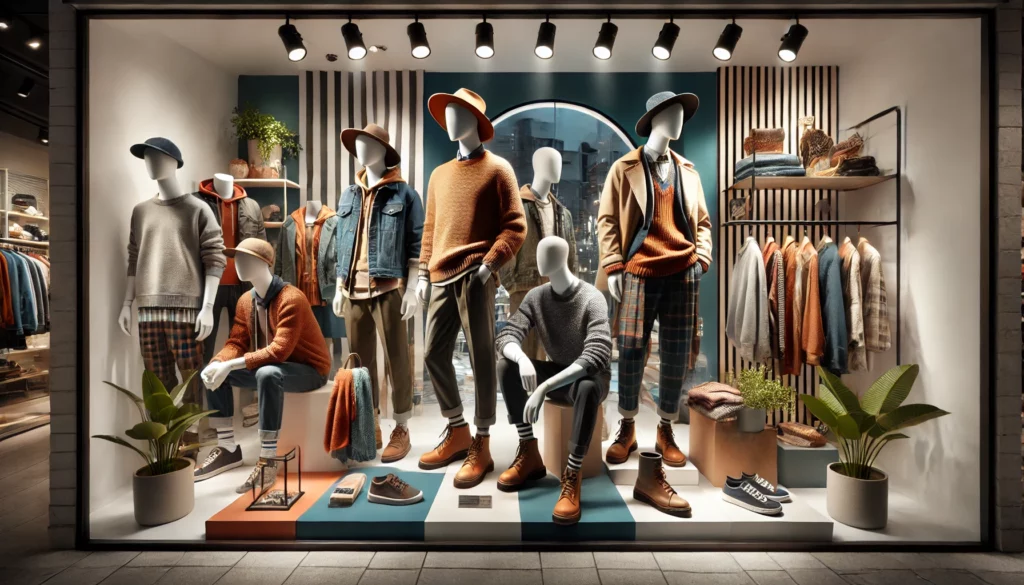
A customer enters a store intending to buy a bottle of shampoo.
Twenty minutes later, she leaves with shampoo, a hair mask, a scented candle, and a water bottle she never planned to purchase.
Most retailers would call that a successful shopping trip.
Most customers would call it spontaneous.
Neither description tells the whole story.
What actually happened was merchandising.
Not advertising.
Not persuasion.
Not luck.
Merchandising.
It is one of the most powerful forces in retail and, paradoxically, one of the least understood. Customers encounter merchandising every time they shop, yet rarely notice it. Retail executives invest millions in merchandising strategies, yet often struggle to define precisely why certain merchandising decisions succeed while others fail.
That ambiguity exists because merchandising is not a single activity. It is a collection of interconnected decisions involving product selection, assortment planning, pricing, placement, presentation, and storytelling.
At its best, merchandising transforms shopping from a transaction into an experience.
At its worst, it creates confusion, friction, and missed sales opportunities.
The distinction matters because consumers rarely purchase products in isolation. They purchase within environments. And those environments influence behavior more profoundly than most retailers care to admit.
The question, then, is not simply what retail merchandising is.
The more interesting question is why it remains one of the most decisive drivers of retail performance.
Retail Merchandising Defined
At its core, retail merchandising is the process of presenting products to customers in ways that maximize both customer satisfaction and business performance.
That definition sounds deceptively straightforward.
Yet merchandising encompasses a remarkable range of decisions:
- Which products should be offered?
- How many variations should be available?
- Where should products be displayed?
- Which items should be grouped together?
- How should pricing be communicated?
- What visual cues should guide customer attention?
Every answer shapes customer behavior.
Merchandising is therefore both an art and a science.
The science comes from data.
The art comes from understanding people.
The strongest retailers excel at both.
Merchandising Is Really About Choice Architecture
One of the most persistent myths in retail is that customers make decisions independently.
Certainly, customers exercise agency.
But the environment matters.
A great deal.
Behavioral researchers have repeatedly demonstrated that the way choices are presented influences the choices people ultimately make.
Retail merchandising operates within this principle.
Consider a grocery store.
Milk is rarely placed near the entrance.
Impulse products frequently appear near checkout lanes.
Premium items often occupy eye-level shelf positions.
Complementary products are grouped together.
These decisions are intentional.
Merchandising creates what psychologists might call a decision environment.
Retailers create conditions that make certain choices easier, more visible, and more appealing.
Customers remain free to decide.
The environment shapes how those decisions unfold.
The Core Components of Retail Merchandising
Effective merchandising consists of several interconnected disciplines.
When one element weakens, the entire customer experience often suffers.
Product Assortment
Merchandising begins with deciding what products customers will encounter.
This sounds obvious until retailers face assortment complexity.
Offering too few products limits customer choice.
Offering too many products creates confusion.
Research consistently suggests that excessive choice can overwhelm shoppers and reduce purchase confidence.
The goal is not maximum variety.
The goal is relevant variety.
Successful assortments balance breadth and simplicity.
Product Placement
Location influences visibility.
Visibility influences purchasing behavior.
Products positioned at eye level generally outperform products located at less prominent shelf positions.
End-cap displays frequently generate stronger sales than standard shelf placements.
High-traffic areas create exposure opportunities.
Retailers often pay close attention to placement because attention itself is scarce.
Products cannot be purchased if they remain unnoticed.
Pricing Presentation
Merchandising extends beyond price itself.
How pricing is displayed matters.
Customers interpret value through context.
A product positioned beside a more expensive alternative may appear affordable.
The same product displayed differently may seem costly.
Price perception frequently depends on surrounding information.
Visual Presentation
Visual merchandising encompasses:
- Store layouts
- Product displays
- Signage
- Lighting
- Color coordination
- Fixture design
These elements influence emotional responses before customers consciously evaluate products.
Retail environments communicate messages continuously.
Customers absorb those messages whether retailers intend them or not.
Why Merchandising Matters More Than Ever
Consumers today encounter an overwhelming number of purchasing options.
Retailers no longer compete solely against neighboring stores.
They compete against every alternative available to consumers.
That reality increases the importance of merchandising.
Products alone rarely create differentiation.
Many retailers sell similar merchandise.
The competitive advantage often emerges from how products are presented.
The shopping experience itself becomes part of the value proposition.
Merchandising helps retailers:
- Improve product discoverability
- Increase basket size
- Strengthen brand identity
- Simplify decision-making
- Enhance customer satisfaction
In effect, merchandising converts inventory into experience.
Without it, products become isolated objects rather than components of a coherent shopping journey.
Different Merchandising Strategies Across Retail Categories
Not all merchandising approaches serve the same objectives.
Different retail categories emphasize different priorities.
Retail Merchandising Comparison
| Retail Category | Merchandising Focus | Customer Objective | Common Strategy |
|---|---|---|---|
| Grocery | Convenience and speed | Efficient shopping | Category organization |
| Luxury Retail | Exclusivity and prestige | Emotional engagement | Sparse presentation |
| Fashion Retail | Inspiration and discovery | Trend exploration | Lifestyle displays |
| Consumer Electronics | Product education | Informed decision-making | Interactive demonstrations |
| Home Furnishings | Visualization | Space planning | Room-based displays |
| Beauty Retail | Experimentation | Product trial | Tester stations and guided discovery |
Notice how the merchandising strategy changes according to customer expectations.
This is a critical insight.
Effective merchandising is customer-centric, not product-centric.
The objective is understanding how customers want to shop.
My Lesson Learned About Merchandising
Several years ago, I worked with a retailer facing stagnant sales despite introducing several promising new products.
Management assumed the issue involved pricing.
Others blamed marketing.
The products themselves appeared competitive.
Yet customer adoption remained disappointing.
When we observed shoppers inside stores, a different explanation emerged.
Customers simply were not seeing the products.
The merchandise was displayed logically from an operational perspective but invisibly from a customer perspective.
Products were buried within crowded assortments.
Signage lacked clarity.
Key items received minimal visual emphasis.
After reorganizing displays and improving visual hierarchy, sales increased significantly.
The products had not changed.
The customers had not changed.
The presentation had changed.
That experience reinforced a lesson I continue to find relevant: merchandising is often less about convincing customers and more about helping them notice what already interests them.
Visibility frequently precedes demand.
Visual Merchandising: The Emotional Dimension
Retail decisions are not purely rational.
Emotion plays a substantial role.
Visual merchandising recognizes this reality.
A beautifully designed retail environment creates feelings before it communicates information.
Luxury retailers understand this particularly well.
Sparse displays can create perceptions of exclusivity.
Carefully controlled lighting can increase perceived quality.
Generous spacing can enhance product significance.
These effects are subtle.
Yet they influence behavior.
Customers rarely say, “I purchased this because of shelf spacing.”
Nevertheless, environmental cues shape perception continuously.
Retailers ignore these influences at their own risk.
Merchandising and Customer Psychology
The most effective merchandising strategies align with human psychology.
Several principles appear repeatedly.
Attention Is Limited
Customers cannot evaluate everything.
Merchandising helps direct attention toward priority products.
Simplicity Encourages Decisions
Complex environments create friction.
Clear organization improves confidence.
Context Shapes Value
Products are evaluated relative to surrounding alternatives.
Placement influences perception.
Discovery Creates Engagement
Customers enjoy finding relevant products unexpectedly.
Thoughtful cross-merchandising supports this process.
These principles help explain why merchandising influences outcomes so consistently.
Retailers are not merely displaying products.
They are designing decision environments.
The Rise of Omnichannel Merchandising
Historically, merchandising occurred primarily inside physical stores.
Today, merchandising extends across channels.
Customers interact with merchandise through:
- Websites
- Mobile apps
- Social commerce platforms
- Marketplaces
- Physical stores
This evolution creates new challenges.
Product presentation must remain consistent while adapting to different environments.
An online category page functions differently from a physical aisle.
A mobile screen functions differently from a storefront display.
Yet the underlying objective remains remarkably similar.
Help customers discover products efficiently and confidently.
The medium changes.
The merchandising principles endure.
Data Has Changed Merchandising—But Not Replaced Judgment
Retailers now possess extraordinary amounts of customer data.
They can analyze:
- Conversion rates
- Product views
- Click-through behavior
- Basket composition
- Purchase frequency
These insights improve merchandising precision.
Yet data alone cannot determine every decision.
Consumer behavior often contains emotional and contextual dimensions that resist simple measurement.
A display may succeed because it creates excitement.
A layout may resonate because it feels intuitive.
A product assortment may feel right despite conflicting historical data.
The strongest merchandisers combine analytical discipline with human insight.
Neither capability is sufficient independently.
Together, they become powerful.
Common Merchandising Mistakes
Even experienced retailers encounter recurring merchandising challenges.
Overcrowded Displays
Too many products compete for attention simultaneously.
Visibility declines.
Decision-making becomes harder.
Poor Product Adjacencies
Products lacking logical relationships are grouped together.
Customers struggle to navigate.
Inconsistent Presentation
Brand identity becomes fragmented.
Customer expectations become unclear.
Ignoring Customer Behavior
Operational convenience overrides customer needs.
Shopping becomes more difficult.
These mistakes often emerge gradually.
Their cumulative impact, however, can be substantial.
Measuring Merchandising Effectiveness
Retailers increasingly rely on metrics to evaluate merchandising performance.
Common measures include:
- Sales per square foot
- Conversion rate
- Average transaction value
- Basket size
- Category productivity
- Product sell-through rates
These metrics provide useful signals.
Yet measurement should always connect back to customer behavior.
Successful merchandising ultimately influences how customers shop, discover, and purchase.
The numbers matter.
The customer experience matters more.
Conclusion: Merchandising Is Retail’s Most Powerful Conversation
When people ask, “What is retail merchandising?” they often expect a discussion about displays, signage, or shelf arrangements.
Those elements matter.
But they are merely visible expressions of something deeper.
Merchandising is the language retailers use to communicate with customers.
Every assortment decision sends a message.
Every display tells a story.
Every placement choice influences perception.
Customers rarely read these messages consciously.
Yet they respond to them continuously.
The most successful retailers understand that merchandising is not decoration. It is not an operational afterthought. It is not a collection of visual tactics.
It is strategy made visible.
And perhaps that is what makes merchandising so fascinating.
When executed effectively, customers barely notice it at all.
They simply feel understood.
They find what they need.
They discover what they did not know they wanted.
And they leave believing they made entirely independent choices.
Which, from a merchandising perspective, may be the greatest success of all.
- Arts
- Business
- Computers
- Игры
- Health
- Главная
- Kids and Teens
- Деньги
- News
- Personal Development
- Recreation
- Regional
- Reference
- Science
- Shopping
- Society
- Sports
- Бизнес
- Деньги
- Дом
- Досуг
- Здоровье
- Игры
- Искусство
- Источники информации
- Компьютеры
- Личное развитие
- Наука
- Новости и СМИ
- Общество
- Покупки
- Спорт
- Страны и регионы
- World

 English
 French
 Spanish
 Portuguese
 Deutsch
 Turkish
 Dutch
Dutch
 Italiano
 Arabic
 Romaian
 Portuguese (Brazil)
 Greek
Greek
