
Can neuroplasticity improve memory?
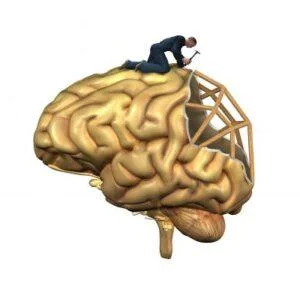
The mind is not a warehouse, and it is certainly not a hard drive. We operate under the stubborn, persistent delusion that our mental faculties are a fixed endowment—a set of biological tools we are handed at birth, which we must then use to hack away at the granite of reality until they inevitably dull and break. We treat our cognitive limits as a permanent horizon, a fence beyond which we cannot venture, convinced that the architecture of our understanding is as immutable as the color of our eyes.
But this is not how the brain is built.
I remember standing in a cluttered, humming laboratory in Montreal, watching an fMRI scan as it rendered the neural geography of a musician who had begun training in their sixties. They were not a prodigy. They were a person of perfectly average intellect who had been told, for their entire adult life, that their window for mastery had slammed shut decades ago. As the scan populated with bursts of color—denoting an explosion of new synaptic activity in the auditory cortex—I realized that the old map of the brain was dead. We were not looking at a static machine. We were looking at a living, adaptive landscape. I was witnessing the physical evidence of neuroplasticity: the brain’s radical, persistent, and lifelong capacity to rewire its own circuitry in response to the demands of the world.
Can neuroplasticity improve memory? The question is framed incorrectly. It suggests that neuroplasticity is a "feature" we can toggle to boost our output. It is not. Neuroplasticity is the fundamental operating system of the mind. It is not an add-on; it is the process through which memory is even possible in the first place. The question is not whether it can improve memory, but why we have spent so long treating our brains as if they were finished products rather than ongoing projects.
The Ecology of the Synaptic Renovation
We live in a culture that treats cognitive maturity as a steady, upward climb that ends in a plateau, followed by a slow, tragic erosion. We accept the "senior moment" as a biological destiny, ignoring the fact that our neurons are constantly pruning, branching, and strengthening based on what we actually do.
Think of your memory as a forest. If you walk the same path every single day—the same thoughts, the same routines, the same patterns of intake—the path becomes a road. It is efficient, frictionless, and utterly predictable. But it is also where growth stops. Neuroplasticity is the process of abandoning the road and cutting a new trail. It is uncomfortable. It is difficult. It requires the brain to allocate precious metabolic energy to the task of building new structures, which is precisely why we tend to avoid it.
The Biological Circuit Breakers
When we engage in neuroplastic practice, we are triggering the release of neurotrophic factors—the "fertilizer" of the mind. These are the chemical messengers that encourage the growth of new dendritic spines, the tiny, finger-like structures that connect one neuron to another. We are not just "learning"; we are physically increasing the complexity of our own biological hardware.
| Engagement Level | Neural Response | Memory Impact |
| Passive Consumption | Low synaptic firing; minimal pruning | Rapid decay; no long-term structural gain |
| Active Retrieval | LTP (Long-Term Potentiation) | Strengthens existing pathways; high retention |
| Complex Skill Acquisition | Dendritic arborization | Creates novel, redundant neural networks |
| Environment Enrichment | Increased BDNF (Brain-Derived Neurotrophic Factor) | Improves global cognitive reserve |
The Lesson of the Locked Room
I once spent a month trying to memorize the layout of a city I had never visited, using only a paper map and my own spatial visualization. I was struggling. I felt the sharp, electric fatigue of a brain being pushed past its comfort zone. I wanted to reach for a navigation app, to outsource the labor to a device that would do the thinking for me.
The lesson I learned was not about the city. It was about the threshold of the struggle. By forcing myself to stay in that uncomfortable, heightened state of attention, I wasn't just learning the streets. I was forcing my brain to allocate more cortical territory to spatial reasoning. When I finally arrived in the city, the sensation of moving through it was not a recognition; it was an expansion. I had physically altered the landscape of my own temporal lobe.
This is the distinction we often ignore: we are rarely "forgetting" because our brains are full. We are forgetting because we have stopped giving our brains a reason to build new rooms.
The Discipline of the Expansion
If you want to use neuroplasticity to improve your memory, you must reclaim the labor of the mind. You must stop treating your cognitive life as a variable you can optimize away.
1. The Strategy of Novelty
The brain does not care about the familiar. You can read the same information for forty years and you will not create a new, plastic trace. You must pursue the unknown. The acquisition of a skill that is fundamentally alien to your current expertise is the ultimate stimulus for neural growth.
2. The Ritual of "Difficult" Retrieval
Do not lean on the easy path. When you are trying to remember, do not immediately consult your notes or your digital tools. Force the brain to struggle for the retrieval. That discomfort—that specific, electric sensation of searching for a connection that isn't quite there—is the feeling of the dendrites reaching out and reconnecting.
3. The Architecture of Rest
You are not a machine. You are a biological system. Neuroplasticity is a massive, metabolic endeavor. If you are not sleeping, you are not building. The deepest stages of rest are not wasted time; they are the moments when the brain is most active, binding the day’s fragile, plastic traces into the long-term, permanent structures of the mind.
The Provocative Conclusion: The Choice to Remember
Can neuroplasticity improve memory? It is the only thing that can. It is the architect, the material, and the blueprint.
We are living in an era of unprecedented cognitive neglect, not because our brains are failing, but because we have outsourced the labor of attention and sacrificed the necessity of neural friction for the hollow promise of ease. We have decided that our cognitive limits are merely barriers to be accepted, rather than territories to be conquered. We have surrendered our status as the architects of our own mental palaces in favor of a cheap, externalized storage locker that eventually leaks.
If you are concerned, do not look for a diagnostic shortcut or a memory-boosting pill. Look for the pattern of your own engagement. Be willing to endure the perceived "lack of productivity" of hours spent in the discomfort of the new. You are not the sum of what you have experienced; you are the sum of what you have bothered to keep. And that, in the final analysis, is a choice you make, over and over again, every single moment you decide to look at the world and actually, truly, see it.
- Arts
- Business
- Computers
- Παιχνίδια
- Health
- Κεντρική Σελίδα
- Kids and Teens
- Money
- News
- Personal Development
- Recreation
- Regional
- Reference
- Science
- Shopping
- Society
- Sports
- Бизнес
- Деньги
- Дом
- Досуг
- Здоровье
- Игры
- Искусство
- Источники информации
- Компьютеры
- Личное развитие
- Наука
- Новости и СМИ
- Общество
- Покупки
- Спорт
- Страны и регионы
- World

 English
 Russian
 French
 Spanish
 Portuguese
 Deutsch
 Turkish
 Dutch
Dutch
 Italiano
 Arabic
 Romaian
 Portuguese (Brazil)
