
Is memory genetic?
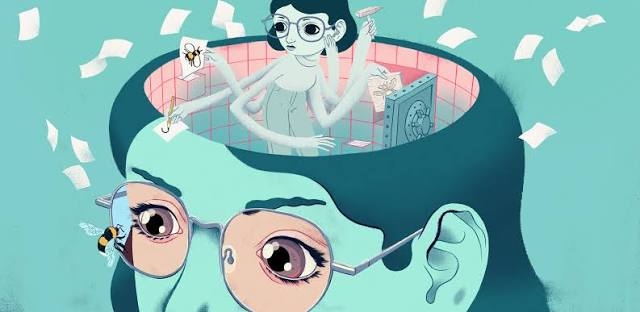
The mind is not a warehouse, and it is certainly not a hard drive. We operate under the stubborn, persistent delusion that our mental faculties are a pre-ordained inheritance—a biological endowment that we receive, fully formed, at the moment of conception. We treat the act of remembering as a manifestation of a "genetic destiny," believing that our ability to recall a grocery list or a stanza of poetry is etched into our DNA, as immutable as the color of our eyes or the architecture of our jawlines.
But this is not how the brain is built.
I remember standing in a fluorescent-lit laboratory in cold, gray Stockholm, watching a twin study that sought to isolate the "memory gene." The researchers were searching for the biological blueprint of recall. They found threads, certainly. They found markers of synaptic efficiency and proteins that regulate the plasticity of the hippocampus. Yet, when they finished, the data didn't offer a map of a predetermined future. It offered a map of a fragile, responsive potential. I watched a set of identical twins—sharing every base pair of their code—display vastly different capacities for spatial memory. One had spent his life building mental palaces to master cards; the other had spent his life in front of a screen, outsourcing his recollection to a device. The genes were the same. The architecture was unrecognizable.
Is memory genetic? The question itself is framed as if we are looking for a singular "on" switch. We are not. To ask if memory is genetic is to ask if the capacity to run a marathon is genetic. Are there genes that influence the length of your tendons, the efficiency of your oxygen uptake, or the density of your muscle fibers? Of course. But do those genes dictate whether you will finish the race? They do not. The race is won by the miles you put in.
The Ecology of the Heritable Trace
We live in a culture that treats the human intellect as a fixed asset to be inventoried. We are constantly searching for the "smart gene," the "forgetful gene," or the "anxious gene," as if the human experience were a simple input-output equation of nucleotides. We confuse the predisposition for a cognitive style with the realization of that style.
Think of your genome as a set of building blocks. It provides the floor plan, the materials, and the structural limitations. It dictates that you are a house, not a forest. But it does not dictate how you decorate the rooms, which windows you keep open, or whether you choose to build an extension into the backyard of your own latent potential. Memory is the interior design of the brain. It is the result of the constant, obsessive, lifelong process of structural modification that we call experience.
The Biological Sorting Mechanism
When we examine the genetic components of memory, we aren't looking at the content of what we remember. We are looking at the mechanics of the machinery. We see variations in how quickly a synapse can be potentiated, how efficiently a protein can be synthesized, or how robustly a dendrite can arborize.
| Genetic Variable | Biological Function | Impact on Memory |
| BDNF Expression | Neural "fertilizer" production | High; dictates the plasticity threshold |
| Synaptic Tagging | Molecular markers for recall | Moderate; influences trace stability |
| Dopamine Receptor Density | Motivation/Attention coupling | High; governs the depth of encoding |
| Myelination Rate | Neural signal conductivity | Moderate; influences processing speed |
The Lesson of the Unfinished Room
I once spent a month obsessed with the idea that I had hit my own "genetic ceiling." I had reached a plateau in my ability to memorize complex narratives, and I was convinced that I had simply run out of the biological fuel provided by my parents. I was looking for an excuse to stop the labor. I wanted to believe that my failure was written in my double helix, so I wouldn't have to face the fact that I was simply not practicing with the necessary intensity.
The lesson I learned was not about my DNA. It was about my transparency to myself. I had not "lost" my capacity; I had stopped challenging my limits. By forcing myself to return to the uncomfortable, electric work of spatial visualization—to push through the mental fatigue that I had mistaken for biological exhaustion—I realized that the "ceiling" was not a wall. It was a floor.
This is the distinction we often ignore: we are rarely failing because our genes are insufficient. We are failing because we are using our genes as a shield to protect us from the work of building our own cognitive architecture.
The Discipline of the Interaction
If you want to understand the role of your heritage, you must first acknowledge that your genes are not your commander. They are your collaborators.
1. The Strategy of Environmental Press
The gene-environment interaction is the primary driver of the brain. If you provide the hardware with a rich, challenging, and novel environment, the genetic potential for plasticity will be actualized. If you provide it with the predictable and the passive, the potential will remain, quite literally, buried.
2. The Ritual of "Difficult" Retrieval
The effort of memory is the very thing that signals to the genome to keep the machinery efficient. When you struggle to recall a name or a sequence, you are triggering a molecular cascade that effectively says, this pathway is important, keep the hardware in top shape. You are signaling to your own biology.
3. The Architecture of Growth
We must stop asking if we are "born with it." We must start asking what we are building with what we are given. Your heritage is the foundation, but you are the architect. The most significant variables in the memory equation are not the nucleotides in your cells; they are the choices you make every single day about what you will bother to notice.
The Provocative Conclusion: The Choice to Remember
Is memory genetic? It is a factor, yes, but it is a minor note in a much larger symphony of self-construction. To surrender to the idea that your memory is a genetic prison is to commit the ultimate act of cognitive sabotage.
We are living in an era of unprecedented genetic curiosity, not because we are finally understanding the self, but because we are looking for a place to shift the blame. We have decided that our biological limits are something to be accepted as a destiny, rather than a challenge to be met with the labor of the day. We have surrendered our status as the architects of our own mental palaces in favor of a cheap, externalized storage locker that eventually leaks.
If you are concerned about your capacity, do not look for a genetic test or a shortcut. Look for the pattern of your own engagement. Be willing to endure the discomfort of the struggle. You are not the sum of what you have inherited; you are the sum of what you have bothered to keep. And that, in the final analysis, is a choice you make, over and over again, every single moment you decide to look at the world and actually, truly, see it.
- Arts
- Business
- Computers
- Игры
- Health
- Главная
- Kids and Teens
- Деньги
- News
- Personal Development
- Recreation
- Regional
- Reference
- Science
- Shopping
- Society
- Sports
- Бизнес
- Деньги
- Дом
- Досуг
- Здоровье
- Игры
- Искусство
- Источники информации
- Компьютеры
- Личное развитие
- Наука
- Новости и СМИ
- Общество
- Покупки
- Спорт
- Страны и регионы
- World

 English
 French
 Spanish
 Portuguese
 Deutsch
 Turkish
 Dutch
Dutch
 Italiano
 Arabic
 Romaian
 Portuguese (Brazil)
 Greek
Greek
