
Memory improvement exercises
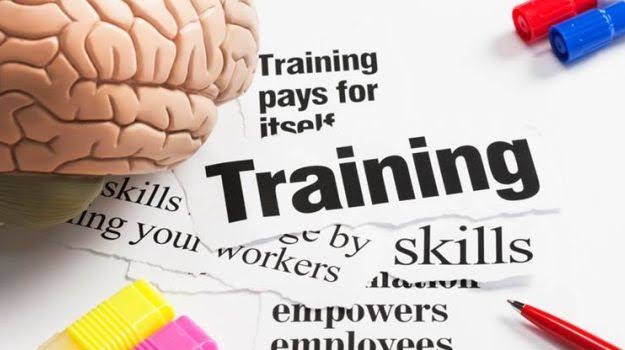
The mind is not a warehouse, and it is certainly not a hard drive. We operate under the stubborn, persistent delusion that if we can just find the right set of mental "reps"—the cognitive equivalent of bicep curls—we can harden our recall into something immutable. We treat memory as a muscle that must be worked until it burns, assuming that by logging hours on a screen or reciting lists in the dark, we are somehow thickening the synaptic gray matter of our own brains.
But this is not how the brain is built.
I remember standing in the back of a dimly lit hall in New York, watching a competitor in the U.S. Memory Championship. He was a teenager with a nervous tic, trembling as he stared at a deck of shuffled cards. To the casual observer, he looked like a person in the midst of a breakdown. In reality, he was constructing a cathedral. He was placing images—grotesque, hilarious, vivid—into a mental palace he had spent months meticulously furnishing. When he eventually rattled off the order of those fifty-two cards in less than two minutes, he wasn't performing a feat of intellectual superhumanity. He was simply using the brain the way it was designed to be used: as a spatial, visual machine.
What are the best memory improvement exercises? The question is framed as if there were a caloric equivalent to focus—as if we could perform a specific set of drills and wake up with a more robust hippocampus. There is not. The most effective preservation of the mind is not found in a gym of mental calisthenics. It is found in the intentional, often difficult act of reclaiming the labor of attention from a world that is designed to disperse it.
The Ecology of the Natural Mind
We live in a culture that encourages the immediate, the transient, and the disposable. We are constantly feeding the system, yet we never allow the system to stabilize the trace. We confuse the "brain fog" born of chronic distraction and the passive consumption of data with a genuine inability to recall.
Think of your memory as a desk covered in paper. When you try to "improve" it with repetitive drills without changing your habits, you are not organizing your workspace. You are simply piling more paper on top. You are clearing the surface, certainly, but you are not learning how to file, how to cross-reference, or how to build a coherent system. You are effectively lobotomizing your own capacity for long-term storage by relying on exercises that never force you to actually encounter the world.
The Biological Circuit Breakers
The hippocampus—the brain's primary gateway for new information—requires a specific, enriched environment to function. When we ignore our biology, we lose the ability to bind new information to existing knowledge structures. The trace does not stick.
| Exercise Type | Biological Mechanism | Impact on Cognitive Reserve |
| Method of Loci | Spatial/Visual encoding | Extremely high (Built architecture) |
| Spaced Repetition | Synaptic strengthening | High (Optimal for acquisition) |
| Narrative Reconstruction | Emotional/Episodic binding | High (Best for long-term meaning) |
| Gamified Drills | Low-level pattern recognition | Negligible (Near-transfer only) |
The Lesson of the Locked Room
I once spent a month strictly using a popular suite of "brain training" exercises, convinced that if I could just hit a high enough score, my memory would sharpen. I felt, for a fleeting moment, as if I were getting sharper. I was faster at the tasks. I felt a surge of pride every time the screen flashed a new high score.
Then, I met a man who had spent his life practicing the "Method of Loci"—an ancient, spatial technique that uses the architecture of one's own home to store information. He didn't use a structured drill. He used the front door, the hallway, the kitchen table. When he asked me to recall the list of ten items we had discussed, I fumbled. He remembered them all. He hadn't "trained." He had lived into the information.
The lesson I learned was not about the quality of the drills. It was about the location of the effort. The exercises were performing the work for me. They were automating the process of association. They were making the work easy. And because it was easy, it was useless. Memory is not a function of how many puzzles you solve. It is a function of how much labor you invest in the act of understanding.
The Discipline of the Observation
If you want to know how to improve your memory, you must first know how to stop outsourcing it. Do not look for the exercise that claims to do the work for you. Look for the practice that forces you to do the work yourself.
1. The Narrative Test
Are you using a drill to help you remember, or are you using it to avoid the work of understanding? If you can't describe the information in your own words, you haven't learned it. You've only stored it in a place you can't access without a prompt.
2. The Feedback Loop
Ask yourself: If the power went out, would I still know this? If the answer is no, you haven't memorized it. You've only linked it to an external device or a repetitive game. A memory that resides on a score is not a memory; it is data.
3. The Functional Impact
Are you still navigating your world? The moment you begin to rely on a drill to avoid the friction of remembering, you have reached a threshold where the tool has become the master.
The Provocative Conclusion: The Choice to Remember
How do you improve memory? By realizing that "improvement" does not mean "ease." It means aligning your habits with the way your biology evolved. It means moving your body to feed your brain with oxygen and growth factors. It means prioritizing the silence of sleep, where the brain does its quiet, essential work of binding yesterday to today. It means using the natural architecture of your own life—your home, your walk to work, the people you meet—as the filing cabinet for your experiences.
We are living in an era of unprecedented cognitive neglect, not because our brains are failing, but because we have outsourced the labor of attention to a world that ignores the basic, biological requirements of the mind. We have decided that our cognitive limits are something to be bypassed or ignored until they can no longer be hidden. We have surrendered our status as the architects of our own mental palaces in favor of a cheap, externalized storage locker that eventually leaks.
If you are concerned, do not look for a digital shortcut. Look for the pattern of your own engagement. Be willing to endure the discomfort of self-scrutiny. You are not the sum of what you have experienced; you are the sum of what you have bothered to keep. And that, in the final analysis, is a choice you make, over and over again, every single moment you decide to look at the world and actually, truly, see it.
- Arts
- Business
- Computers
- Spiele
- Health
- Startseite
- Kids and Teens
- Geld
- News
- Personal Development
- Recreation
- Regional
- Reference
- Science
- Shopping
- Society
- Sports
- Бизнес
- Деньги
- Дом
- Досуг
- Здоровье
- Игры
- Искусство
- Источники информации
- Компьютеры
- Личное развитие
- Наука
- Новости и СМИ
- Общество
- Покупки
- Спорт
- Страны и регионы
- World

 English
 Russian
 French
 Spanish
 Portuguese
 Turkish
 Dutch
Dutch
 Italiano
 Arabic
 Romaian
 Portuguese (Brazil)
 Greek
Greek
