
What are the best brain exercises for students?
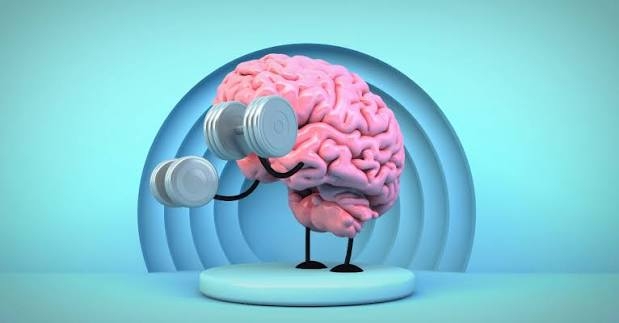
You stare blankly at a complex problem set while your mind feels like it is crawling through thick, suffocating sludge, watching your working memory fail to retain simple formulas as the midnight hour approaches.
You grip the edge of your desk, cursing your sluggish processing speed and the mental fog clouding your cognitive capabilities.
Why is my brain moving at a snail's pace? Why can't I sharpen my mental acuity when I need it most?
Let’s cut through the noise right out of the gate: your chronic cognitive sluggishness is not a sign that your neurological hardware is permanently defective, and your tendency to hit a mental wall under academic pressure is not proof that you were born without the capacity for high-level neuroplasticity. For decades, traditional education culture and pop psychology have treated brain exercises like a superficial gimmick—you are either told to download generic mobile app puzzle games, complete mindless Sudoku grids, or solve colorful riddles until your focus magically sharpens.
That view is dangerously backward.
Brain exercises are not unexplainable emotional art forms or magical digital toys that rewrite cognitive architecture through wishful thinking. They are mechanical, highly measurable internal processing drills that can be mapped, diagnosed, analyzed, and systematically trained just like your cardiovascular conditioning, muscular strength, or technical execution. If you want to stop watching your academic potential get slowly torched by mental fatigue and cognitive decay, you have to stop treating your brain like a mysterious black box and start treating it like a system that requires strict diagnostic calibration. What are the best brain exercises for students? Let's break down the foundational architecture required to stop reacting to mental static and start executing with precision.
The Anatomy of an Uncalibrated Cognitive Processor
Think about how you evaluate a high-performance neurological testing facility when its data-processing servers begin lagging under intense computational workloads. If the system is uncalibrated and the processing nodes are flooding with erratic error signals, you don't stare at the server rack and yell at the machinery to compute data with more enthusiasm. You connect the diagnostic terminal, analyze the packet logs, rewrite the processing protocols, and restore structural stability to the hardware array. You treat the data corruption as a mechanical breakdown that requires systematic debugging.
Yet, when it comes to human cognitive conditioning, we completely abandon all logic.
We expect students to execute complex analytical tasks, retain massive volumes of structural data, and navigate high-stakes academic friction while running unmanaged, chaotic mental routines that constantly undermine their neural efficiency. And when our working memories inevitably flood with panic, distraction, or cognitive exhaustion—causing slow processing, careless errors, and academic burnout—we blame ourselves for lacking natural intelligence, completely ignoring the reality that we never engineered a structural framework to train our cognitive processors.
Cognitive conditioning operates on exact neurobiological feedback loops. When you lack structural self-assessment tools, your brain defaults to lazy mental shortcuts, burning through glucose inefficiently and fatiguing your prefrontal cortex. You aren't weak; you are simply ignoring the mechanical breakdowns causing your uncalibrated cognitive processing loops.
The Lesson of the Over-Drilled Undergrad
I learned this reality years ago while working with an elite university engineering student who was utterly convinced that his persistent inability to retain complex algorithmic proofs was the result of a terminal flaw in his biological hard drive. On paper, his dedication was absolute. He spent hours every evening playing high-end reaction-time training video games and completing digital brain-training puzzles on his phone, convinced he was building elite cognitive horsepower. Yet, the moment he sat down for an advanced systems architecture exam, his working memory would short-circuit under pressure.
His mental training was a high-performance system running with zero operational transfer or structural alignment.
When we finally sat down and mapped his cognitive habits after a devastating midterm failure that nearly disqualified him from his honors cohort, we discovered something entirely different. He wasn't failing because his brain lacked capacity. He was failing because his "brain exercises" were entirely disconnected from the actual mechanics of academic retrieval. He was training himself to be fast at tapping colorful tiles on a screen while leaving his active recall, structural deconstruction, and working-memory encoding completely uncalibrated.
Once we built a structured protocol to replace passive app games with rigorous active recall drills, dual-n-back working memory manipulation using academic variables, and deliberate cognitive friction exercises, his entire profile changed. The coursework didn't get any lighter, but his ability to process dense structural data without letting cognitive fatigue hijack his focus became completely mechanical. That is what true cognitive exercise training looks like in action.
The Taxonomy of Cognitive Exercise Mechanics
To understand what the best brain exercises actually are for students, you have to look past vague wellness advice to "keep your mind active" and examine concrete behavioral mechanics. Here is how unskilled and skilled approaches compare across different cognitive frameworks.
| Brain Exercise Dimension | The Unskilled Approach (Mobile Apps & Passive Puzzles) | The Skilled Approach (Mechanically Engineered Cognitive Drills) | Corrective Technical Protocol |
| Drill Selection | Playing generic smartphone puzzle games that improve screen-tapping speed. | Utilizing targeted working memory loads, dual-n-back tasks, and active recall integration. | Task specificity, cognitive load scaling, working memory loading. |
| Interference Management | Training in a vacuum of artificial comfort, ignoring real academic friction. | Introducing cognitive interference, noise, and complex multi-variable constraints into drills. | Environmental loading, stress inoculation, distraction gating. |
| Feedback Processing | Checking final scores on an app without analyzing why specific mental errors occurred. | Conducting immediate diagnostic root-cause analysis on missed recall items to fix mental models. | Diagnostic auditing, error deconstruction, model correction. |
| Temporal Pacing | Rushing through mental exercises without regard for cognitive endurance or cadence. | Structuring cognitive drills into calculated endurance blocks matching real exam durations. | Cadence matching, pacing intervals, cognitive stamina mapping. |
Notice the structural divide? The unskilled approach relies entirely on hope, passive entertainment, and digital distraction. The skilled approach relies on mechanics. When academic complexity or cognitive load scales upward, the naive method collapses into complete functional inefficiency.
Step-by-Step Protocol: Engineering Your Brain Exercise Arsenal
You cannot read your way into elite cognitive mastery. You have to build your mental capabilities through deliberate, systematic behavioral drills just like you train your physical fitness or technical execution. Here is how you engineer cognitive precision into your academic workflow.
1. Conduct a Cognitive Friction Audit
The single greatest cause of poor mental performance is invisible cognitive drift—letting your brain rely on easy, repetitive thinking patterns that provide an illusion of hard work while actually stagnating your neuroplastic growth.
-
The Practice: Map your daily study and thinking habits for a single week. Count how many times you default to passive recognition tasks (like rereading notes) versus active cognitive friction tasks (like blank-sheet synthesis). Strip away the passive routines and replace them with rigorous mental generation drills.
-
The Goal: Stop the thermal leaks in your mental processor. When your cognitive workouts force your brain to generate answers from scratch against severe resistance, your neural architecture strengthens rapidly.
2. Implement Structured Dual-N-Back Working Memory Drills
Your working memory is the cognitive RAM of your brain. If your RAM is cluttered and uncalibrated, complex problem-solving will cause immediate mental throttling.
-
The Practice: Utilize scientifically validated working memory protocols such as dual-n-back exercises or complex sequence manipulation drills for ten minutes daily. Instead of random app imagery, use your actual course variables—matching abstract mathematical concepts with visual spatial grids simultaneously.
-
The Goal: Expand your cognitive bandwidth accurately. Increasing working memory capacity directly enhances your ability to hold multiple complex variables in mind during high-level academic problem-solving.
3. Construct a Structured Mental Deconstruction Drill
A major engine of cognitive breakdown is the inability to break complex, overwhelming information down into digestible structural components without panicking.
-
The Practice: Take a dense, highly technical academic paper or chapter that you find confusing. Without highlighting or rereading, force yourself to spend fifteen minutes manually mapping its underlying logical framework on a blank sheet of paper, identifying every core premise, assumption, and supporting data point.
-
The Goal: Prevent cognitive overload from freezing your processing. Training your brain to systematically deconstruct complexity turns intimidating study material into manageable mechanical components.
4. Build a Cognitive Stamina Calibration Protocol
True mental sharpness is not achieved by brief bursts of intense thinking followed by hours of digital distraction; it requires building sustained cognitive endurance under load.
-
The Practice: Gradually scale your uninterrupted deep-thinking blocks. Begin with forty-five minutes of pure, unbroken analytical work—no tabs, no phone, no music—and systematically build toward ninety-minute cognitive endurance blocks. Treat any distraction as a mechanical failure that requires an immediate reset.
-
The Goal: Inoculate your nervous system against mental fatigue. When your brain is conditioned to sustain high-level focus over prolonged intervals, academic exams and complex writing projects lose their power to exhaust your cognitive reserves.
The Provocative Reality of Cognitive Conditioning
Let’s dismantle the ultimate comforting illusion in education: the belief that mastering brain health means reaching a magical state of effortless intelligence where mental fatigue never occurs and learning requires zero friction.
When students struggle with cognitive performance, they love to wait until they "feel smart" or until their focus magically returns so they can finally study without resistance. They cast themselves as victims of difficult subjects and dense curricula. That is a cop-out. It is a psychological defense mechanism designed to protect you from the uncomfortable labor of training your mind with the same brutal discipline you apply to physical conditioning.
Mastering cognitive conditioning requires maintenance. It requires sweat, structural discipline, and the brutal honesty of looking at your own sloppy mental habits without making excuses. If your car engine starts sputtering because you are ignoring basic mechanical maintenance and driving on unmaintained roads under a heavy load, you don't curse the vehicle or wait for the road to flatten itself. You tune the engine, adjust your telemetry, and drive with intention.
It is time to tune the telemetry of your own cognitive processor. Stop waiting for motivation to magically sharpen your mind, stop hoping that casual mobile games will substitute for rigorous brain exercises, and stop treating mental fatigue as an unalterable personal destiny. Build the systems, master the cognitive mechanics, and take absolute ownership of your intellectual output. Watch how quickly your academic trajectory transforms when you stop reacting to mental static and start engineering your brain exercises.
- Arts
- Business
- Computers
- Spellen
- Health
- Home
- Kids and Teens
- Money
- News
- Personal Development
- Recreation
- Regional
- Reference
- Science
- Shopping
- Society
- Sports
- Бизнес
- Деньги
- Дом
- Досуг
- Здоровье
- Игры
- Искусство
- Источники информации
- Компьютеры
- Личное развитие
- Наука
- Новости и СМИ
- Общество
- Покупки
- Спорт
- Страны и регионы
- World

 English
 Russian
 French
 Spanish
 Portuguese
 Deutsch
 Turkish
 Italiano
 Arabic
 Romaian
 Portuguese (Brazil)
 Greek
Greek
