
What is design thinking?
The Multimillion-Dollar Post-It Note That Solved the Wrong Problem
Twelve years ago, a prominent consumer electronics manufacturer in the Pacific Northwest found itself facing an existential crisis. Market share for its flagship home automation hub was plunging, customer return rates were hitting all-time highs, and the executive board was gripped by a quiet panic. The leadership team did what modern corporate bureaucracies always do when under siege.
They hired an elite design thinking consultancy.
For six intense months, the consultants deployed the sacred liturgy of human-centered design. They rented a sprawling loft space, covered every square inch of the walls with neon pastel Post-it notes, wore stylish minimalist sneakers, and conducted immersive ethnographic interviews with hundreds of consumers. They mapped empathy journeys, sketched customer personas named "Frustrated Frank" and "Busy Brenda," and built rapid low-fidelity cardboard prototypes of sleek wall-mounted touchscreens.
They presented their comprehensive design thinking binder to the board—a glorious, multi-media masterpiece of empathetic storytelling complete with customer quotes, emotional arc graphs, and colorful wireframes.
They felt profoundly rigorous. They had executed the double-diamond design process down to the letter.
Then, a veteran firmware engineer walked past the wall of Post-it notes, picked up a prototype touchscreen, and asked a profoundly irritating question.
He did not ask about the emotional resonance of the user interface iconography. He did not ask whether the cardboard mockup captured the ergonomic nuance of family living rooms. Instead, he asked: "Why are we redesigning the touchscreen interface when the hardware radio chip drops its Wi-Fi connection every time a microwave oven in the kitchen is turned on?"
When they actually investigated the real-time physical performance of the hardware, the answers revealed a staggering institutional delusion. The user interface was entirely fine. The customer frustration had nothing to do with empathy gaps or confusing button placements.
The root cause was purely radio frequency interference. A cheap, unshielded Wi-Fi module sourced to save two dollars per unit was causing the device to constantly drop offline whenever appliances operated nearby, forcing confused users to perform frustrating hard resets.
The fix did not require six months of ethnographic empathy workshops, cardboard prototyping, or persona mapping. A hardware engineer swapped out the wireless chip for a shielded component costing an extra dollar and fifty cents. Overnight, customer return rates plummeted to zero. The user interface was completely untouched. But the crisis had exposed a profound, uncomfortable truth about how organizations utilize structured problem-solving methodologies.
This is the hidden trap of modern management frameworks. We treat design thinking as a magical incantation, assuming that executing a human-centered empathetic sequence automatically means we are solving the right problem.
The Epidemic of Empathy Fetishism
Look at your own professional calendar this week. How many hours did you spend in workshops mapping user journeys, clustering sticky notes by emotional resonance, writing "How Might We" statements, and building low-fidelity paper prototypes? You likely walked out of those rooms feeling energized by the creative energy, proud of your deep empathy, and deeply productive. But did you ever pause to ask whether the human-centered process you were driving through actually addressed the underlying structural constraint of the system?
We suffer from a deeply ingrained cultural pathology known as empathy fetishism. From our earliest days in product design school or corporate innovation labs through our rise up the executive hierarchy, our institutions train us to fall in love with the ritual of empathy rather than the reality of the problem.
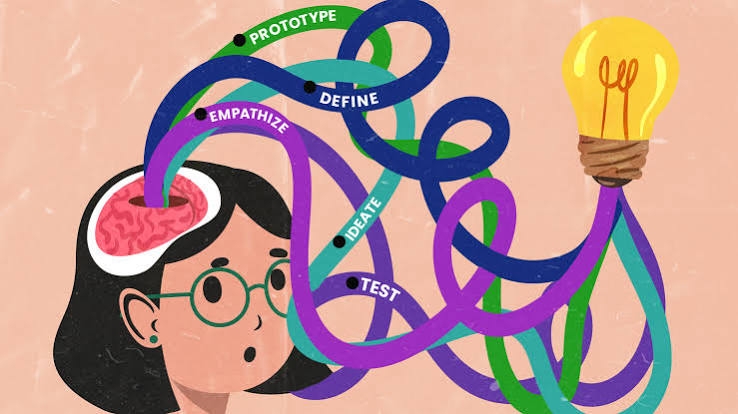
The design thinking framework—Empathize, Define, Ideate, Prototype, Test—was originally popularized by IDEO and Stanford’s d.school as a powerful creative problem-solving toolkit for wicked, human-centric challenges. The premise is brilliant: immerse yourself in the lived reality of users to uncover unmet needs that data alone cannot reveal.
Generations of innovators took this creative protocol and turned it into an unthinking corporate religion. We run design thinking sprints for everything: backend database migrations, enterprise supply chain logistics, tax compliance software, and server architecture overhauls.
We love design thinking because it feels safe, expressive, and emotionally rewarding. It gives us a colorful, tactile roadmap that shields us from the terrifying ambiguity of hard technical friction and statistical reality. If an initiative fails, we don't question our initial problem framing; we simply assume we didn't interview enough users or build enough paper prototypes. We turn human-centered innovation into an infinite treadmill of creative busywork.
Yet, running a design thinking sprint on a misframed problem is like meticulously designing the upholstery for a car that is pointed directly off a cliff. No amount of empathy mapping, persona crafting, or rapid prototyping will save you if your initial problem definition is fundamentally flawed.
Consider how most organizations handle a sudden drop in enterprise software adoption. Within minutes of reviewing the metrics, product teams open digital whiteboarding software. They charter a design thinking workshop, interview a few friendly users, write sticky notes about "empowering workflows," prototype a new navigation bar, and test it with a handful of colleagues. They drive through the phases with breathtaking momentum.
Yet, if you interrupt them mid-workshop and ask, "What empirical evidence do we have that our initial framing targeted the true structural root of the friction?" you will often watch the room disintegrate into nervous silence. They are furiously empathizing their way deeper into a delusion.
If you drive through a creative methodology without first verifying your problem framing, your human-centered discipline becomes an elaborate machine for making mistakes faster.
Anatomy of the Divergence: Design Thinking Theater vs. Upstream Problem Mastery
To understand why traditional design thinking workshops fail so frequently when applied to complex operational challenges, we have to look past corporate buzzwords and examine the concrete behavioral mechanics of how we manage change. Here is how conventional design thinking theater compares to rigorous upstream problem mastery across various operational frameworks:
| Improvement Dimension | Conventional Design Thinking Theater (The Empathy Trap) | Upstream Problem Mastery (The Diagnostic Protocol) | Cognitive Cost & Organizational Impact |
| Empathize / Define | Interviewing friendly users and writing emotional "How Might We" statements based on surface complaints. | Enforcing a deliberate diagnostic pause to interrogate the premise and test alternative problem definitions. | High initial friction, low long-term waste. Prevents multi-million-dollar misallocations. |
| Ideate Phase | Generating hundreds of creative sticky notes on a wall without verifying whether the ideas solve a structural issue. | Building the cheapest, fastest behavioral experiment to test assumptions under real-world friction. | Requires intellectual humility. Exposes hidden blind spots before ideation begins. |
| Prototype Phase | Building beautiful cardboard mockups, clickable Figma prototypes, and high-fidelity visual representations of a flawed premise. | Actively searching for disconfirming evidence, interviewing behavioral outliers, and tracking lagging realities. | Demands conceptual discipline. Shifts energy from decorative prototyping to hard truth-seeking. |
| Testing & Iteration | Testing prototypes with biased focus groups who praise the visual design while ignoring the core system failure. | Reengineering structural incentives or abandoning the project if the core premise proves false. | Transforms organizational efficiency. Eliminates infinite design sprints in favor of root solutions. |
Notice the structural divide in the table above? Conventional design thinking theater relies entirely on emotional storytelling, visual artifacts, and unconstrained ideation. Upstream problem mastery relies on diagnostic pause, empirical falsification, and structural alignment. When organizational complexity scales upward, unanchored creative driving collapses into exhausting corporate theater.
A Lesson from My Own Blind Spots
I learned this reality the hard way several years ago while leading product strategy for a fast-growing enterprise software firm. Our user onboarding completion rate was dipping, and executive leadership demanded an immediate, human-centered intervention to fix the user journey.
My initial reaction was textbook empathy fetishism. I gathered our product team, and we launched a formal, four-week design thinking sprint.
-
Empathize: We conducted twenty video interviews with new users who abandoned the platform during setup, capturing quotes about feeling "overwhelmed" and "lost."
-
Define: We crafted an emotional persona named "Overwhelmed Olivia" and wrote a poignant How Might We statement: How might we make our software feel like a welcoming, friendly conversation rather than a cold database?
-
Ideate & Prototype: We spent a week sketching gorgeous, illustrated onboarding screens featuring friendly mascot animations, tooltip guides, and comforting progress bars.
-
Test: We tested the clickable Figma prototype with a focus group who beamed with delight, praising the charming illustrations and welcoming tone.
-
Implement: We coded the illustrated onboarding screens and pushed them live to production.
We felt like masters of human-centered innovation. We had executed the design thinking framework to absolute perfection.
Two months later, our sixty-day customer retention rate hit an all-time low.
Our charming illustrated onboarding screens had successfully comforted users during setup. But because we focused entirely on emotional tone and visual friendliness, we completely ignored the fact that the actual software required enterprise users to manually input a complex JSON configuration file that lacked error-handling scripts. Users felt welcomed during onboarding, only to hit an unresolving coding wall on day two, prompting immediate cancellation.
Our design thinking sprint had successfully optimized emotional aesthetics while ignoring structural system failure. We used empathy to accelerate our journey off a cliff.
I sat at my desk staring at our glowing churn metrics, internalizing a brutal professional truth. A human-centered creative methodology cannot save you if you are beautifying a symptom. Making the wrong road feel emotionally welcoming with design thinking only guarantees you arrive at disaster with a smile.
How to Execute Design Thinking Without Falling Into Common Traps
Is design thinking useless? Not at all. The design thinking framework is a brilliant engine for product innovation and user experience refinement—provided it is deployed after the problem has been correctly framed. When used to design intuitive interactions for a validated, well-understood workflow, design thinking is unmatched. But when used as a substitute for root cause analysis, it becomes an expensive distraction.
Here are four rigorous rules to transform design thinking from an exercise in empathetic theater into a precision instrument of strategy.
1. Never Start a Design Thinking Sprint on Day One
When a crisis strikes, your organization's instinct is to immediately book a loft, buy Post-it notes, and start interviewing users. Resist this urge with absolute discipline.
-
The Practice: Forbid any empathy mapping or ideation workshops until your team has explicitly articulated at least three alternative ways to define the problem and tested their underlying assumptions against raw empirical data.
-
The Nuance: Use design thinking for execution after diagnosis, never for diagnosis itself. Once you know what the true root cause is, the design thinking sequence is exceptional for crafting elegant, human-centric solutions.
2. Interrogate the "Empathy" Phase (Beware Persona Theater)
The most common point of failure in a design thinking project occurs during the initial research phase, where teams fall in love with emotional anecdotes while ignoring hard operational data.
-
The Practice: When gathering user insights, refuse to rely exclusively on self-reported user interviews or focus groups. Track lagging realities, unprompted behavioral telemetry, and second-order systemic consequences.
-
The Nuance: If your empathy phase tracks what users say they feel rather than what they actually do under real operational friction, your entire creative model is built on self-deception.
3. Build Escape Hatches Before Prototyping
The ultimate goal of prototyping is rapid learning. But building high-fidelity mockups too quickly can trap a team into falling in love with a solution built on a flawed premise.
-
The Practice: Treat every prototype as provisional. Build a mandatory sunset clause into every creative sprint, requiring a secondary audit to verify that the human-centered solution didn't obscure an underlying technical or structural failure.
-
The Nuance: True innovation includes the courage to throw away a gorgeous, beloved prototype the moment empirical evidence proves it was built on a misframed premise.
4. Test Assumptions in Forty-Eight Hours
Traditional design thinking sprints in large corporations often take months to complete, turning a simple behavioral test into a multi-week workshop marathon.
-
The Practice: Compress your initial Empathize-Define cycle into a forty-eight-hour window by building the cheapest, ugliest, lowest-fidelity simulation of your proposed change and testing it directly with users in the wild.
-
The Nuance: If a methodology requires weeks of persona crafting and slide deck assembly before you can test an assumption, your organization is using process as a psychological defense mechanism against uncertainty.
The Provocative Reality of Design Thinking
Let us dismantle the ultimate comforting illusion in modern corporate culture: the belief that strategic excellence is simply a matter of adopting famous human-centered frameworks, filling out empathy maps, and driving through creative workshops with relentless enthusiasm.
When organizations face messy, multi-dimensional operational crises, they love to praise the empathetic facilitators who cover loft walls in pastel sticky notes, organizing chaos into neat emotional journeys of innovation. They cast those individuals as masters of modern strategy. That is a dangerous, systemic delusion. It is a psychological defense mechanism designed to protect us from the highly uncomfortable, ambiguous labor of sitting in silence, questioning our foundational premises, and admitting that our favorite creative frameworks are often just sophisticated distractions.
Mastering operational strategy requires immense intellectual restraint. It requires the courage to step off the empathy treadmill when empirical testing reveals a flawed premise, the discipline to prioritize brutal operational reality over visual elegance, and the strict honesty of looking at your own cognitive biases without making excuses.
If you are lost in an unfamiliar desert, having a beautifully illustrated, empathetic map of how thirsty you feel will not save your life. If you walk toward a mirage with inspirational design thinking, every step you take merely distances you from survival.
It is time to check your bearings. Stop treating design thinking as a magical cure-all for operational confusion. Stop hoping that emotional empathy will somehow rescue a misframed problem. Build the diagnostic pauses, master the art of radical reframing, and take absolute ownership of your intellectual output. Watch how quickly your professional trajectory transforms when you stop decorating your assumptions and start engineering verifiable reality.
- Arts
- Business
- Computers
- Jogos
- Health
- Início
- Kids and Teens
- Money
- News
- Personal Development
- Recreation
- Regional
- Reference
- Science
- Shopping
- Society
- Sports
- Бизнес
- Деньги
- Дом
- Досуг
- Здоровье
- Игры
- Искусство
- Источники информации
- Компьютеры
- Личное развитие
- Наука
- Новости и СМИ
- Общество
- Покупки
- Спорт
- Страны и регионы
- World

 English
 Russian
 French
 Spanish
 Portuguese
 Deutsch
 Turkish
 Dutch
Dutch
 Italiano
 Arabic
 Romaian
 Greek
Greek
