
How Do I Validate a SaaS Idea? The Difference Between a Clever Concept and a Business Customers Will Actually Pay For
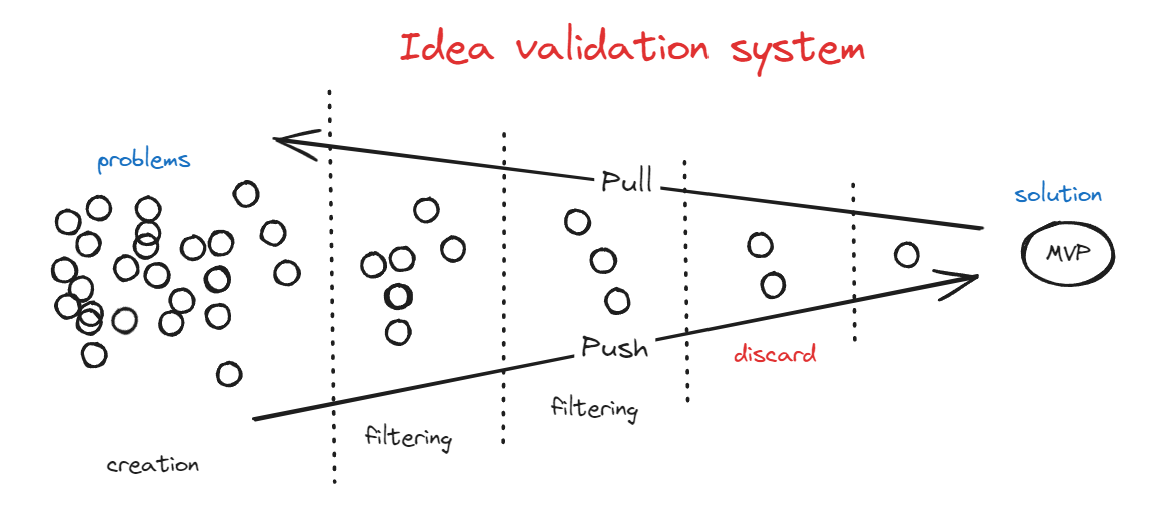
Every year, thousands of software products are built for customers who never asked for them.
The founders are intelligent. The interfaces are polished. The engineering is often impressive.
And yet the products struggle.
Not because the code is flawed.
Because the assumption is.
That distinction is worth lingering on.
When entrepreneurs discuss launching a SaaS company, conversations frequently gravitate toward features, technology stacks, funding, and product development. Those topics are important. But they tend to overshadow a far more consequential question:
Does anyone genuinely want this?
Not in theory.
Not in a survey where respondents casually click "yes."
Not in a conversation where friends offer encouragement.
But in the marketplace, where attention is scarce, budgets are finite, and customers routinely ignore solutions that fail to solve meaningful problems.
This is why validation sits at the center of successful SaaS creation.
Validation is not about proving your idea is brilliant.
It is about discovering whether your assumptions are wrong before those assumptions become expensive.
And perhaps that is the first misconception worth addressing.
Validation is not a search for confirmation.
It is a search for truth.
Why Most SaaS Ideas Feel Better Than They Actually Are
People naturally fall in love with solutions.
Customers fall in love with outcomes.
The gap between those perspectives creates much of the risk in early-stage software development.
Founders often spend months refining features because the product makes sense to them.
Customers, meanwhile, evaluate software through a completely different lens.
They ask:
- Does this solve a problem I care about?
- Is the problem painful enough to justify change?
- Is the solution worth paying for?
- Is it better than what I'm doing today?
Notice something important.
Customers rarely ask whether the software is technically sophisticated.
They care about utility.
Barbara Kahn has frequently emphasized that successful businesses emerge from deep customer understanding rather than product fascination. The companies that thrive tend to organize themselves around customer needs, not internal assumptions.
Validation is the mechanism that tests whether those needs actually exist.
The Goal of Validation Is Not Popularity
Many founders unknowingly validate the wrong thing.
They seek approval.
Approval feels good.
Validation generates evidence.
These are not the same.
A person saying, "That's a great idea," provides encouragement.
A person agreeing to pay for the solution provides information.
The second response matters more.
This distinction becomes crucial because people are often generous with opinions and cautious with money.
Validation should focus on behaviors rather than compliments.
Interest is useful.
Commitment is better.
Payment is best.
Start With the Problem, Not the Product
One of the fastest ways to invalidate a SaaS concept is to begin by discussing software.
Customers frequently struggle to evaluate hypothetical products.
They are much better at describing frustrations.
This creates an important shift in perspective.
Instead of asking:
"Would you use this software?"
Ask:
"How do you currently solve this problem?"
The answers reveal far more.
When customers describe complicated workarounds, manual processes, spreadsheets, repetitive tasks, or recurring frustrations, they expose opportunities.
The software comes later.
The pain comes first.
The Three Questions That Matter Most
When speaking with potential customers, focus on understanding:
- What is frustrating?
- How often does it happen?
- What does it cost them?
The third question is frequently overlooked.
Yet cost transforms inconvenience into opportunity.
A minor annoyance may not justify software adoption.
A recurring problem that wastes thousands of dollars annually often does.
Customer Interviews: The Most Underrated Validation Tool
Entrepreneurs sometimes search for sophisticated validation frameworks.
Ironically, one of the most effective methods remains surprisingly simple.
Talk to customers.
Not once.
Repeatedly.
The objective is not to pitch.
The objective is to listen.
Customer interviews uncover language, priorities, emotional triggers, and behavioral patterns that surveys often miss.
A useful rule:
Spend more time asking questions than explaining solutions.
Founders frequently learn more from ten thoughtful conversations than from months of internal brainstorming.
What to Listen For
Pay attention when multiple people independently describe:
- The same frustration
- The same workaround
- The same inefficiency
- The same unmet need
Patterns matter.
Individual opinions can mislead.
Repeated patterns deserve attention.
The Validation Ladder: From Assumption to Evidence
Not all validation methods provide equal confidence.
Some generate weak signals.
Others generate strong ones.
The progression often looks like this:
| Validation Method | Confidence Level | Cost | Insight Quality | Primary Purpose |
|---|---|---|---|---|
| Personal Assumption | Very Low | None | Weak | Idea generation |
| Friend Feedback | Low | None | Limited | Initial reactions |
| Customer Interviews | Moderate | Low | High | Problem discovery |
| Survey Responses | Moderate | Low | Moderate | Pattern identification |
| Landing Page Test | High | Low | High | Demand measurement |
| Email Sign-Ups | High | Low | High | Interest validation |
| Pre-Sales | Very High | Low | Very High | Purchase intent |
| Paid Customers | Highest | Moderate | Definitive | Market validation |
Notice the pattern.
As customers commit increasing amounts of effort, attention, or money, validation quality improves.
Behavior consistently outweighs opinion.
Build a Landing Page Before Building Software
This recommendation often surprises founders.
The software doesn't exist.
So why create a landing page?
Because demand can be tested before development begins.
A simple landing page should explain:
- The problem
- The proposed solution
- The expected outcome
- A clear call to action
The goal is not perfection.
The goal is measurement.
Do visitors sign up?
Do they request demos?
Do they ask questions?
Do they share the page?
These behaviors provide valuable evidence.
If interest remains weak, the market may be communicating something important.
Listen carefully.
The Ultimate Validation Test: Asking for Money
Nothing reveals truth faster than pricing.
This is where many founders become uncomfortable.
Charging feels premature.
Yet willingness to pay often separates curiosity from genuine demand.
Customers may enthusiastically support an idea in conversation.
The moment payment enters the discussion, priorities become clearer.
This is not a flaw.
It is valuable information.
Pre-Sales Change Everything
A pre-sale asks customers to commit before the final product exists.
Not every market supports this approach.
But when it works, it creates extraordinarily strong validation.
Why?
Because customers are no longer evaluating possibilities.
They are evaluating value.
And value is what determines business viability.
Competitive Analysis: Validation Through Existing Demand
Many entrepreneurs worry when competitors exist.
They shouldn't.
The absence of competitors can be more concerning.
Competition often signals market demand.
People are already spending money.
Problems already exist.
Solutions are already being purchased.
The question becomes:
Can you solve the problem differently, more effectively, or for a specific audience?
A crowded market is not automatically unattractive.
An unproven market may be.
What Competitors Reveal
Competitors help answer several critical questions:
- Who buys solutions in this category?
- What features matter most?
- How are products priced?
- Where are customers dissatisfied?
Those insights can dramatically improve positioning.
A Lesson I Learned From a Founder Who Ignored Validation
Several years ago, I spent time advising a founder who possessed remarkable technical capabilities.
He identified a process that seemed inefficient and immediately began building software.
Development consumed nearly nine months.
The final product looked excellent.
Elegant interface.
Robust functionality.
Sophisticated architecture.
Customers were unimpressed.
Not because the product was poor.
Because the problem was not urgent.
The founder had validated the existence of a process.
He had not validated the importance of the pain.
Eventually, he returned to customers, conducted interviews, and discovered a different frustration generating significantly greater business impact.
The second product gained traction quickly.
The contrast was striking.
The lesson has remained with me ever since:
Customers rarely pay for interesting solutions.
They pay for meaningful relief.
Why Speed Matters in Validation
One of validation's greatest advantages is efficiency.
Building software is expensive.
Learning should be inexpensive.
Every week spent validating assumptions before development can save months of unnecessary effort later.
This creates an interesting paradox.
The fastest path to launching a successful SaaS product often involves slowing down before writing code.
Research accelerates execution.
Assumptions slow it down.
Signals That Your SaaS Idea Is Valid
While no single metric guarantees success, several indicators suggest a promising opportunity.
Customers Describe the Problem Without Prompting
If people independently raise the issue, demand may already exist.
Existing Solutions Create Frustration
Dissatisfaction often creates openings for new entrants.
Customers Use Workarounds
Spreadsheets, manual processes, and repetitive tasks frequently indicate unmet needs.
Prospects Request Early Access
Interest becomes more meaningful when customers proactively seek participation.
Customers Express Willingness to Pay
Perhaps the strongest signal of all.
People protect their budgets carefully.
When payment becomes part of the conversation, validation becomes significantly stronger.
The Mistake Most Founders Make
Many entrepreneurs believe validation occurs before launch.
In reality, validation continues indefinitely.
Markets evolve.
Customer needs change.
Competitors emerge.
What worked yesterday may become less relevant tomorrow.
The strongest SaaS companies maintain continuous feedback loops.
They keep listening.
Keep measuring.
Keep adapting.
Validation is not a milestone.
It is a discipline.
The Most Dangerous Outcome Isn't Failure
When founders think about validation, they often fear rejection.
Ironically, rejection can be useful.
Clear rejection provides direction.
Indifference is more dangerous.
A market that simply doesn't care offers little momentum to build upon.
Which leads to a provocative conclusion.
The purpose of validation is not to convince customers your idea deserves attention.
The purpose is to determine whether attention already exists.
That distinction changes everything.
Because successful SaaS businesses rarely manufacture demand.
They uncover it.
They identify frustrations customers already experience, costs customers already incur, and inefficiencies customers already tolerate.
Then they remove them.
So if you're asking how to validate a SaaS idea, resist the temptation to start with software.
Start with observation.
Listen carefully.
Measure relentlessly.
Challenge your assumptions.
And remember that the strongest validation does not come from praise, encouragement, or enthusiasm.
It comes from a customer who says something far more valuable:
"When can I start using it?"
Or better yet:
"Where do I pay?"
- Arts
- Business
- Computers
- Giochi
- Health
- Home
- Kids and Teens
- Money
- News
- Personal Development
- Recreation
- Regional
- Reference
- Science
- Shopping
- Society
- Sports
- Бизнес
- Деньги
- Дом
- Досуг
- Здоровье
- Игры
- Искусство
- Источники информации
- Компьютеры
- Личное развитие
- Наука
- Новости и СМИ
- Общество
- Покупки
- Спорт
- Страны и регионы
- World

 English
 Russian
 French
 Spanish
 Portuguese
 Deutsch
 Turkish
 Dutch
Dutch
 Arabic
 Romaian
 Portuguese (Brazil)
 Greek
Greek
