
How does the foreign exchange market work?
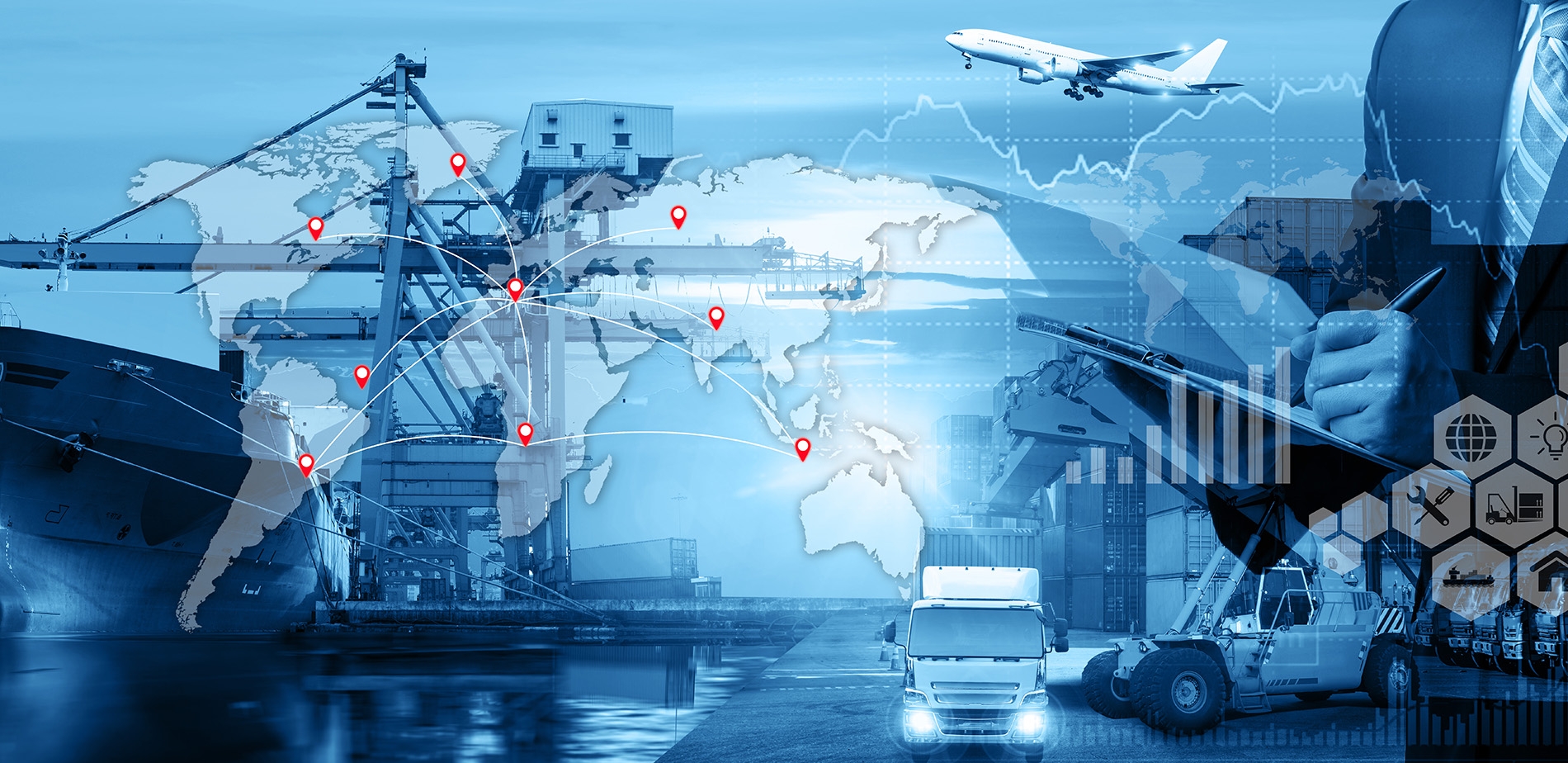
How Does the Foreign Exchange Market Work?
The foreign exchange market, commonly called the forex market or FX market, is the global marketplace where currencies are bought and sold. It plays a central role in international trade, investment, tourism, and global finance. Whenever a person exchanges one currency for another, a business pays an overseas supplier, or an investor buys a foreign asset, the foreign exchange market is involved.
Unlike a traditional stock exchange, the forex market does not operate from one central location. It is a global, decentralized network of banks, financial institutions, businesses, governments, brokers, and individual traders. The market operates almost continuously during the business week, making it one of the world's most active financial markets.
What Is the Foreign Exchange Market?
The foreign exchange market is a marketplace for exchanging one currency for another. Currencies are always traded in pairs, such as EUR/USD, GBP/USD, or USD/JPY.
A currency pair shows how much of one currency is needed to buy a unit of another. For example, if EUR/USD is 1.10, it means that one euro is worth 1.10 U.S. dollars.
The first currency in a pair is called the base currency, while the second is the quote currency. If the EUR/USD exchange rate rises, the euro has increased in value relative to the U.S. dollar, assuming other factors remain constant.
How Currency Trading Works
Forex trading involves simultaneously buying one currency and selling another. This is why currencies are quoted in pairs.
For example, suppose a trader expects the euro to strengthen against the U.S. dollar. The trader could buy EUR/USD. If the exchange rate rises, the trader may be able to sell the position at a higher rate and make a profit.
If the euro instead falls against the dollar, the trader could experience a loss.
Foreign exchange transactions also occur for practical reasons rather than speculation. A European company importing products from the United States may need to exchange euros for dollars to pay its American supplier. Similarly, a traveler visiting another country needs to exchange their domestic currency for the local currency.
Who Participates in the Forex Market?
The foreign exchange market has many participants with different objectives.
Commercial and investment banks are among the most important participants. They conduct currency transactions for themselves and their customers and provide liquidity to the market.
Central banks participate to manage their countries' monetary systems and, in some cases, influence exchange rates. They may buy or sell currencies as part of foreign-exchange interventions or manage international reserves.
Businesses use the forex market when they conduct international transactions. Companies may need foreign currencies to pay suppliers, receive payments from customers, or invest in other countries.
Investment funds and financial institutions trade currencies as part of investment and risk-management strategies.
Retail traders participate through forex brokers and typically attempt to profit from changes in exchange rates.
Governments and multinational corporations can also participate because international economic activity often requires large currency transactions.
How Are Exchange Rates Determined?
Exchange rates are influenced by supply and demand. When demand for a currency increases relative to its supply, its value may rise. When demand decreases, its value may fall.
Many economic and financial factors affect this demand.
Interest Rates
Interest rates are particularly important. If a country's interest rates become relatively attractive, investors may want to hold assets denominated in that country's currency. Increased demand can contribute to a stronger currency.
Inflation
Inflation can also affect currency values. Persistently high inflation may reduce a currency's purchasing power and can weaken demand for it, although the relationship between inflation and exchange rates is complex.
Economic Growth
Countries with strong economic growth may attract investment, increasing demand for their currencies. Economic weakness can have the opposite effect.
Political and Economic Stability
Investors generally prefer stable economic and political environments. Political uncertainty, financial crises, or concerns about government policy can affect confidence in a currency.
Trade Flows
International trade also influences currencies. When a country exports goods and services, foreign buyers may need its currency to make payments. Imports, meanwhile, can create demand for foreign currencies.
Where Does Forex Trading Take Place?
The forex market is decentralized, meaning there is no single physical exchange through which all currency transactions pass.
Instead, trading takes place electronically through a network of banks, financial institutions, brokers, and other market participants. Large financial institutions can trade directly with one another, while retail traders generally access the market through brokers.
The decentralized structure allows participants around the world to trade currencies across different financial centers.
Why Is the Forex Market Open Nearly 24 Hours?
Forex trading generally follows the opening hours of major financial centers around the world. As one major market closes, another is opening.
Trading activity moves through major centers in regions such as Asia, Europe, and North America. Because these markets overlap during certain periods, currency trading can continue around the clock from Monday through Friday.
This near-continuous operation is one of the major differences between forex and many traditional financial markets.
The Role of Forex Brokers
Individual traders typically cannot trade directly with the largest banks in the global currency market. Instead, they use a forex broker.
A broker provides a trading platform through which customers can view currency prices, place orders, and manage positions. The broker may obtain prices from liquidity providers and other financial institutions.
Forex brokers can offer different account types, trading conditions, and levels of leverage. Because trading conditions and regulations vary between jurisdictions, traders should understand how a broker operates before opening an account.
What Is Leverage?
Leverage allows traders to control a position larger than the amount of money they deposit in their trading account.
For example, leverage could allow a trader with $1,000 to control a position worth considerably more than $1,000. While leverage can increase potential returns, it also magnifies potential losses.
This makes leveraged forex trading particularly risky. A relatively small movement in an exchange rate can have a significant effect on a trader's account when leverage is used.
What Are Bid and Ask Prices?
Forex prices generally include two prices: the bid and the ask.
The bid is the price at which a market participant can sell the currency pair, while the ask is the price at which it can buy. The difference between these prices is called the spread.
The spread is one of the costs traders may face when entering and exiting a forex position. Major currency pairs often have relatively narrow spreads because they are heavily traded, while less-liquid currencies may have wider spreads.
Why Is the Forex Market Important?
The foreign exchange market is essential to the global economy because it allows money to move between countries and currencies.
Without an efficient currency market, international businesses would have greater difficulty buying and selling across borders. Investors would also face more obstacles when investing in foreign markets.
The forex market also helps determine the relative value of currencies, which affects the prices of imported and exported goods. Exchange-rate movements can therefore influence businesses, consumers, investors, and governments.
Risks of the Foreign Exchange Market
Although forex trading can provide opportunities, it carries significant risks. Exchange rates can change rapidly because of economic data, interest-rate decisions, geopolitical events, market sentiment, and unexpected news.
Leverage can make these risks substantially larger. Traders can lose money quickly, and in some circumstances losses may exceed expectations depending on the trading arrangement and applicable protections.
For this reason, understanding currency pairs, market conditions, transaction costs, and risk management is essential before participating in forex trading.
Conclusion
The foreign exchange market is the global system through which currencies are exchanged. It connects banks, businesses, governments, investors, brokers, and individual traders around the world.
Currencies are traded in pairs, and their exchange rates are influenced by supply and demand as well as factors such as interest rates, inflation, economic growth, political stability, and international trade. Because the market operates through a decentralized global network, forex trading can take place almost continuously during the business week.
The forex market is fundamental to international commerce and finance, but trading currencies for profit involves substantial risk. Understanding how exchange rates, spreads, leverage, and market participants interact is an important first step for anyone interested in the world of foreign exchange.
- Arts
- Business
- Computers
- Παιχνίδια
- Health
- Κεντρική Σελίδα
- Kids and Teens
- Money
- News
- Personal Development
- Recreation
- Regional
- Reference
- Science
- Shopping
- Society
- Sports
- Бизнес
- Деньги
- Дом
- Досуг
- Здоровье
- Игры
- Искусство
- Источники информации
- Компьютеры
- Личное развитие
- Наука
- Новости и СМИ
- Общество
- Покупки
- Спорт
- Страны и регионы
- World

 English
 Russian
 French
 Spanish
 Portuguese
 Deutsch
 Turkish
 Dutch
Dutch
 Italiano
 Arabic
 Romaian
 Portuguese (Brazil)