
Can I Integrate Generative AI Into My SaaS?
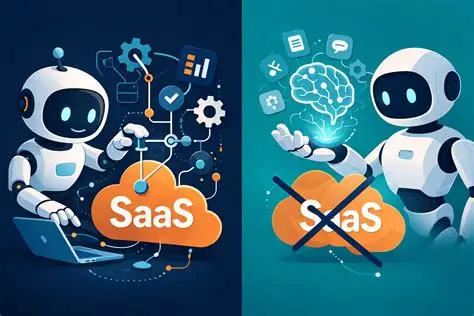
Adding generative AI to a SaaS product can look deceptively simple.
Connect an API.
Send a prompt.
Receive an answer.
Put the answer on the screen.
Done.
Except it isn't.
The first prototype may take hours. The production system can take months.
Because once generative AI enters a real SaaS application, it inherits everything that makes SaaS difficult in the first place: customer data, permissions, billing, latency, uptime, security, integrations, support, compliance, and the unpleasant reality that customers will eventually ask the system to do something you never anticipated.
Generative AI doesn't replace those concerns.
It multiplies them.
Still, the opportunity is substantial. A SaaS application that previously required customers to navigate dozens of screens can potentially interpret natural-language requests, summarize information, generate content, analyze records, retrieve internal knowledge, and automate portions of a workflow.
The key is knowing where AI creates real value rather than merely adding novelty.
What Does It Mean to Integrate Generative AI Into SaaS?
At the simplest level, integration means connecting your SaaS application to a generative AI model and embedding its capabilities into an existing customer workflow.
Your application might send information to a model and receive:
- Text
- Summaries
- Classifications
- Recommendations
- Structured data
- Code
- Images
- Draft communications
- Analysis
- Workflow instructions
But the architecture should not look like:
User → AI model → answer
A production SaaS application is more likely to look like:
User → SaaS application → authorization → data retrieval → AI model → validation → application logic → user
That middle layer is where much of the product value lives.
The model generates.
Your software determines what it sees, what it can do, and what happens next.
Start With a Workflow, Not a Chatbot
The most common mistake is adding a general-purpose AI assistant because every competitor seems to have one.
That's not a strategy.
Ask instead:
Which customer workflow is expensive, repetitive, slow, or difficult to navigate?
Maybe customers spend 20 minutes preparing a report.
Maybe support agents repeatedly search the same knowledge base.
Maybe salespeople manually summarize calls.
Maybe finance teams review thousands of transactions.
Maybe users spend hours turning raw data into customer-ready explanations.
These are opportunities.
A blank chat window is not necessarily one.
The Best AI Features Have a Job
A strong generative AI feature usually has a specific responsibility.
For example:
Weak: "Ask our AI anything."
Stronger: "Summarize this customer account and identify the three most important risks."
Weak: "AI writing assistant."
Stronger: "Turn this support conversation into a proposed resolution and customer response."
The second versions are easier to evaluate.
They are also easier to price, market, improve, and constrain.
Where Can Generative AI Fit Into a SaaS Product?
There are several high-value integration patterns.
1. Content Generation
AI can generate:
- Emails
- Product descriptions
- Reports
- Proposals
- Documentation
- Marketing copy
- Meeting notes
This is relatively straightforward technically.
It can also be relatively easy for competitors to replicate.
So generation works best when it is connected to proprietary customer data and an existing workflow.
2. Summarization
Summarization is often more valuable than generic generation because businesses already have too much information.
AI can condense:
- Customer calls
- Support tickets
- Contracts
- Reports
- Project histories
- Internal documents
The product becomes a compression layer between information overload and human attention.
3. Natural-Language Search
Instead of forcing users to learn complex filtering systems, your application can let them ask questions conversationally.
"Show me customers whose renewal is within 90 days and whose support volume has increased."
The application interprets the request and translates it into structured retrieval.
This can dramatically improve accessibility to complex datasets.
4. Retrieval-Augmented Generation
RAG allows an AI application to retrieve relevant information from a private knowledge base and provide it to the model as context.
The flow becomes:
Question → Retrieve information → Provide context → Generate answer
This is useful for:
- Internal knowledge systems
- Customer support
- Document analysis
- Enterprise search
- Policy assistants
- Product documentation
The critical detail is that retrieval should respect authorization.
The model should never receive information simply because that information exists somewhere in your database.
5. AI-Assisted Automation
This is where the integration becomes more interesting.
Instead of generating an answer, the system can help execute work.
For example:
Customer request → Understand intent → Retrieve account → Analyze issue → Draft response → Create support ticket
With appropriate permissions, some steps can become automated.
That is no longer just generative AI.
It is workflow automation with intelligence embedded inside it.
Compare the Main Integration Approaches
| Integration pattern | Development complexity | Customer value | Risk level | Typical cost profile | Best use case |
|---|---|---|---|---|---|
| AI writing assistant | Low | Medium | Low | Low–Medium | Drafting |
| Summarization | Low–Medium | High | Low–Medium | Low–Medium | Calls, documents, tickets |
| AI search | Medium | High | Medium | Medium | Knowledge discovery |
| RAG | Medium–High | High | Medium–High | Medium | Private company knowledge |
| Structured extraction | Medium | High | Medium | Low–Medium | Documents and forms |
| AI recommendations | High | High | High | Medium | Decisions and prioritization |
| AI agents | High–Very High | Very High | High–Very High | Potentially high | Multi-step automation |
The table reveals something important.
The technically easiest AI features are often the least defensible.
The more deeply AI becomes integrated into the customer's workflow, the more valuable the product can become—but the engineering and risk requirements rise with it.
That is the trade-off.
How Do I Connect My SaaS to a Generative AI Model?
The basic architecture is straightforward.
Your backend sends a request to an AI provider's API.
The request might include:
- System instructions
- User input
- Relevant application data
- Retrieved documents
- Output requirements
- Conversation history
The model returns a result.
Your application then decides what to do with that result.
The crucial principle is simple:
Do not expose model credentials to the browser.
AI API calls should generally be mediated by your backend or another controlled server-side layer.
That gives you control over:
- Authentication
- Rate limiting
- Usage tracking
- Prompt construction
- Data filtering
- Cost management
- Logging
- Model selection
- Abuse prevention
Your backend becomes the gatekeeper.
Design the AI Layer as a Product Component
Don't scatter AI calls throughout your application.
Create an abstraction layer.
For example:
Application → AI service → model provider
That separation gives you flexibility.
You may eventually want to:
- Change models
- Add fallback providers
- Route different tasks to different models
- Compare model performance
- Track costs
- Add caching
- Introduce evaluation
- Adjust prompts centrally
The model should be replaceable.
Your business logic should not depend on one provider's API syntax being embedded in fifty unrelated files.
Manage Customer Data Carefully
This is where AI integration becomes a serious SaaS engineering problem.
Your application may already contain sensitive customer information.
Now you are potentially sending portions of that information to an external model provider.
Before doing so, understand:
- What data is transmitted
- Where it is processed
- How it is retained
- Whether it is used for model improvement
- What contractual protections apply
- What customers need to be told
- Which data should never be sent
The answer will vary by provider, product, industry, and contract.
Don't treat data handling as an afterthought.
For enterprise customers, it may be part of the purchasing decision.
Multi-Tenant AI Requires Another Layer of Isolation
Imagine your SaaS serves 1,000 companies.
Company A asks:
"Summarize our customer complaints."
Your retrieval system finds documents.
But which documents?
Only Company A's.
That sounds obvious.
Production systems are full of places where obvious rules can fail.
Tenant identifiers must flow through:
- Database queries
- Retrieval indexes
- Vector stores
- Object storage
- Background jobs
- Caches
- AI prompts
- Logs
A shared AI infrastructure layer does not mean shared customer context.
Every AI request should have a clear authorization boundary.
And don't ask the model to enforce that boundary.
Your application should enforce it before the model ever receives the data.
Don't Trust the First AI Output
Generative models can produce convincing answers that are wrong.
That makes evaluation essential.
Create test cases based on real customer scenarios.
Measure:
- Accuracy
- Relevance
- Completeness
- Hallucination frequency
- Instruction adherence
- Response time
- Cost
- User acceptance
Then repeat the tests whenever you change the model, prompt, retrieval system, or workflow.
This is the AI equivalent of regression testing.
Except the output may not be deterministic.
That means your testing strategy needs to focus on acceptable behavior, not merely identical output.
Add Guardrails Around High-Stakes Actions
If an AI-generated answer is informational, an error may be inconvenient.
If the AI can delete a record, send a contract, issue a refund, or modify financial information, the consequences are different.
Use controls such as:
- Permission boundaries
- Human approval
- Structured outputs
- Validation rules
- Action limits
- Audit logs
- Confirmation steps
- Rollback mechanisms
Autonomy should be earned.
It shouldn't be granted because the demo looked impressive.
Watch Your AI Unit Economics
This deserves more attention than it usually receives.
Traditional SaaS economics are relatively easy to model.
AI adds a variable cost to individual workflows.
One customer action might trigger multiple model calls.
For example:
User request → Query rewriting → Retrieval → Ranking → Generation → Verification
The customer sees one interaction.
You see six operations.
That difference matters.
Track:
AI cost per customer
AI cost per workflow
AI cost per successful outcome
And, most importantly:
Gross margin after AI costs
You may discover that a feature customers love is economically terrible.
That doesn't necessarily mean you should remove it.
It means you need to improve the economics.
Use smaller models for simpler tasks.
Cache repeatable requests.
Reduce unnecessary context.
Use structured outputs.
Batch asynchronous workloads.
Route complex requests only to expensive models.
AI optimization is not merely an engineering exercise.
It is margin management.
Should I Fine-Tune a Model?
Usually, not at first.
Fine-tuning can be valuable when you have a strong reason to modify model behavior for a specialized task and enough high-quality training examples to justify the effort.
But many SaaS use cases can initially be handled through:
- Better prompts
- Retrieval
- Structured context
- Tool calling
- Output schemas
- Evaluation
- Workflow design
Start there.
Fine-tuning should solve a demonstrated limitation.
It shouldn't be the first response to an unclear product problem.
The Lesson: The AI Is Not Your Moat
One lesson worth carrying into almost every AI product decision is that access to a capable model is increasingly less distinctive.
Your competitors can probably access models too.
Your advantage is what you build around them.
Your customer data.
Your workflow.
Your integrations.
Your evaluation dataset.
Your distribution.
Your domain expertise.
Your ability to make AI reliable inside a specific business process.
A model can generate a paragraph for almost anyone.
It cannot automatically understand why your customer's internal workflow works the way it does.
That context is the product opportunity.
A Sensible Roadmap for Adding Generative AI
Don't rebuild your SaaS overnight.
Use stages.
Stage 1: Identify the workflow
Find one expensive or frustrating task.
Stage 2: Prototype
Connect an AI model and test whether the capability is genuinely useful.
Stage 3: Integrate
Put the capability inside the existing customer workflow.
Stage 4: Secure
Add authorization, data controls, rate limits, logging, and tenant isolation.
Stage 5: Evaluate
Build a test dataset and measure output quality.
Stage 6: Control costs
Track inference spending by customer and workflow.
Stage 7: Automate
Only after reliability is demonstrated should you allow the AI to perform consequential actions.
This sequence matters.
It prevents the company from confusing technological possibility with product-market value.
The Provocative Conclusion
Yes, you can integrate generative AI into your SaaS.
The technical barrier is lower than many companies assume.
The strategic barrier is higher.
Because the question isn't whether an AI model can generate something inside your application.
It can.
The question is whether that generated result changes the customer's economics.
Does it eliminate work?
Does it shorten a workflow?
Does it improve a decision?
Does it make valuable information accessible?
Does it help one employee accomplish what previously required several?
Does it produce an outcome customers would actually pay more to obtain?
If the answer is yes, AI belongs in the product.
If the answer is no, you may simply be decorating conventional software with a more fashionable interface.
The strongest AI SaaS products will not be the ones with the most model calls.
They will be the ones where AI becomes almost invisible.
A customer asks for something.
The system understands.
The right information appears.
The tedious work happens.
The result is checked.
The customer moves on.
That is the standard worth pursuing.
Not "Where can we put AI?"
A much harder question:
"What should our customers never have to do manually again?"
That is where generative AI becomes more than a feature.
It becomes part of the product's reason for existing.
- Arts
- Business
- Computers
- Jeux
- Health
- Domicile
- Kids and Teens
- Argent
- News
- Personal Development
- Recreation
- Regional
- Reference
- Science
- Shopping
- Society
- Sports
- Бизнес
- Деньги
- Дом
- Досуг
- Здоровье
- Игры
- Искусство
- Источники информации
- Компьютеры
- Личное развитие
- Наука
- Новости и СМИ
- Общество
- Покупки
- Спорт
- Страны и регионы
- World

 English
 Russian
 Spanish
 Portuguese
 Deutsch
 Turkish
 Dutch
Dutch
 Italiano
 Arabic
 Romaian
 Portuguese (Brazil)
 Greek
Greek