
Can Sponsorship Packages Be Customized?
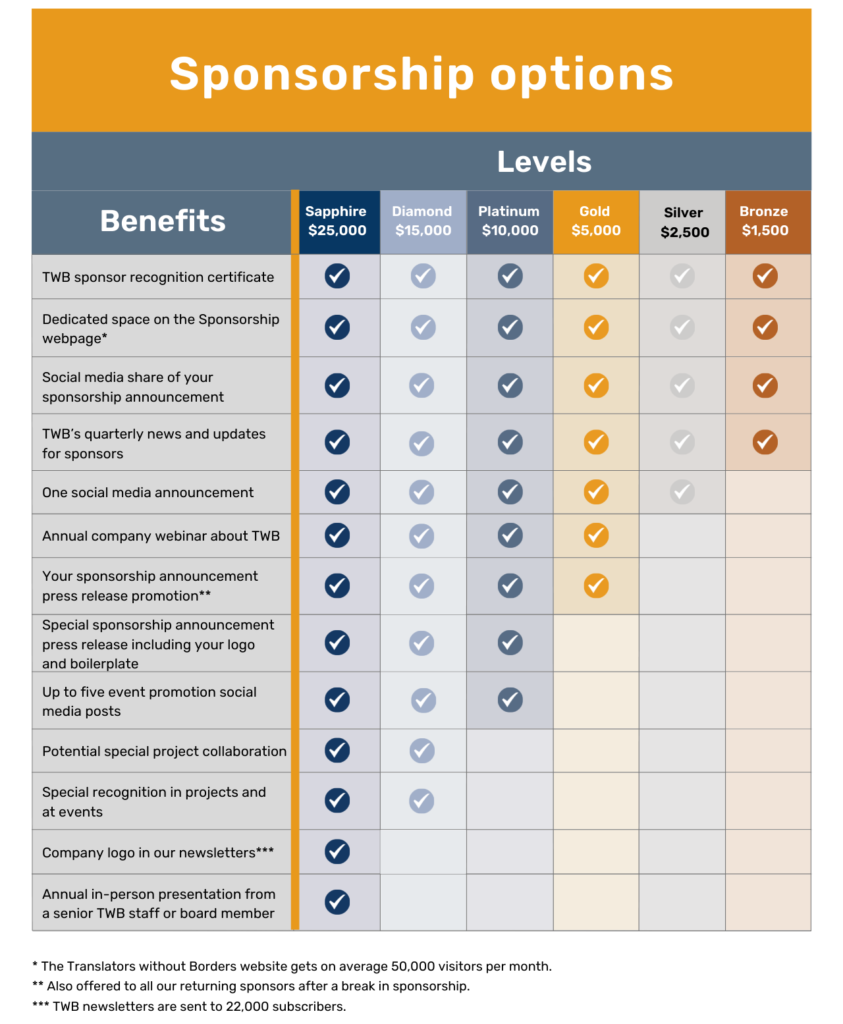
The sponsorship package looks perfect.
Until the sponsor reads it.
Then comes the question every sponsorship seller eventually hears:
“Can we customize this?”
Sometimes that question makes organizers nervous.
They worry customization will create extra work. They worry other sponsors will demand the same treatment. They worry their carefully designed Gold, Silver, and Bronze packages will become meaningless.
But here's the reality:
Sponsors aren't buying your package. They're buying the opportunity behind the package.
And those are two very different things.
A standard sponsorship package gives you structure. Customization gives you flexibility.
The smartest sponsorship programs use both.
You create clear packages so prospects can quickly understand their options. Then you customize selected elements so the partnership aligns with the sponsor's goals, audience, budget, and marketing strategy.
That doesn't weaken your sponsorship program.
Done properly, it makes it stronger.
Why Sponsors Ask for Customization
A sponsor may love your event but dislike half the benefits in the package.
That's normal.
Imagine a software company sponsoring a business conference.
It may love:
- Executive networking
- Speaking opportunities
- Lead generation
- Thought leadership
- VIP hospitality
But it may have almost no interest in:
- Print advertising
- Product samples
- Consumer giveaways
- Physical signage
Another sponsor might have the exact opposite priorities.
A consumer brand may want sampling, social visibility, experiential activation, and promotional exposure.
Same event.
Different objectives.
That's why a rigid package can create an unnecessary obstacle.
The sponsor isn't necessarily saying, “Your price is too high.”
They may be saying:
“Your package isn't built for us.”
That's a much more useful conversation.
What Can Be Customized?
Almost everything—within reason.
The trick is knowing which elements should remain standardized and which should be flexible.
1. Branding and Visibility
You can customize how and where the sponsor appears.
Options might include:
- Logo placement
- Stage signage
- Digital recognition
- Event program placement
- Website presence
- Email inclusion
- Social media promotion
- Branded content
- Video recognition
A major sponsor might want prominent placement across every major event touchpoint.
A smaller sponsor might prefer fewer, more targeted appearances.
2. Hospitality
Hospitality is particularly easy to customize.
Instead of giving every sponsor the same number of tickets, you could create packages based on their objectives.
One sponsor may want 20 event tickets.
Another may prefer 8 tickets plus a private executive reception.
A third may want 4 VIP passes and access to a speaker dinner.
The value isn't necessarily the number of seats.
It's what the sponsor intends to do with them.
3. Speaking Opportunities
Speaking rights can be customized by sponsor objective and event format.
Possible opportunities include:
- Keynote introduction
- Panel participation
- Educational session
- Fireside chat
- Workshop
- Roundtable
- Welcome remarks
- Interview
- Sponsored content session
But be careful.
A sponsorship agreement should not automatically give a sponsor editorial control over your event's programming.
Your audience still matters.
If attendees feel like they're sitting through a commercial, everyone loses.
The best sponsored content provides genuine value while giving the sponsor credible visibility.
Customization Doesn't Mean “Anything Goes”
This is where sponsorship strategy requires discipline.
A sponsor says:
“Can we change the package?”
The answer can be yes.
It doesn't have to mean:
“Tell us everything you want and we'll build it for free.”
Customization should have boundaries.
Some benefits should be protected.
For example, you may have only one:
- Presenting sponsor
- Title sponsor
- Category-exclusive sponsor
- Naming-rights opportunity
- Keynote sponsor
- VIP reception sponsor
Those assets should not be casually duplicated.
Scarcity creates value.
If two competing companies both receive “exclusive” category rights, neither has exclusivity.
If six companies are all called presenting sponsors, the designation loses meaning.
Customization should make a sponsorship more relevant, not less valuable.
Standard Packages vs. Custom Sponsorships
Here's a practical comparison:
| Factor | Standard Package | Customized Package |
|---|---|---|
| Pricing | Predetermined | Negotiated |
| Benefits | Predefined | Tailored |
| Sales process | Faster | Longer |
| Sponsor fit | General | High |
| Internal complexity | Lower | Higher |
| Activation | Limited/modular | Highly specific |
| Scalability | High | Lower |
| Best for | Smaller sponsors | Strategic partners |
| Negotiation required | Low | Moderate–High |
| Relationship potential | Good | Often stronger |
Neither approach is universally better.
A standard package is efficient.
A custom package can be more valuable.
The question is when to use each.
When Should You Customize a Sponsorship Package?
Customization makes the most sense when the sponsor has meaningful strategic potential.
Consider customizing when:
The Sponsor Has a Large Budget
If a company is prepared to make a major investment, it deserves a deeper conversation.
A $100,000 strategic partnership shouldn't necessarily look identical to a $5,000 sponsorship.
The investment creates room for additional rights, activation, hospitality, content, and exclusivity.
The Sponsor Has a Specific Objective
Maybe they need leads.
Maybe they're launching a product.
Maybe they want to reach executives.
Maybe they want community credibility.
Maybe they're trying to build relationships with a particular demographic.
If you know the objective, you can design around it.
The Sponsor Has a Unique Audience Fit
Sometimes a company is so perfectly aligned with your audience that a custom opportunity makes sense.
For example, an educational technology company sponsoring an education conference may have opportunities that a general consumer brand doesn't.
Don't force both sponsors into identical boxes.
The Sponsor Wants a Multi-Year Relationship
Long-term sponsorships are ideal candidates for customization.
A three-year agreement could include benefits that evolve over time.
Year one might focus on awareness.
Year two could emphasize engagement.
Year three could center on deeper customer relationships and thought leadership.
Now you're not selling three identical sponsorships.
You're building a partnership.
A Lesson I Learned About Customization
One of the most useful lessons I've learned in sponsorship sales is that customization should begin with questions, not concessions.
Early on, it's tempting to respond immediately when a prospect asks:
“Can we change this?”
The instinct is to start negotiating.
Take away the ad.
Add tickets.
Reduce the price.
Throw in another social post.
That approach can create a messy package very quickly.
A better approach is to ask:
“What would you most like this sponsorship to accomplish?”
That one question can completely change the conversation.
I remember working through a sponsorship discussion where the prospect wanted several benefits removed from the standard package.
At first glance, it looked like a difficult negotiation.
But after digging deeper, the reason became clear: the company didn't care about broad visibility. It cared about reaching a small group of high-value decision-makers.
So instead of simply discounting the package, the focus shifted toward the benefits that supported that goal.
Less inventory.
More relevance.
The final partnership made more sense for both sides.
That experience reinforced an important principle:
Customization isn't about giving sponsors less. It's about giving them more of what matters.
Create Modular Sponsorship Packages
One of the best ways to customize without creating chaos is to build modular packages.
Think of your sponsorship program as a base package plus optional modules.
For example:
Base Gold Sponsorship
Includes:
- Premium branding
- Event tickets
- Website visibility
- Social recognition
- Sponsor recognition
- Standard activation
Then offer optional modules:
Executive Module
- VIP hospitality
- Executive reception
- Speaker dinner
Lead Generation Module
- Sponsored activation
- Opt-in lead capture
- Product demonstration
- Post-event lead report
Thought Leadership Module
- Panel participation
- Educational session
- Sponsored content
- Interview
Content Module
- Video
- Podcast
- Newsletter feature
- Post-event content
Now customization becomes manageable.
Instead of reinventing the entire package, you're assembling pieces.
That's much easier operationally.
Put a Price on Customization
Here's a mistake worth avoiding:
Never assume customization is free.
If a sponsor wants something outside the standard package, determine its value.
Maybe it requires additional staffing.
Maybe it involves production.
Maybe it requires new content.
Maybe it occupies premium inventory.
Maybe it prevents you from selling that asset to another sponsor.
All of those factors have economic consequences.
Custom benefits should either increase the sponsorship investment or replace benefits of comparable value.
Otherwise, your “customization” becomes a discount disguised as flexibility.
Use an Internal Value Matrix
Your sales team should know what benefits are worth before negotiating.
For example:
| Benefit | Illustrative Internal Value | Customization Priority |
|---|---|---|
| Basic logo recognition | $500–$1,500 | High flexibility |
| Premium signage | $2,000–$5,000 | Moderate |
| Dedicated email | $2,000–$7,500 | Moderate |
| Speaking opportunity | $5,000–$15,000 | Controlled |
| VIP hospitality | $5,000–$20,000 | Moderate |
| Lead-generation activation | $5,000–$25,000+ | High |
| Category exclusivity | $10,000–$50,000+ | Low flexibility |
| Presenting rights | $15,000–$100,000+ | Very low flexibility |
| Naming rights | $25,000–$250,000+ | Extremely limited |
These figures are illustrative planning ranges, not universal market rates.
The purpose is to establish internal discipline.
Your sales team should know what it can trade.
And what it can't.
Customization Can Increase Sponsorship Revenue
This is the part some organizers miss.
They see customization as extra work.
But customization can also increase revenue.
Suppose your standard Gold sponsorship costs $20,000.
A prospect says:
“We'd like Gold, but we also want category exclusivity, a private reception, and a custom content series.”
Instead of saying yes for $20,000, you can build a $35,000 or $40,000 strategic partnership.
Now the sponsor receives exactly what matters.
And the event receives more revenue.
Everyone wins.
The key is to price the additional value.
Don't Customize Everything
There is a point where customization becomes counterproductive.
If every sponsor gets a completely different package, three things happen.
First, your sales process becomes difficult to manage.
Second, fulfillment becomes complicated.
Third, sponsors may start comparing deals.
And that can create problems.
Imagine Sponsor A paid $20,000 for Gold and received 10 tickets.
Sponsor B paid $20,000 and received 25.
Eventually someone asks why.
You need a rational explanation.
That's why a 80/20 approach often works well:
Keep approximately 80% of the core package consistent.
Customize the remaining 20% around strategic objectives.
The exact ratio can vary, but the principle is useful.
Structure creates efficiency.
Flexibility creates relevance.
You need both.
Customization and Sponsor Exclusivity
Exclusivity deserves special attention.
Sponsors may ask:
“Can we be the only company in our category?”
That can be enormously valuable.
But don't give it away casually.
Before offering exclusivity, determine:
- What category is protected?
- Which competitors qualify?
- How long does exclusivity last?
- Does it apply to all event activities?
- Are existing sponsors grandfathered in?
- Does exclusivity apply to media partners?
- What happens if another company approaches you later?
Put the answer in writing.
“Exclusive” should never depend on everyone's interpretation of the word.
Custom Packages Should Still Be Easy to Explain
A customized sponsorship can become complicated very quickly.
Don't let it.
At the end of the process, the sponsor should receive a concise summary:
Investment: $35,000
Partnership Level: Gold Strategic Sponsor
Core Benefits: X, Y, Z
Customized Benefits: A, B, C
Exclusivity: Defined category
Activation: Specific opportunity
Term: One year
Measurement: Agreed metrics
Simple.
Clear.
Professional.
The customization happened behind the scenes.
The final agreement shouldn't read like a negotiation transcript.
The Bottom Line
Yes, sponsorship packages can absolutely be customized.
In fact, the strongest sponsorship programs often expect some level of customization.
But customization should be strategic.
Don't customize because a sponsor asks for something.
Customize because the change makes the partnership more valuable.
Start with your standard packages.
Use them as the foundation.
Then identify the sponsor's objectives.
Determine which benefits matter.
Build modular options.
Price additional value appropriately.
Protect scarce assets.
Document everything.
And here's the provocative truth:
A sponsorship package that cannot be customized is often too rigid. A sponsorship program that can be customized endlessly is usually too poorly structured.
The sweet spot is somewhere in between.
You need enough structure to protect your value.
Enough flexibility to meet the sponsor's needs.
And enough strategic thinking to turn a collection of benefits into a partnership that actually makes sense.
Because the goal isn't to sell the package exactly as written.
The goal is to create a sponsorship the company is genuinely excited to buy.
That's customization done right.
- Arts
- Business
- Computers
- Oyunlar
- Health
- Home
- Kids and Teens
- Money
- News
- Personal Development
- Recreation
- Regional
- Reference
- Science
- Shopping
- Society
- Sports
- Бизнес
- Деньги
- Дом
- Досуг
- Здоровье
- Игры
- Искусство
- Источники информации
- Компьютеры
- Личное развитие
- Наука
- Новости и СМИ
- Общество
- Покупки
- Спорт
- Страны и регионы
- World

 English
 Russian
 French
 Spanish
 Portuguese
 Deutsch
 Dutch
Dutch
 Italiano
 Arabic
 Romaian
 Portuguese (Brazil)
 Greek
Greek