
What Is GDP and How Is It Calculated?
What Is GDP and How Is It Calculated?
Gross Domestic Product, commonly known as GDP, is one of the most widely used measures in economics. Governments, businesses, investors, and the media rely on it to understand how an economy is performing. Although the term is often mentioned in news reports, its meaning and calculation are not always clear. This article explains what GDP is, why it matters, and how it is calculated.
What Is GDP?
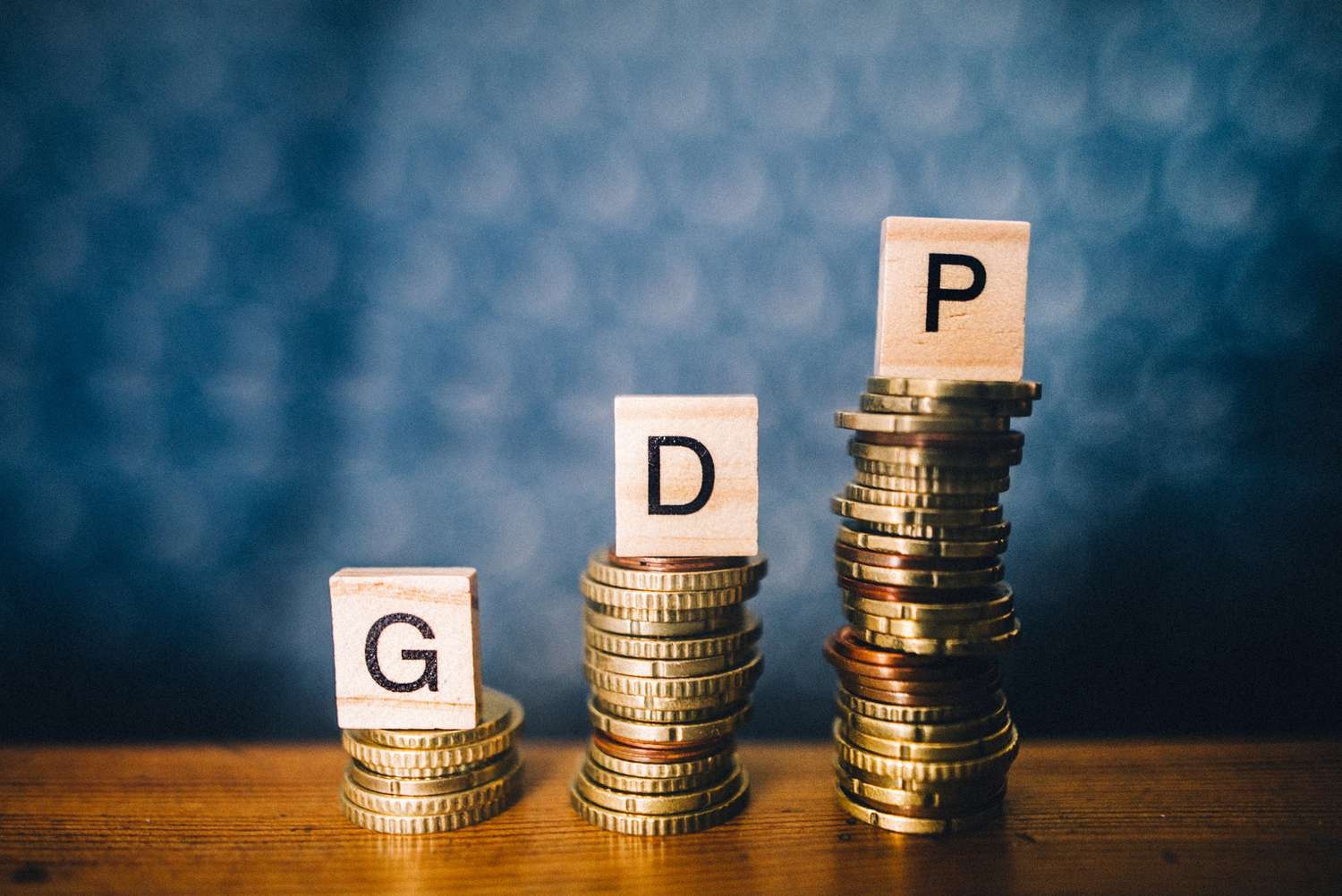
GDP stands for Gross Domestic Product. It measures the total value of all final goods and services produced within a country’s borders during a specific period, usually a year or a quarter.
There are several important parts of this definition:
-
Total value: GDP adds up the monetary value of production, not the number of items produced.
-
Final goods and services: Only goods and services sold to the final user are counted. Intermediate goods (used to make other products) are excluded to avoid double counting.
-
Produced within a country’s borders: GDP includes production by foreign-owned companies operating domestically but excludes domestic companies producing abroad.
-
Specific period: GDP is measured over time, making it useful for tracking economic growth or decline.
In simple terms, GDP shows how big an economy is and how fast it is growing or shrinking.
Why Is GDP Important?
GDP is important because it serves as a broad indicator of economic health.
-
Measuring economic growth
When GDP increases, it usually means the economy is producing more goods and services, which often leads to higher incomes and more jobs. When GDP falls, it may signal an economic slowdown or recession. -
Comparing economies
GDP allows comparisons between countries or regions. For example, economists can compare the size of different national economies or analyze living standards using GDP per capita (GDP divided by population). -
Guiding policy decisions
Governments and central banks use GDP data to make decisions about taxation, public spending, interest rates, and economic reforms. -
Helping businesses and investors
Companies use GDP trends to plan investments, expand operations, or assess market potential.
Despite its usefulness, GDP is not a perfect measure. It does not account for income inequality, environmental damage, unpaid work, or overall well-being. Still, it remains a central economic indicator.
What Does GDP Include?
GDP includes four major categories of economic activity:
-
Goods (such as cars, food, and clothing)
-
Services (such as healthcare, education, and transportation)
-
New production only (used goods are excluded)
-
Market-based activities (most unpaid work is not counted)
By focusing on these areas, GDP captures the core of formal economic production.
How Is GDP Calculated?
Economists calculate GDP using three main approaches. In theory, all three should produce the same result because they measure the same economic activity from different perspectives.
1. The Expenditure Approach
The expenditure approach is the most common and easiest to understand. It calculates GDP by adding up all spending on final goods and services in the economy.
The formula is:
GDP = C + I + G + (X − M)
Where:
-
C (Consumption): Spending by households on goods and services, such as food, clothing, housing, and healthcare.
-
I (Investment): Spending on capital goods like machinery, factories, and new housing. It also includes changes in inventories.
-
G (Government spending): Government expenditure on goods and services, such as schools, roads, and defense. Transfer payments like pensions are excluded because they are not payments for goods or services.
-
X (Exports): Goods and services sold to other countries.
-
M (Imports): Goods and services bought from other countries.
Imports are subtracted because they are included in consumption, investment, or government spending but were not produced domestically.
2. The Income Approach
The income approach measures GDP by adding up all incomes earned from producing goods and services.
This includes:
-
Wages and salaries paid to workers
-
Profits earned by businesses
-
Rent earned from property
-
Interest earned on capital
-
Taxes on production and imports, minus subsidies
This approach reflects the idea that all spending in the economy becomes income for someone else.
3. The Production (or Value-Added) Approach
The production approach calculates GDP by adding the value added at each stage of production.
Value added is the difference between the value of output and the value of intermediate inputs. For example, if a bakery buys flour for $2 and sells bread for $5, the value added is $3. GDP sums these value-added amounts across all industries.
This method avoids double counting and is often used for detailed industry analysis.
Nominal GDP vs. Real GDP
GDP can be measured in two important ways:
-
Nominal GDP: Measured using current prices. It reflects changes in both production and prices (inflation).
-
Real GDP: Adjusted for inflation, using constant prices. It shows changes in actual production.
Real GDP is generally preferred when comparing economic performance over time because it removes the effect of rising prices.
GDP Per Capita
GDP per capita is calculated by dividing GDP by the population. It provides a rough estimate of average income and living standards.
However, GDP per capita does not show how income is distributed. A country can have a high GDP per capita while many people remain poor.
Limitations of GDP
While GDP is useful, it has clear limitations:
-
It ignores income inequality
-
It does not measure happiness or quality of life
-
It excludes unpaid work, such as household labor
-
It does not account for environmental costs
Because of these weaknesses, economists often use GDP alongside other indicators, such as the Human Development Index (HDI) or measures of well-being.
Conclusion
GDP is a key economic measure that represents the total value of goods and services produced within a country over a given period. It helps track economic growth, compare economies, and guide policy decisions. GDP can be calculated using the expenditure, income, or production approach, each offering a different perspective on economic activity. Although GDP has important limitations and does not capture every aspect of human well-being, it remains one of the most important tools for understanding how economies function and change over time.
- Arts
- Business
- Computers
- Jogos
- Health
- Início
- Kids and Teens
- Money
- News
- Personal Development
- Recreation
- Regional
- Reference
- Science
- Shopping
- Society
- Sports
- Бизнес
- Деньги
- Дом
- Досуг
- Здоровье
- Игры
- Искусство
- Источники информации
- Компьютеры
- Личное развитие
- Наука
- Новости и СМИ
- Общество
- Покупки
- Спорт
- Страны и регионы
- World

 English
 Russian
 French
 Spanish
 Portuguese
 Deutsch
 Turkish
 Dutch
Dutch
 Italiano
 Arabic
 Romaian
 Greek
Greek