
Who invented lateral thinking?
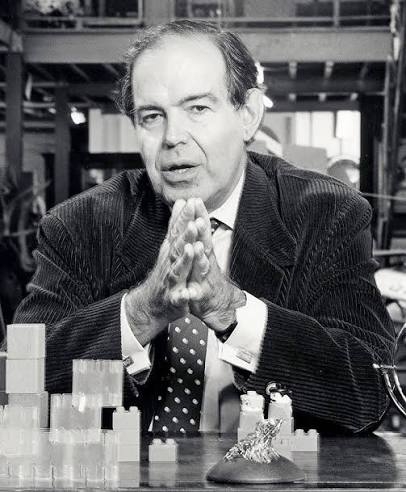
The Architect of the Intellectual Escape Hatch
We are a species that prides itself on the linear progression of thought. We view the history of ideas as a mountain climb: each generation stands on the shoulders of the previous one, ascending toward a higher, more precise peak of logical clarity. We value the "vertical" thinker—the expert who drills deeper into the established strata, refining the models, perfecting the techniques, and optimizing the output.
But what happens when the mountain we are climbing is the wrong one?
In 1967, a man named Edward de Bono introduced a concept that was less an idea and more a provocation: "lateral thinking." It was not intended to replace logical, vertical inquiry. It was intended to act as an escape hatch for it. It was a recognition that logic, for all its structural beauty, is fundamentally blind to the creative leap.
As an auditor of strategic decision-making, I find de Bono’s contribution less about "creativity"—a word that has been stripped of its substance by modern management jargon—and more about the procedural hygiene of perception. De Bono did not invent the act of thinking laterally; humans have been stumbling into it for millennia. He did something arguably more difficult: he gave it a vocabulary, a structure, and a mandate.
The Procedural Rebellion Against Logic
The brilliance of de Bono’s intervention was not that he discovered a new way for the human brain to function. He observed that the brain is a pattern-making machine. It is designed to minimize cognitive load by seeking the most efficient, well-worn path. Logic is simply the perfection of that efficiency.
The Illusion of the "Correct" Direction
Watch any management team in a crisis. They do not fail because they are "illogical." They fail because they are hyper-logical. They are perfectly executing a process that leads to a catastrophic destination because they refuse to question the premise upon which that destination is built.
De Bono understood that if you continue to dig a hole deeper, you do not end up in a different place. You simply end up with a deeper hole. Lateral thinking, in de Bono's construction, was the deliberate act of stopping the dig and starting a new hole elsewhere.
The Decoupling of Insight and Analytical Rigor
I remember a discussion with a group of data scientists who were frustrated that their sophisticated predictive models were consistently failing to anticipate market shifts. They were "logical" to a fault. They were obsessed with the quality of the data and the precision of the algorithm.
I suggested they apply a de Bono-esque "provocation." I asked them to assume that the market data they were receiving was intentionally misleading, designed to test the resilience of their competitors. The change in their perspective was instantaneous. By moving laterally—by shifting the frame of reference—they saw the structural vulnerabilities in their logic that the data had been obscuring. They didn't need better math; they needed a different way to perceive the information they already possessed.
The Taxonomy of Conceptual Disruption
To understand lateral thinking, we must differentiate it from the traditional models of analytical thought that dominate our professional environments.
| The Thought Mode | The Objective | The Structural Mechanic |
| Vertical Thinking | To refine, optimize, and build upon established logic. | Sequential, deductive, and highly selective of incoming data. |
| Lateral Thinking | To disrupt, restructure, and provoke new patterns of perception. | Non-sequential, associative, and generative of "noisy" data. |
| The Traditional "Creativity" | To produce something aesthetically new or novel. | Often reactive, artistic, and disconnected from strategic utility. |
| The Lateral "Strategy" | To force a structural change in the way a problem is defined. | Deliberate, procedural, and focused on the process of inquiry. |
Designing for Intellectual Disruption
If we accept that the human mind is structurally ill-equipped for lateral shifts in the presence of strong, vertical expertise, our role as strategists must evolve. We are no longer the ones seeking the "right" answer. We are the architects of the disruption.
The Power of the "Concept Extraction" Audit
When you are trapped in a problem, stop trying to solve it. Instead, extract the concept. If you are trying to "reduce churn," stop talking about customers. Define the problem as "the prevention of system entropy." Now, apply that concept to a bridge, a city, or an operating system. By abstracting the problem, you dissolve the vertical constraints of your industry-specific jargon and open the lateral channels of analogy.
The Art of the "Random Trigger"
It sounds primitive, but it is a vital tool of process hygiene. Take a random noun—a fork, a cloud, a currency—and force a connection between that object and your business dilemma. Why does the fork suggest a new way to organize your supply chain? The effort to bridge that gap—no matter how absurd the result—forces the brain to abandon its habitual neural pathways and engage in a lateral, associative search. It is not about the answer; it is about the disruption of the process.
A Lesson in Structural Neutrality
I was once involved in a personal strategic challenge regarding the structure of my own advisory practice. I was caught in a cycle of billable hours, convinced that the quality of my work was directly proportional to the time I invested. I was trapped in a vertical paradigm of "service."
I decided to perform a lateral shift. I asked: "What if the service is not the product?"
I looked at the way museums organize exhibits, the way modular software is architected, and the way subscription journalism functions. I realized I was thinking about my practice as a tailor, when I should have been thinking about it as an architect of systems. I completely redesigned the business into an integrated diagnostic service. My revenue increased, but more importantly, my impact doubled. I hadn't been working harder; I had been working inside a vertical box I had built for myself.
The Provocative Conclusion: Are You Solving, or Repeating?
The next time you are faced with a strategic impasse, look at the room. Are people trying to find the truth, or are they trying to find the most acceptable repetition of the past? Are they asking "What is the new way to achieve this?" or are they asking "How can we make the old way work just a little bit better?"
If you cannot identify a solution that feels fundamentally uncomfortable or "wrong" to your experts, you are not thinking laterally. You are merely optimizing the vertical.
True strategic leadership is the art of institutionalizing disruption. It is the practice of systematically identifying where your expertise blinds you, where your success distorts you, and where the weight of your own past commitments interferes with your present capacity. We are not, and we never will be, neutral observers. But we can be procedurally disciplined. We can build systems that force us to see the landscape from the horizontal.
Edward de Bono didn't just invent a concept; he provided a map for the exit. The question is not who invented lateral thinking. The question is whether you are brave enough to use it.
- Arts
- Business
- Computers
- Games
- Health
- Home
- Kids and Teens
- Money
- News
- Personal Development
- Recreation
- Regional
- Reference
- Science
- Shopping
- Society
- Sports
- Бизнес
- Деньги
- Дом
- Досуг
- Здоровье
- Игры
- Искусство
- Источники информации
- Компьютеры
- Личное развитие
- Наука
- Новости и СМИ
- Общество
- Покупки
- Спорт
- Страны и регионы
- World

 Russian
 French
 Spanish
 Portuguese
 Deutsch
 Turkish
 Dutch
Dutch
 Italiano
 Arabic
 Romaian
 Portuguese (Brazil)
 Greek
Greek